
In 2026, bronze selections rose from 30% to 40% of marketplace enrollment while silver selections fell from 57% to 43%, according to KFF's analysis of marketplace deductibles and enrollment. The shift followed the expiration of enhanced tax credits, but it doesn't mean bronze automatically became the better plan. It means the old shortcut, “choose silver for safety,” no longer works for every household.
For a 1099 contractor, early retiree, or family paying the full marketplace premium, the right choice depends on net premium, expected medical use, deductible exposure, prescription needs, and eligibility for cost-sharing reductions. A lower monthly bill can be useful, but it may be a poor bargain if you need regular care and must absorb a large deductible before the plan contributes meaningfully.
Why 2026 Changed the Bronze Versus Silver Decision
Consider a self-employed consultant whose income varies throughout the year. In prior enrollment periods, a subsidy may have kept silver within reach. In 2026, the loss of enhanced credits made that same plan feel substantially more expensive, while bronze became more appealing because it reduced the monthly payment. That household isn't necessarily healthier or more comfortable with risk. It may have less room in its monthly budget.
The marketplace response was visible in enrollment. KFF reports that bronze selections increased from 30% to 40%, while silver selections declined from 57% to 43% after enhanced tax credits expired. Milliman's 2026 ACA landscape analysis also projects average net premium increases of 65% for bronze and 121% for silver in 2026.
Those figures change the shopping conversation. A person who chose silver for years may now compare the monthly difference against expected doctor visits, prescriptions, laboratory work, and the possibility of an unexpected hospital event. A family may decide that bronze protects cash flow better, while another family may discover that silver still costs less over the year because it reduces point-of-care expenses.
Practical rule: Compare the annual premium plus realistic medical spending. Don't judge a marketplace plan by its premium alone.
Use a current marketplace quote rather than relying on an old renewal assumption. This marketplace health insurance guide can help frame the eligibility and plan-shopping questions, but your final decision should use your actual projected income, household size, county, doctors, medications, and subsidy result.
How Actuarial Value Shapes Premiums and Deductibles
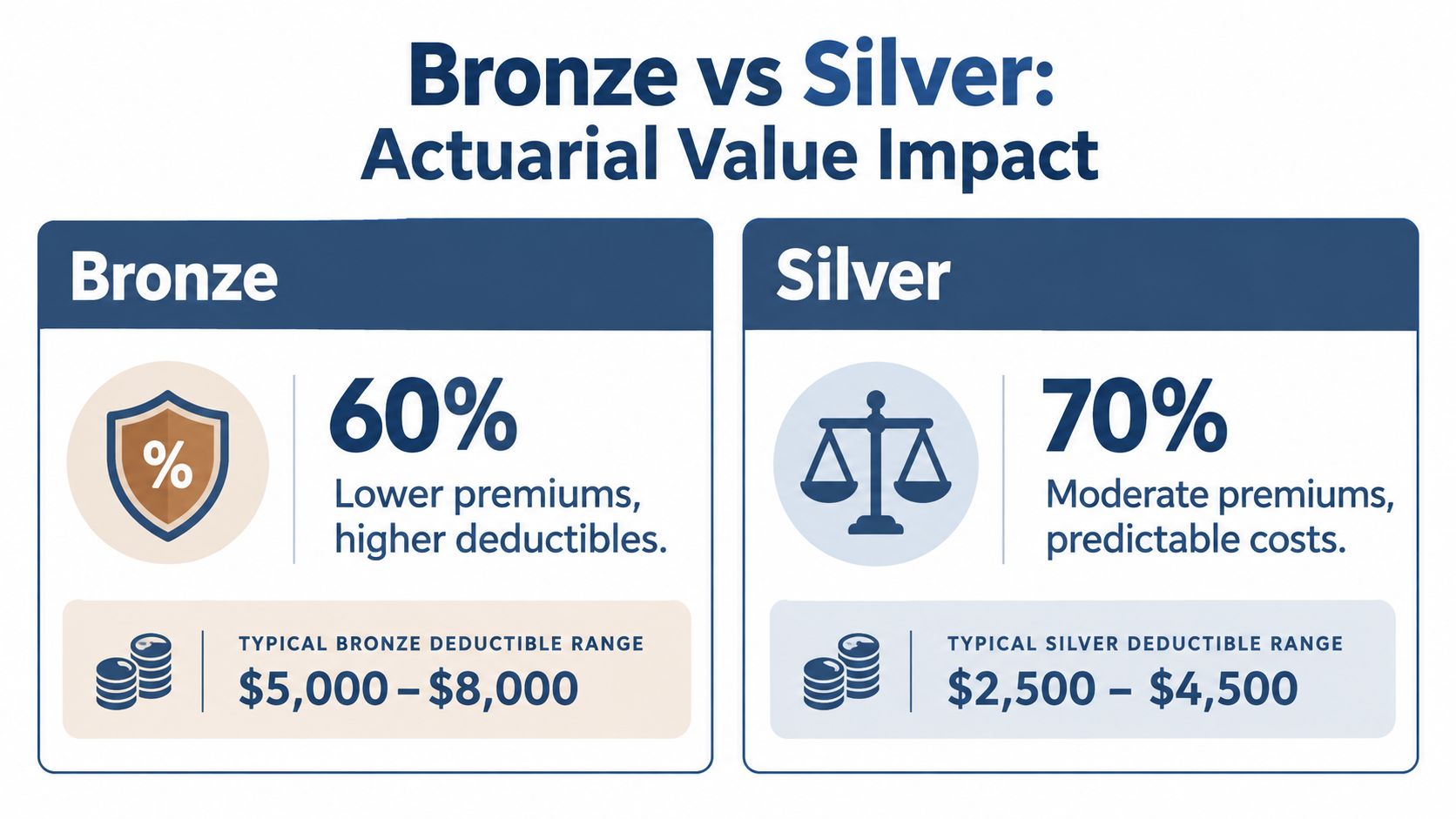
Actuarial value estimates the share of expected covered medical costs a plan pays for a standard population. Bronze plans target 60% actuarial value, while silver plans target 70%, as explained in the Commonwealth Fund's actuarial value overview.
Those percentages do not predict the exact share of your own bills. Your deductible, copays, coinsurance, covered services, provider network, negotiated rates, and timing of care determine what you pay. Metal levels provide a comparison framework, not a claim-by-claim promise.
The spending path matters
A 2026 benchmark summary reported average deductibles of $7,186 for bronze and $5,304 for silver. The figures show why the monthly premium is only one part of the decision. A higher bronze deductible may mean delaying care or drawing more heavily on savings, while silver can move you into plan cost sharing sooner.
Both tiers can also have out-of-pocket maximums generally above $9,000, based on Commonwealth Fund analysis included in the CMS final actuarial value calculator methodology. Similar catastrophic limits can therefore hide very different costs during the months before you reach them.
CMS permits certain expanded bronze designs to fall within plus five or minus two points of the standard actuarial value when they cover at least one major service before the deductible or qualify as an HSA-compatible high-deductible health plan. Do not assume every bronze plan follows the same benefit sequence. Check the summary of benefits and coverage for primary care, urgent care, generic prescriptions, and diagnostic services.
For a plain-language explanation of how actuarial value affects plan design, compare plans with Benely. Then compare each plan's deductible, copays, coinsurance, and out-of-pocket maximum rather than relying on its metal label. This guide to deductibles in health insurance can help separate expenses paid before and after the deductible.
Side-by-Side Bronze Versus Silver Marketplace Comparison
A useful comparison should focus on the cost profile you can experience. The table below uses verified benchmark information where available and keeps plan-specific features qualitative because premiums, networks, copays, and coinsurance vary by location and household.
| Decision factor | Bronze | Silver |
|---|---|---|
| Designed actuarial value | About 60% of expected covered costs | About 70% of expected covered costs |
| Monthly premium | Generally lower than silver, though the net difference depends on subsidies | Generally higher than bronze, with subsidy effects varying by household |
| 2026 average deductible | $7,186 | $5,304 |
| Cost before the deductible | Often concentrated more heavily on the enrollee, although some plans cover selected services earlier | Often offers a less severe spending path, but plan details differ |
| Coinsurance and copays | Can leave you paying more after the deductible, depending on the design | Can reduce cost per service compared with bronze, depending on the design |
| Out-of-pocket protection | Often has a high maximum, generally above $9,000 in Commonwealth Fund analysis | Often has a high maximum, generally above $9,000 in Commonwealth Fund analysis |
| Usually fits | People prioritizing monthly cash flow and expecting limited care | People expecting recurring care, prescription use, or more predictable spending |
The table's most important message is that bronze buys lower recurring cost at the price of a steeper spending path. If you rarely use care, that trade may be acceptable. If you visit a specialist, fill prescriptions regularly, or manage a chronic condition, the deductible and coinsurance can turn a seemingly affordable plan into a difficult annual expense.
Silver isn't automatically superior. Its value depends on the premium difference and whether you use the benefits. A healthy contractor with a cash reserve may reasonably prefer bronze. A household with frequent appointments may spend less overall with silver despite the higher monthly bill.
For a broader process covering networks, prescriptions, deductibles, and out-of-pocket exposure, use this guide on how to compare health insurance plans. A comparison that ignores provider access isn't complete.
The Silver Cost-Sharing Reduction Advantage Most Guides Miss
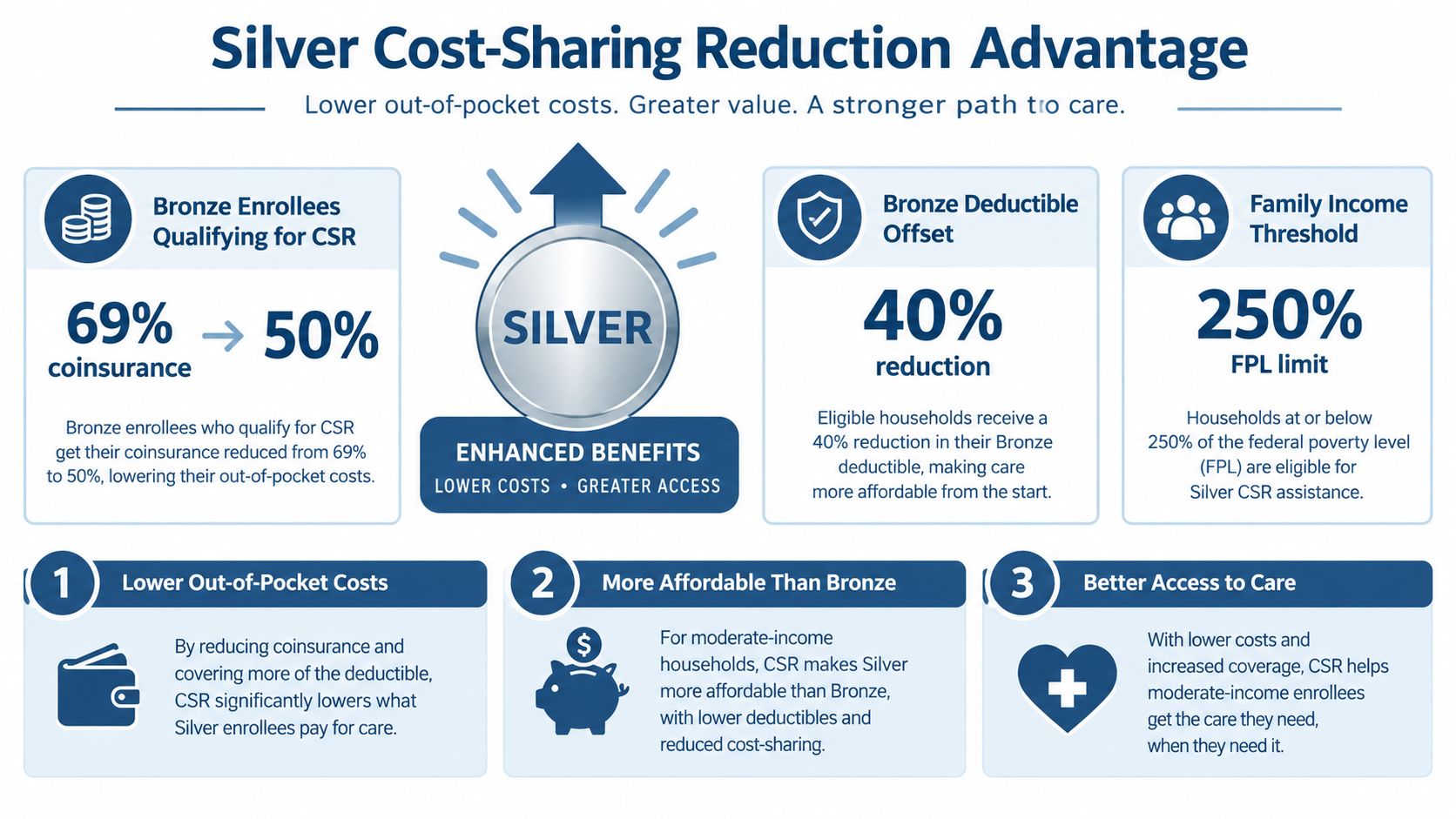
Silver plans can change substantially when you qualify for cost-sharing reductions, or CSR. These benefits apply to eligible Marketplace enrollees with household income up to 250% of the federal poverty level. Instead of lowering the premium, CSR reduces deductibles, copays, coinsurance, and other out-of-pocket costs on qualifying silver plans.
CSR applies to silver, not every metal tier. CMS describes silver CSR variants with actuarial values of 73%, 87%, or 94% for eligible lower-income enrollees in its cost-sharing reduction bulletin. As a result, a silver plan with CSR can have a very different financial design from standard silver, even when both appear under the same metal category.
Standard silver and CSR silver aren't interchangeable
For an enrollee with income up to 150% of the federal poverty level, the average silver deductible can be just $80, compared with $5,304 for standard silver, as the KFF analysis cited earlier shows. That difference can determine whether routine care remains affordable throughout the year.
A bronze plan may show the lower premium, yet choosing it can mean giving up eligibility-based silver cost sharing. The trade-off matters for households with recurring prescriptions, regular appointments, or children and adult dependents who need predictable access to care. Compare the net premiums after financial assistance, then check whether the application indicates CSR eligibility.
KFF reports that the share of CSR silver enrollees fell to a record-low 37%. Premium-focused shopping may therefore lead eligible consumers toward bronze without accounting for reduced silver cost sharing. Estimate variable 1099 income carefully and update the Marketplace application when your circumstances change.
Before choosing a tier, use this guide on how to calculate your health insurance subsidy. Treat the subsidy estimate as the starting point. The final comparison should include CSR eligibility and the medical spending you expect to face.
When Bronze Is the Smarter Choice and When It Is Not
Bronze can be the smarter choice when your main constraint is monthly cash flow and your expected use of care is low. It may also fit when you have enough savings to handle a high deductible, prefer paying for services as needed, and find that the net silver premium is too large after your available subsidy.
That choice works only if you understand the risk. A bronze plan can cover preventive services and protect against covered catastrophic costs while still leaving you responsible for substantial expenses during the year. A low premium doesn't make the deductible disappear.
Bronze tends to fit these situations
- Limited expected use: You rarely see a doctor, don't rely on ongoing prescriptions, and aren't anticipating procedures or specialist care.
- Cash-flow priority: Your income varies and keeping the monthly premium manageable matters more than reducing routine service costs.
- HSA-compatible design: The plan meets the requirements for an HSA-compatible high-deductible health plan, and you understand how the deductible applies.
- Adequate reserves: You can pay a large covered medical bill without using high-cost debt or abandoning necessary care.
Silver becomes more compelling when your care is predictable. Regular appointments, recurring medications, pregnancy-related care, behavioral health treatment, or chronic-condition management can make a lower deductible and more favorable cost sharing worth the premium difference.
The 2026 premium shift complicates the decision. Milliman projects average net premium increases of 65% for bronze and 121% for silver, while benchmark silver premiums in HealthCare.gov states are projected to rise about 30% on average in 2026. These are projections, not a guarantee for your county or household, so compare your actual after-subsidy prices.
If the silver premium difference is affordable, calculate the annual difference before rejecting it. If it isn't, stress-test the bronze deductible against your likely care.
Bronze is usually a poor fit when you know you'll use substantial care and don't have liquid savings. It's also a risky default for anyone eligible for CSR, because choosing bronze can mean passing up silver-specific cost-sharing benefits.
Which Bronze or Silver Tier Fits Your Situation
The right recommendation changes with your income pattern and health needs. A 1099 contractor shouldn't use the same rule as a healthy early retiree or a family managing regular treatment.
Self-employed professionals and 1099 contractors
Start with cash-flow stability, then model care. If your income varies, the premium must remain payable during a slow month, but you also need to estimate household income accurately for subsidy purposes. Bronze may fit a healthy contractor with savings and minimal use. Silver deserves closer attention if prescriptions, therapy, specialist visits, or planned treatment are part of the year.
Don't choose bronze solely because the premium looks comfortable on the enrollment screen. Add the deductible and likely service costs to your annual worksheet.
Early retirees before Medicare
Adults ages 60 to 64 should inspect prescription tiers, provider networks, and continuity of care before comparing metal levels. A plan that excludes a preferred specialist or places a key medication behind a large deductible may create more disruption than the premium savings justify.
Silver often deserves serious consideration when care is recurring. Bronze can work for someone with low expected use who has a strong reserve, but it shouldn't be selected without checking the worst realistic spending path.

Families and people without employer coverage
Working-class families should check CSR eligibility before considering bronze. If a family member has chronic care needs, a silver plan with reduced cost sharing can be more practical than a bronze plan with a lower premium.
Parents buying coverage for adult children should focus on the network, prescriptions, deductible, and out-of-pocket maximum. Financial advisors and Medicare clients referring younger family members can help by asking for a full-year cost comparison, not just the first month's premium.
Decision signal: Choose the tier that your household can keep active and use when necessary. A theoretically cheaper plan isn't useful if its cost sharing causes you to delay care.
Frequently Asked Questions About Marketplace Metal Tiers
Is bronze ever genuinely better than silver?
Yes. Bronze can be a rational choice when you expect limited care, need the lowest manageable monthly premium, have savings for the deductible, and aren't eligible for valuable silver CSR benefits. It becomes less attractive when you expect frequent treatment or can't absorb substantial out-of-pocket bills.
Why did bronze become more popular in 2026?
The shift followed the expiration of enhanced tax credits and higher premium pressure. KFF reported bronze enrollment rising from 30% to 40% while silver enrollment fell from 57% to 43%. That reflects household budget decisions, not proof that bronze offers better medical coverage.
What happens if I qualify for CSR but choose bronze?
You generally lose the silver-specific cost-sharing reduction benefit because CSR applies to qualifying silver plans. Compare the bronze premium with the CSR silver premium and its reduced deductible, copays, and coinsurance before enrolling.
Are marketplace deductibles unaffordable?
They can be difficult for households without savings, especially under standard bronze designs. KFF reported that the average marketplace deductible increased by about $1,000 per person in 2026, while the verified benchmark comparison placed average deductibles at $7,186 for bronze and $5,304 for silver. Your actual plan may differ, so check the plan documents rather than relying on an average.
What should I calculate before enrolling?
Write down the annual premium, deductible, expected copays and coinsurance, prescription costs, provider network, and out-of-pocket maximum. Run a low-use scenario and a high-use scenario, then check whether CSR changes the silver calculation.
My Policy Quote provides health insurance guidance and quote support for people comparing ACA marketplace options, including bronze and silver plans. Use its health insurance resources and quote options to compare your household's net premiums, deductibles, networks, and likely cost sharing before choosing your 2026 plan.