

You're 62, your spouse would struggle if your income disappeared, and the mortgage still has years left. Or you're 68, your children are independent, but you want to cover final expenses without leaving a bill behind. In both situations, searching for the “best” policy starts in the wrong place.
The better question is how long you need coverage. A term policy that protects a mortgage for ten years solves a different problem from one that replaces a spouse's income for twenty years. At older ages, choosing the wrong term can mean paying for coverage you don't need, or discovering later that the policy ends before the financial obligation does.
This guide takes a firm position: term life is often the best value for healthy adults over 60 with a temporary need, but shorter terms usually make more sense than chasing a long policy that may be unavailable or prohibitively expensive. If your need is permanent, a whole life or other permanent policy may be the more honest fit.
| Situation | Starting recommendation | Why |
|---|---|---|
| Mortgage or debt ending soon | 10-year term | Matches a defined payoff horizon |
| Spouse needs temporary income protection | 15-year term | Covers a meaningful retirement transition |
| Younger partner or long remaining obligation | 20-year term, if available | Protects a longer income gap |
| Final expenses only | Small permanent policy or short term | Term may expire before the need disappears |
| Serious health challenges | Simplified issue or guaranteed issue | Approval may matter more than low premiums |
Why Term Life at 60 Feels Different
Consider a 65-year-old couple with a nearly paid-off mortgage. The husband still works part time, while his wife relies on his income and would need time to adjust if he died. He doesn't need a massive lifelong death benefit. He needs protection until the mortgage is gone and the household budget can stand on its own.
That distinction changes the recommendation. A 10-year term might solve the debt problem, while a 15-year term could better protect the spouse through a longer transition. Buying a 30-year policy just because it sounds safer may produce a premium that strains retirement income and offers protection long after the original obligation has ended.
Life insurance priorities often shift after 60. Children may be financially independent, but a spouse, a dependent adult child, a mortgage, business debt, or a planned inheritance can still justify coverage. Some buyers also want money available for final expenses so relatives don't have to liquidate savings during an already difficult period. Guidance for older adults commonly frames term life around these temporary obligations and permanent policies around lifetime needs, as discussed in this guide to life insurance for people over 50.
The central trade-off
Term insurance usually provides more death benefit for each premium dollar than permanent insurance. That makes it attractive when the need has a clear end date. The problem is that insurers are pricing applicants at an age when mortality risk is materially higher, and the policy may still run into the years when claims become more likely.
A 2026 analysis using actuarial life-expectancy data reported that a 65-year-old man has an average remaining life expectancy of 17.5 years, while a 65-year-old woman has 20.1 years. It also said that people who bought 20-year term policies in their 40s will outlive those policies by 15 to 25 years, which helps explain why term coverage bought earlier in life may no longer be in force when death occurs. See the analysis of longevity and outliving term life insurance for the underlying discussion.
Practical rule: Buy term life to cover a financial obligation with an identifiable end date. Don't use a temporary product to solve a permanent need.
The rest of the decision follows from that rule. First identify the years of exposure. Then compare carriers that can issue that term at your age and health classification. Price matters, but availability and policy fit come first.
How Age Reshapes Term Life Pricing and Availability
At 60, the same term policy can cost several times more than it did at 40. The reason is straightforward: a level premium must cover the insurer's risk throughout the entire term. Starting that guarantee at an older age means more of the coverage period falls in higher-risk age bands.
A 2026 rate chart shows the difference for a preferred-plus male buying a 20-year, $500,000 policy. The monthly premium rises from $28.03 at age 40 to $199.32 at age 60, an increase of $171.29 per month, or about $2,072 per year. These figures come from Insurance Geek's 2026 term-life rate chart.
Figures below are for a $500,000 policy, the face amount verified in the source chart.
| Age | 20-Year Term, $500K | Monthly premium | vs. Age 40 |
|---|---|---|---|
| 40 | $500,000 | $28.03 | Baseline |
| 60 | $500,000 | $199.32 | +$171.29/mo |
For a buyer in their 60s, the practical question is how long coverage is needed. Match the term to the mortgage, loan, income-replacement period, or other obligation first. Then compare insurers that can issue that term at your age and health class.
Why age caps matter
Carriers also restrict the age at which they will issue new coverage and the length of the available term. The same 2026 rate source reported maximum issue ages for 10-year term ranging from 60 to 80, depending on the insurer. At 60, several options may still be available. Waiting can reduce the carrier pool and eliminate longer terms.
The restrictions become tighter for 20-year and 30-year policies. A carrier may offer a 10-year policy to an older applicant while declining to offer a 20-year or 30-year term at that same age. Simplified-issue coverage may remain available, but it can come with lower face amounts or narrower eligibility than fully underwritten insurance.
Read renewal and conversion language carefully
A level-term policy does not promise an affordable premium after the initial level period. Renewal usually follows age-based rates, and a new application later may involve fresh underwriting concerns. A conversion privilege can allow a move to permanent insurance without another medical exam, but the converted premium will reflect the policy terms and the insured's age at conversion.
Ask four questions before choosing a policy: Is the quoted premium level? Which underwriting class produced it? How long does the coverage last? What happens if protection is still needed when the term ends? The lowest monthly quote is useful only when the term, eligibility, and future options fit the actual need.
Term Lengths That Still Make Sense After 60
At 60, start with the deadline, not the carrier. If a mortgage ends in eight years, buying a 20-year policy adds cost without solving a longer problem. A comparison cited by The Wall Street Journal's senior life insurance guide showed Pacific Life offering 10-year term coverage up to age 80, while maximum ages for longer terms were substantially lower across carriers.
| Age | 10-Year Term | 15-Year Term | 20-Year Term | 30-Year Term |
|---|---|---|---|---|
| 60 | Broadly available | Available with some carriers | Available selectively | Limited |
| 65 | Broadly available | Carrier-dependent | Narrowing quickly | Rare |
| 70 | Still available with some carriers | Limited | Often unavailable | Generally unavailable |
These are market availability patterns, not promises of approval. Health, state, underwriting class, face amount, and carrier rules determine the offer you receive.
Ten years
A 10-year term fits a short, defined obligation: a mortgage nearing payoff, a business loan with a scheduled end date, or a temporary income bridge for a spouse. It also keeps more carrier options open because the insurer is not committing to coverage as far into advanced age.
The same WSJ comparison found 10-year, $250,000 term pricing for men at age 60 ranging from $66 per month at Penn Mutual to $73 at Nationwide. At age 70, the same product ranged from $161 to $208 per month. The figures show how strongly age band and carrier selection can affect the quote.
Fifteen years
Fifteen years often fits a retirement transition better than either a short 10-year policy or an expensive longer term. For example, if a 60-year-old expects a spouse's income to remain exposed until age 72, a 15-year policy provides coverage through that period with a three-year buffer. The same term can protect a remaining mortgage or give investment assets time to become sufficient.
Set the term from the date the financial risk ends. A five-year debt does not automatically justify 15 years, while a 12-year income gap may justify the added margin.
Longer terms: 20 and 30 years
| When it works | When it fails |
|---|---|
| A 20-year term can fit a younger spouse, dependent adult, or long-term debt that genuinely requires protection beyond retirement. | Pricing and availability tighten as applicants move deeper into their 60s. At 70, treat 20-year coverage as an exception to investigate, not the default. |
| A 30-year term may serve an unusually long dependent-care or legacy obligation. | Limited availability, high premiums, or both make it a poor target for most applicants over 60. If the need lasts for life, compare permanent coverage instead. |
Do not buy a longer term just because it sounds safer. Match the coverage period to the years your family would face a measurable financial loss.
If an existing policy is approaching expiration, review the options at the end of term life insurance well before the final notice. Waiting can leave fewer affordable choices.
Underwriting Options for Older Applicants
At 60 and beyond, underwriting class can determine whether term life is affordable, barely manageable, or unrealistic. A healthy applicant should usually start with fully underwritten coverage, not guaranteed issue. Someone with significant medical complexity may need the opposite approach.
| Underwriting Type | Health Questions | Exam Required | Typical Senior Profile |
|---|---|---|---|
| Preferred plus | Detailed | Usually yes | Exceptional health and favorable history |
| Preferred | Detailed | Often | Healthy applicant with limited risk factors |
| Standard | Detailed | Often | Controlled conditions or ordinary age-related risks |
| Simplified issue | Yes, focused questions | Usually no | Moderate health concerns or preference for speed |
| Guaranteed issue | None or minimal | No | Serious health issues or prior declines |
Fully underwritten applications
Preferred plus, preferred, and standard applications typically involve detailed health information, prescription review, and often a paramedical exam with blood and urine testing. A healthy 60-something with well-controlled type 2 diabetes may still qualify for standard or better, depending on the insurer's rules. Mild cardiac history or cancer in remission doesn't automatically end the conversation, but timing, treatment, recurrence risk, and medical records matter.
Applicants should avoid hiding a diagnosis or medication. Underwriters can verify information, and inaccurate answers can create claim problems later. Gather doctor contact details, medication history, procedure dates, and recent lab results before starting.
Simplified issue
Simplified issue removes the exam but still asks health questions and may use outside data to verify the application. It can be useful for someone with manageable health concerns who values speed, or for an applicant whose conditions make an exam inconvenient.
The trade-off is straightforward. Less medical evidence usually means less opportunity to prove exceptional health, so the premium may be higher and coverage limits may be more restricted. Compare simplified issue with a fully underwritten quote before choosing convenience.
Guaranteed issue
Guaranteed issue asks little or nothing about health and doesn't require an exam. It exists for applicants who may not qualify through ordinary underwriting, including people with serious comorbidities or previous declines. The cost per dollar of coverage is high, so it should be a fallback, not the first quote for a healthy applicant.
No-medical-exam term life guidance can help you distinguish simplified issue from guaranteed issue before submitting an application.
A recent diagnosis or procedure can affect decisions temporarily, so timing matters. If your health is stable, prepare the records and apply accurately rather than postponing without a reason. If you've just received a serious diagnosis, ask an advisor whether one carrier's underwriting approach is more suitable before filing multiple applications.
When Alternatives Beat Term Life for Seniors
Term life is a poor fit when the need doesn't have a credible end date. A policy that expires before final expenses, estate liquidity, or a dependent's support needs disappear can leave the family with the same problem you were trying to solve.
The alternatives aren't automatically better. They solve different problems and carry different premium trade-offs.
Guaranteed issue whole life
Guaranteed issue whole life makes sense when health prevents traditional approval and a smaller permanent benefit is still valuable. It doesn't require medical questions or an exam, but that access comes at a steep price per dollar of coverage. If you need permanent final-expense money and standard or simplified issue isn't realistic, guaranteed issue may be preferable to having no policy.
Review the waiting-period language carefully. The policy may treat early natural-cause claims differently from accidental death, and the contract controls the benefit.
Graded benefit coverage
Graded benefit policies occupy the middle ground between ordinary underwriting and guaranteed acceptance. They may ask health questions but offer more accessible approval than fully underwritten term life. This route can suit an applicant with health conditions that would likely produce a heavy table rating or decline.
The key question is not whether approval feels easier. It's whether the benefit schedule and premium are reasonable for the actual need.
Term conversion
Conversion is especially valuable for someone who already owns term life and has become less insurable. If the policy includes a conversion rider, the policyholder may be able to move to permanent coverage without a new medical exam before the contractual deadline.
This option can be expensive because the permanent policy's premium reflects the age at conversion. Still, it may beat applying for fresh coverage after a serious diagnosis. Check the conversion deadline, eligible products, minimum conversion amount, and whether the rider applies throughout the full term.
Permanent coverage for a permanent goal
Whole life or another permanent policy deserves serious attention when the goal is a lifelong legacy, estate liquidity, or final expenses that won't disappear. A $25,000 guaranteed-issue policy can cost far more per thousand than a healthy 15-year term, but the comparison is incomplete if the term ends before the insured dies.
A permanent policy isn't a bargain. It's a different promise. Buy it when the promise matters more than maximizing temporary death benefit.
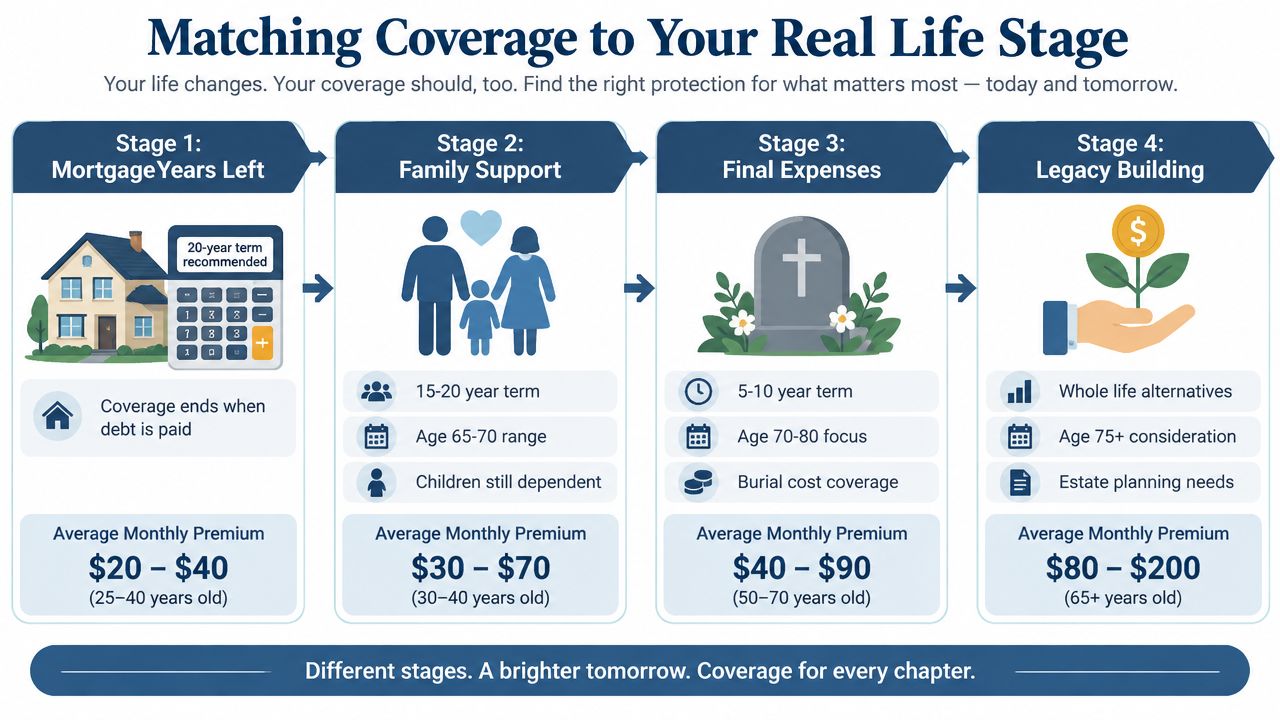
Matching Coverage to Your Real Life Stage
The most useful recommendation depends on the event that ends the need. Start with the date, not the product name. Then choose the shortest term that reaches that date with a reasonable margin.
A 62-year-old helping a spouse bridge the years before Medicare may need protection for only 3 to 5 years, not a 20-year policy. A short term can cover the transition while the household adjusts its health coverage and income plan. The applicant should confirm that the carrier offers the desired term at that age and that the premium remains level.
A 65-year-old with 15 years left on a mortgage has a clearer answer. A 15-year level term matches the debt horizon, provided the face amount reflects the outstanding balance and any additional household need. A 10-year policy would leave a gap, while a 20-year policy may extend beyond the obligation without a compelling reason.
Four practical matches
- Younger partner: A 60-year-old protecting a younger partner who expects to work until age 80 may reasonably investigate a 20-year term. The calculation is tied to the partner's planned retirement, not to a generic age recommendation.
- Legacy gift: A 67-year-old leaving money to grandchildren may prefer a smaller 10-year term if the goal is a defined gift during a particular family stage. If the legacy must be available whenever death occurs, permanent coverage deserves comparison.
- Special-needs dependent: A parent supporting an adult child who may never become financially independent should not assume term is sufficient. The need may be lifelong, making permanent insurance and broader estate planning more appropriate.
- Final expenses: Someone whose only objective is burial or end-of-life bills should compare a small permanent policy with short term coverage. Term can be cheaper initially, but it may expire while the expense remains.
The life insurance needs guide for people at 60 can help organize the debt, income, dependent, and legacy calculations before you request quotes.
Your underwriting route should follow the same logic. Use full underwriting when health is favorable and the savings justify the process. Consider simplified issue when speed or medical complexity makes an exam less attractive. Reserve guaranteed issue for cases where approval is the priority.
A Practical Pre-Application Checklist
Before applying, write down the exact event that ends your financial obligation. List remaining debt, the years until payoff, dependents, spouse income needs, and final expenses. That calculation prevents you from buying a large policy because an online form makes it easy.
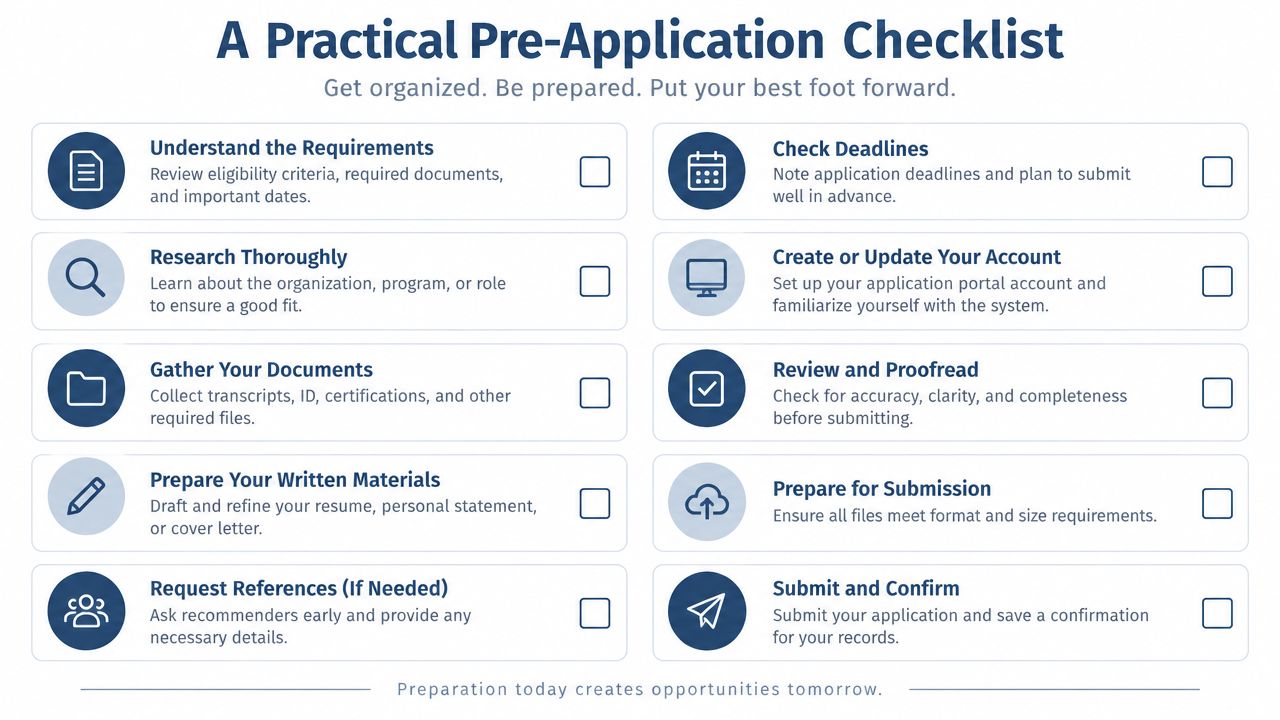
Prepare your file
- Gather medical records: Keep prescription history, doctor contact information, diagnoses, procedures, and recent test results available.
- Request your MIB report: Review the Medical Information Bureau file for inaccuracies before an application relies on it.
- Verify beneficiaries: Check names, contact details, and distribution instructions. A correct policy can still create delays when beneficiary information is incomplete.
- Compare companies: Request quotes from several carriers that offer your desired term at your age. Don't assume one insurer's decline predicts another's decision.
- Review the application: Answer every health question accurately and attach supporting documents when requested.
Ask the advisor or carrier representative four direct questions: What is the confirmed maximum issue age for this term? Which underwriting class produced this premium? Is the rate level for the entire term? What are the conversion deadline and eligible permanent policies? Also confirm whether the application requires a medical exam, paramedical visit, bloodwork, or only a health interview.
Apply while your health is stable rather than waiting for a future milestone. A recent diagnosis or procedure may complicate approval, and age-based pricing won't move in your favor. Don't cancel existing coverage until the replacement policy is approved, issued, and active.
My Policy Quote offers a life insurance quote comparison process that can help you review term coverage from multiple providers and request personalized quotes. Visit My Policy Quote with your coverage horizon, health information, and preferred term length ready, then compare the options before choosing a policy.