
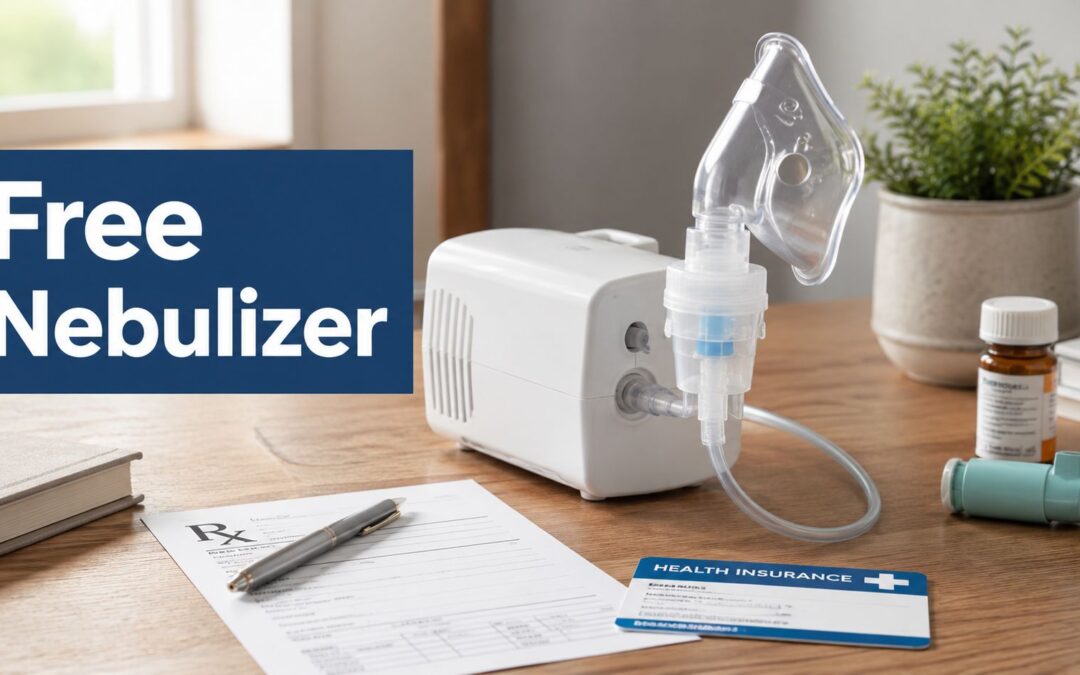
You're staring at a treatment plan, a pharmacy receipt, and a device you can't afford. Maybe it's for your child's asthma flare, maybe it's for your own breathing treatments, and maybe you've already learned the annoying truth, the machine is only one part of the cost. The good news is that a free nebulizer is possible, but almost never by shopping retail and hoping for a miracle. The path runs through insurance, Medicaid, charity clinics, or nonprofit redistribution, and each route has its own paperwork, gatekeeper, and timing.
Why Getting a Free Nebulizer Is Harder Than It Should Be
A nebulizer sounds simple until you try to get one without paying out of pocket. Families find out quickly that the device is not handed out like something off a pharmacy shelf. It is treated as durable medical equipment, so somebody has to decide you qualify, somebody has to document it, and somebody has to approve it.
That is where the process gets messy. People often start by searching for a seller before they figure out the pathway. The better question is, which program will cover it? Usually the answer comes from insurance with DME rules, Medicaid or state assistance, or a nonprofit that redistributes donated equipment. All of those routes depend on the same basics, a qualifying diagnosis, a clinician's order, and a provider or organization that is allowed to release the device.
Practical rule: if nobody is asking for diagnosis details, a prescription, or an approval form, you are probably not in a real coverage workflow yet.
This is a routing problem, not a shopping problem. If you want a nebulizer fast, stop thinking in terms of retail websites and start thinking in terms of eligibility, documentation, and delivery channel. The device may be “free” to you, but someone else is paying for it, reimbursing it, or donating it, and they will want proof.
One example shows how specific the rules can get. New York Medicaid can cover home nebulizer machines and related supplies when the prescription and Certificate of Medical Necessity are in place with an approved DME provider, and the coverage can include the cup and the interface, not just the compressor, which is how the entire setup can end up at no out-of-pocket cost for eligible families. Similar logic drives charity distribution and nonprofit reuse. If you understand that one point, the rest of the process gets much easier.
Check Your Insurance and DME Coverage First

Your first call should go to the insurer, not the pharmacy. Ask for durable medical equipment benefits and say you need to know whether a nebulizer is covered under DME. If the plan covers DME, ask which suppliers are in network, whether prior authorization is required, and what diagnosis or documentation they need before they'll approve the claim.
The workflow is usually straightforward, even if the paperwork isn't. A clinician writes the prescription, the diagnosis supports medical necessity, and the DME supplier submits the order with the plan's required documents. For many families, the stumbling block is not the device itself, it's the handoff between the doctor's office and the supplier. If the prescription is vague, incomplete, or sent to the wrong channel, the claim stalls.
What to ask on the phone
Keep it simple and exact. Use this script:
- Confirm DME coverage: “Does my plan cover a home nebulizer under durable medical equipment?”
- Ask about supplier rules: “Which in-network DME suppliers or pharmacies can bill this benefit?”
- Clarify paperwork: “Do you need a prescription, diagnosis code, prior authorization, or a Certificate of Medical Necessity?”
- Check cost sharing: “Will this go toward my deductible, or can it be covered through HSA or FSA funds?”
- Separate medicine from equipment: “If the device is covered, is the medication billed separately?”
That last question matters. A free nebulizer doesn't automatically mean free medicine. MedlinePlus says you need a prescription to get a nebulizer and also reminds patients that some medications, including albuterol solution, may still require their own prescription, even if the device is obtained another way (MedlinePlus on nebulizer use). That's the trap that leaves people with a machine but no treatment.
If you want a structured overview of DME claim handling, the overview at Durable Medical Equipment coverage basics is worth keeping open while you talk to the plan. It helps you track the difference between device approval, supplier billing, and medication coverage.
One more practical point. Roslindale Pediatrics notes that reimbursement typically requires a prescription and an eligible diagnosis such as asthma, and some plans may allow HSA or FSA spending, which can wipe out the remaining out-of-pocket cost if you have those balances available (Roslindale Pediatrics on getting a nebulizer for your child). That's not a free device in the purest sense, but for many households it's close enough to matter.
Apply Through Medicaid or State Assistance Programs
A Medicaid application is the cleanest public route for many families, especially when income is tight and the diagnosis is already documented. The process still depends on paperwork, and that is where people stall out. Do not stall. Get the prescription, the diagnosis, and the DME supplier lined up before anything is submitted.
State Medicaid programs can cover a home nebulizer, but only if the file is built correctly and the supplier bills it the right way. A clinician has to write the prescription, and the supplier has to be approved to bill Medicaid. If either piece is missing, the claim can sit or get denied even when the device itself is covered.
New York Medicaid is a clear example of how broad the benefit can be once the paperwork is in order. Home nebulizer machines and related supplies can be covered with no out-of-pocket cost when a pediatrician provides a prescription and a Certificate of Medical Necessity to an approved DME provider. The coverage described includes the nebulizer cup and the interface, so the mask or mouthpiece can be included too (ProLifeHC on Medicaid nebulizer coverage).
How to move Medicaid approval forward
Start with the clinician treating the respiratory condition. Ask for the prescription and, if your state requires it, the medical necessity form the DME supplier needs. Then confirm that the supplier takes Medicaid. If you send the request through the wrong vendor, you lose time and risk turning a covered device into a denial.
Medicaid is often generous, but it is never casual. The file has to be clean before the supplier sends it.
If your state has a slow DME process or very few approved vendors, still route the request through the approved channel. Retail ordering is not the shortcut here. The main checkpoint is approval through the insurance and DME workflow, not the cheapest online listing.
Families over Medicaid income limits should still ask about children's public programs or state-specific coverage expansions. The program name changes by state, but the path is similar. A child who does not fit traditional Medicaid may still qualify under another public program, and the paperwork usually looks close to the same.
For a clear Medicaid eligibility overview, How to Qualify for Medicaid is a useful reference before you call the clinic or benefits office. Bring the plan card, the child's diagnosis, and the provider's name, then ask exactly which form needs to be signed and who submits it.
Use Charity Clinics and Nonprofit Redistribution Programs
The most reliable no-cost option when insurance is weak or absent is usually a clinic or nonprofit that already works with donated medical equipment. Global Links' Breathe Hope program is a good example because it accepts requests from free clinics and 501(c)(3) organizations on behalf of clients, and it redistributes clean, functioning nebulizers along with unopened tubing and masks to communities in need (Global Links request form). That detail matters. The device alone isn't enough if the interface set is missing.
Here's how this route usually works in real life. A community clinic identifies a patient who needs the device, the clinic or partner nonprofit submits the request, and the organization handles the transfer. Individuals often can't request the device directly, which frustrates people who are used to buying medical supplies like ordinary retail goods. For this pathway, the gatekeeper is the clinic partner, not the patient.
A similar pattern shows up in other countries. The Cystic Fibrosis Association of Greece says that insured patients can obtain the eflow nebuliser and consumables free through a reimbursement arrangement with EOPYY, and it also provides free devices for uninsured patients and economically disadvantaged families with young children or older patients after physician consultation (Cystic Fibrosis Association of Greece patient support). Asthma Relief in the UK also runs a nebuliser compressor support helpline and lets patients apply for a nebuliser while supplying consumables like face mask kits and compressor air filters (Asthma Relief).
If you're trying to help a child or a family member who's already dealing with unstable housing, a local health navigator can matter more than a big program brochure. Resources like supporting children experiencing homelessness from Homeless Engagement Lift Partnership can be useful when the bigger issue is getting care connected to a stable clinic, not just locating a device.

The right question to ask a clinic is simple. “Do you work with any donated DME or respiratory equipment partners?” If they say yes, ask who completes the request and whether they need a prescription first. For a no-insurance situation, that chain of custody is everything.
If you're trying to get a charity-clinic route moving, No Insurance Doctor Visit Tips can help you show up prepared and avoid wasting the appointment on questions you should've handled before walking in.
Explore Patient-Assistance Programs and Refurbished Devices
Once insurance and charity routes are exhausted, the next best move is to widen the search without pretending every used device is safe. Manufacturer patient-assistance programs are the first thing I'd check for respiratory medications, and sometimes for starter equipment, but don't assume a device program exists just because the medication program does. Ask directly whether they offer nebulizer support, replacement parts, or a starter package, then get the answer in writing.
Community health centers are another path worth asking about. Some run sliding-fee services or connect patients to donated DME inventories. If you're uninsured, those clinics are often better than retail suppliers because they already know how to route medical necessity paperwork. They also tend to understand when a patient needs help with the equipment itself versus the medication that goes inside it.
How to judge a refurbished nebulizer
Treat a used device like a medical tool, not a bargain. Check whether the compressor still runs smoothly, confirm that the air filter housing is intact, and make sure the tubing and mask are replaceable. If the seller can't tell you when it was last used or cleaned, walk away.
If the consumables can't be replaced, the machine isn't really usable.
That's especially important because the source materials stress that nebulizers rely on a full setup, not just a motor. The cup, tubing, and interface all matter. If you're handed a compressor with no way to connect the medication chamber or mask, you haven't solved the treatment problem yet.
You can also ask the prescribing clinician whether the office has sample programs or starter-device referrals. Some medical offices can point families toward equipment sources that a normal internet search won't surface. When you're uninsured and out of options, local relationships often beat broad searches.
Template Language for Prescriptions, Orders, and Appeals
Words get claims approved or denied. Keep them short, clinical, and specific.
For the clinician, use this:
“Please provide a prescription for a home nebulizer for [diagnosis]. The patient needs nebulized medication delivered through [mask or mouthpiece] because [clinical reason]. Please include medical necessity documentation and send it to [DME supplier name].”
For the DME supplier, say:
“I'm calling about a nebulizer order for [patient name] under policy [policy number]. Please confirm what you need to process the claim, including prescription, diagnosis, and any medical necessity form.”
If the claim is denied, don't send a rambling story. Send one tight appeal letter:
“I'm appealing the denial of a home nebulizer for [patient name]. The device was prescribed for [diagnosis], and the treating clinician documented medical necessity. Please review the claim, the prescription, and the supporting records for reconsideration.”
For a practical denial strategy, the prior authorization and denial walkthrough at RevGuard's prior authorization guide is a useful companion if the supplier says the file is incomplete.
| Common Denial Reason | Why It Happens | Corrective Action |
|---|---|---|
| Missing prescription | The supplier can't bill without it | Ask the clinician to resend a signed order |
| Missing diagnosis | The insurer needs medical necessity | Request the diagnosis be added to the chart note |
| Wrong supplier | The vendor isn't in network | Switch to an approved DME provider |
| Incomplete medical necessity form | The CMN wasn't filled out correctly | Return it to the clinician for correction |
| Medication confusion | The device is approved but the drug isn't | Ask the prescriber for the medication order separately |
If you need a broader claims appeal framework, the step-by-step material at How to Appeal an Insurance Claim fits this situation well. Keep copies of every fax confirmation, portal message, and office note. If the appeal has to be escalated, those records are what save it.
Follow-Up Steps and Common Pitfalls to Avoid
Don't assume “approved” means finished. Confirm that tubing, masks, and medication cups are included, because a compressor without consumables is incomplete. Then ask the supplier when delivery is scheduled and whether the prescription is still current, because an expired order can stall a shipment at the last minute.

Also keep the medication issue separate from the device issue. A family can win the nebulizer and still lose time if nobody secured the actual treatment solution. That's the dumbest place to get stuck, and it happens constantly. Once the device arrives, follow the cleaning instructions from the manufacturer, replace filters on schedule, and store the unit dry and clean so it lasts.
The goal isn't just to get the machine home. It's to make sure it can actually be used the day symptoms flare.
If the first route fails, move to the next one fast. Insurance, Medicaid, charity clinic, and nonprofit distribution are different doors, but they all reward the same thing, complete paperwork and a clinician who is willing to document need.
If you're trying to get a nebulizer covered without wasting time on dead ends, My Policy Quote can help you understand the coverage path, the paperwork, and the appeal process in plain English. Visit My Policy Quote to get smarter about DME, Medicaid, and the insurance steps that turn a hard ask into an approved order.