
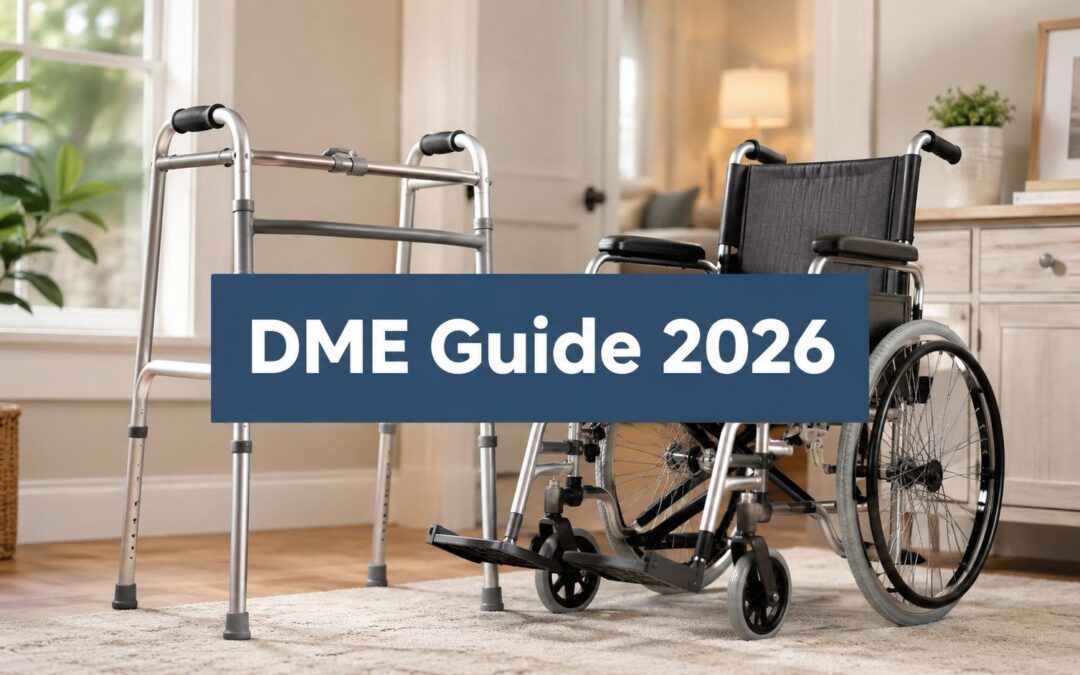
Your doctor says you need a walker, CPAP machine, hospital bed, or wheelchair. That part is clear enough. Then the hard part starts. Which supplier can you use? Will insurance cover it? Are you supposed to rent it, buy it, or wait for prior authorization first?
If you're in that spot right now, you're not overreacting. Durable medical equipment often sounds simple until you try to get it. Families run into prescriptions, billing codes, network rules, delivery delays, and surprise cost-sharing all at once.
That confusion matters because this isn't a niche corner of healthcare. The global durable medical equipment market reached USD 265.2 billion in 2025, and North America held 37.36% of that market, with the U.S. estimated at USD 70.66 billion in the same year, according to GM Insights' durable medical equipment market analysis. Big market or not, the process still feels personal when you're the one waiting on equipment your family needs at home.
What Is Durable Medical Equipment
A lot of people first hear the term after a medical visit that already felt overwhelming. Maybe your parent had a fall. Maybe your spouse is coming home after surgery. Maybe your doctor says your breathing, mobility, or sleep needs support at home. Suddenly, someone mentions DME, and it feels like you're expected to know what that means.
Durable medical equipment is the reusable equipment you need for ongoing care at home. Think of it as the heavy-duty tools for your health. Not disposable supplies like bandages or gloves, but sturdy items meant to help you function day after day.

What that looks like in real life
A walker helps someone move safely from the bedroom to the kitchen.
A CPAP machine supports breathing every night.
A wheelchair, hospital bed, or oxygen equipment can turn a home into a place where recovery or long-term care is manageable.
These items aren't just products. They often become part of a family's daily routine.
Why people get confused
The term itself sounds technical, but the confusion usually comes from the gap between medical need and insurance process. Your doctor may know what equipment you need, but your insurer wants very specific proof, the supplier wants the right paperwork, and you want to know what you'll owe before anything shows up at your door.
Practical rule: If the item is reusable, intended for ongoing medical use, and needed at home because of a health condition, you're likely in durable medical equipment territory.
If insurance language is part of what's making this harder, a plain-English health insurance glossary can help decode terms like deductible, coinsurance, prior authorization, and in-network supplier before you make calls.
Is Your Medical Equipment Covered
A common initial question is the right one. Will my insurance pay for this? Sometimes yes. Sometimes partly. Sometimes only after extra steps that no one explained clearly.
Coverage usually depends on a handful of basics, not just whether the item seems helpful.

The checklist that usually decides coverage
- You need a doctor's prescription. Insurance typically won't treat DME as covered just because you bought it yourself.
- The equipment has to be medically necessary. Helpful isn't always enough. Your record has to show why this item is needed for your condition.
- Home use matters. Many plans, especially Medicare-based coverage rules, focus on equipment needed in the home.
- The supplier usually has to be approved. Out-of-network or non-approved suppliers can create major billing problems.
- Prior authorization may apply. Some items need insurer approval before delivery.
- Your plan's cost-sharing still applies. Covered doesn't always mean free.
One area that surprises families is Medicare's home-use rule. Equipment is often excluded for use outside the home, which can blindside people who assume that if a wheelchair or mobility device helps them function in daily life, coverage will naturally follow. The same policy discussion also notes that on February 25, 2026, CMS announced a nationwide six-month pause on new Medicare enrollment for certain DME suppliers to address improper payments, which can make it harder for some patients to switch or access new suppliers quickly, as described in the American Progress analysis of Medicare DME coverage.
A simple self-check
Ask these questions before you order anything:
- Did your doctor write a detailed prescription?
- Does your chart explain why this exact item is medically necessary?
- Is the equipment mainly for use at home?
- Is the supplier in-network or Medicare-approved for your plan?
- Has anyone confirmed whether prior authorization is required?
- Did you ask what part of the cost is still yours?
A short explainer can help if your equipment need overlaps with braces or support devices. This guide on whether Medicare covers orthotics is useful because orthotics and DME are often confused, even though coverage rules can differ.
Here is a quick video overview before you start calling suppliers or your insurer:
If you remember only one thing from this section, remember this. Never assume a doctor recommendation and insurance approval mean the same thing.
Rent or Buy Your DME Making the Right Choice
Once you know the item may be covered, the next surprise hits. You may not get to choose freely between renting and buying. Your insurer often applies its own rules based on the type of equipment and how long you're expected to need it.
That doesn't mean you have no say. It means you need to understand what each path means for your wallet, your convenience, and your ability to replace or repair the equipment later.
Why renting sometimes makes sense
Renting is common when the need may be temporary or when the equipment is expensive enough that the insurer wants to spread out payments. From your side, renting can mean a lower upfront cost and less responsibility if the item needs servicing.
It can also be less stressful if your needs may change. If your mobility improves after surgery, or if your doctor expects a short recovery window, renting can keep you from owning equipment you won't need for long.
Why buying can be the better long-term move
Buying usually feels simpler because the equipment is yours. For a long-term condition, that can be easier emotionally and practically. You aren't wondering when a rental term ends or whether an insurer will keep approving the same item.
Ownership can also matter if you need the equipment every day and don't want uncertainty about pickups, exchanges, or rental renewals.
| Factor | Renting DME | Buying DME |
|---|---|---|
| Best fit | Short-term recovery or uncertain need | Long-term or ongoing need |
| Upfront cost | Usually lower at the start | Usually higher at the start |
| Insurance involvement | Often tightly controlled by insurer rules | Still controlled by coverage rules, but ownership may be clearer |
| Repairs and maintenance | Supplier may handle more of this | You may have more responsibility after purchase |
| Technology changes | Easier to switch if needs change | Harder if the item becomes a poor fit later |
| Emotional comfort | Can feel temporary or conditional | Can feel more stable and predictable |
Questions to ask before you agree
Don't just ask, "Is this covered?" Ask better questions.
- Ask about the timeline. Is this a monthly rental, a capped rental, or an outright purchase?
- Ask who handles repairs. If the equipment breaks, call the supplier or your insurer first.
- Ask what happens if your condition changes. A different model may require new documentation.
- Ask whether rental payments ever convert to ownership. Some arrangements work that way. Some don't.
A smart question at delivery is, "If this stops working next week, who do I call first?" That answer tells you a lot about whether the process is organized.
If you're helping an older parent, this decision often has less to do with preference and more to do with how stable the medical need really is. Temporary recovery equipment and permanent support devices should not be treated the same way.
How to Choose a DME Supplier
The supplier you choose can make this process smoother or much harder. A good supplier doesn't just drop off equipment. They help verify benefits, collect paperwork, coordinate delivery, and explain what happens if something breaks.
A bad supplier creates confusion fast. They may be slow to return calls, vague about billing, or push you to accept equipment before coverage details are clear.
Start with the network, not the brand
Many families start by searching online for the item itself. Start with your insurance plan instead. Ask for a list of approved DME suppliers. If you have Medicare-related coverage, make sure the supplier is properly enrolled for the kind of equipment you need.
Then ask your doctor's office which suppliers they work with regularly. That doesn't replace checking network status, but it can help you find companies that know how to handle the paperwork.
What to look for in a supplier
The U.S. market includes major players such as Invacare, Sunrise Medical, and Arjo, and that concentration helps create benchmark pricing and standardized product expectations in the market, as noted in Fortune Business Insights' durable medical equipment market overview. For you, the practical takeaway is simple. Supplier choice isn't only about finding a product. It's about finding a company that can deliver the right model, bill it correctly, and support it after delivery.
Use this vetting list:
- Billing clarity: Ask for an itemized estimate before accepting delivery.
- Coverage experience: Ask whether they routinely work with your insurer.
- Service support: Ask how repairs, replacements, and pickups are handled.
- Delivery process: Ask whether setup and basic instruction are included.
- Written policies: Ask for return, exchange, and malfunction policies in writing.
Red flags worth taking seriously
Some warning signs are easy to miss when you're under pressure.
- Unsolicited sales calls: Be cautious if someone contacts you before you've chosen a supplier.
- Pressure to accept delivery fast: Legitimate suppliers should be able to explain your coverage first.
- Vague answers on cost: If they can't explain your likely patient responsibility, slow down.
- No interest in your prescription details: That usually means billing trouble is coming.
A reliable supplier should sound organized, not aggressive. If you feel rushed, get a second option.
Navigating DME Documentation and Billing
This is often the dreaded part. It feels bureaucratic because it is bureaucratic. But once you know what each piece does, the process gets less mysterious.
Two terms matter more than almost anything else: prior authorization and HCPCS codes.

Prior authorization means permission first
Prior authorization is your insurer saying, "Show us why this item is needed before we agree to pay for it." That's all it is. It isn't proof that you don't need the equipment. It's a gatekeeping step.
Problems usually happen when the doctor's order is too vague, the diagnosis notes don't support the request clearly, or the supplier submits incomplete information.
HCPCS codes are the shared language
Think of an HCPCS code as the billing name for a specific kind of medical item. Your doctor may say "power wheelchair" or "CPAP machine." The insurer and supplier often need the right HCPCS code attached so everyone is discussing the exact same category of equipment.
That code affects coverage, pricing, and whether prior authorization is triggered.
Keep this in writing: Ask the supplier which HCPCS code they're billing and ask your insurer to confirm how your plan handles that code.
The Medicare DME system uses HCPCS-based coding and payment tracking. For some high-cost items, including power wheelchairs and CPAP machines, average allowed amounts can vary by 20% to 40% across regions, which helps explain why quotes and payment expectations don't always match from one area to another, according to the CMS methodology for Medicare durable medical equipment, devices, and supplies data.
The paperwork you should track yourself
Even if the supplier says they'll handle everything, keep your own file.
- Prescription and doctor's notes: Ask for copies.
- Authorization records: Save approval numbers, dates, and names.
- Item details: Keep the brand, model, and billed code if available.
- Delivery documents: Check what you received against what was approved.
- Bills and explanations of benefits: Compare them line by line.
If you're dealing with a Medicare claim after delivery or a billing issue, this plain-language guide on how to submit a claim to Medicare can help you understand what to gather and how to follow up.
A lot of denials start as documentation problems, not medical ones. That's frustrating, but it also means some of them can be fixed.
Understanding Your DME Costs and How to Appeal Denials
Often, many families feel blindsided. They hear, "Your plan covers DME," and expect a straightforward answer on price. Then they discover deductibles, co-pays, coinsurance, prior authorization delays, supplier confusion, or a denial that doesn't match what they were told on the phone.
Your frustration is justified.
Why the final cost is so hard to pin down
Research on DME access found that 98.1% of insurance plans offer some DME coverage, but 42.6% require co-pays or deductibles. The same research found high information variability when patients contact insurers, with calls averaging 2 agent transfers, and 47% of adults with disabilities reporting authorization difficulties, as described in the PubMed study on insurance barriers and DME access.
That lines up with what families experience every day. Coverage exists on paper, but getting a clear answer often takes multiple calls and repeated explanations.
What to ask before delivery
If you want fewer surprises, ask these questions in one call and write down every answer:
- What is my deductible status? If it hasn't been met, your cost may be higher.
- Is this subject to co-pay or coinsurance? "Covered" isn't enough detail.
- Is prior authorization already approved? Don't assume the supplier handled it.
- Is this supplier in-network for this item? Network status can vary by equipment type.
- Am I renting or buying? Your out-of-pocket costs may depend on that structure.
If a representative gives a verbal answer, ask them to note the account and give you a reference number for the call.
How to appeal a denial without freezing up
A denial feels personal, but start by treating it like a paperwork event. You are building a record.
- Read the denial notice carefully. Look for the stated reason. It may be lack of medical necessity, missing records, wrong supplier, or no prior authorization.
- Request the full criteria used for the denial. Ask what documentation was missing or insufficient.
- Call your doctor's office. Ask them to send stronger chart notes, a more detailed prescription, or a letter explaining why this exact item is medically necessary.
- Get help from the supplier. Good suppliers know what insurers usually want for specific equipment categories.
- File the appeal on time. Deadlines matter.
- Keep copies of everything. Every fax, portal upload, call log, and letter.
If the denial involves Medicare, this guide to the Medicare appeals process can help you organize your next steps and avoid missing deadlines.
The biggest mistake is stopping after the first no. Many denials are really requests for better documentation, clearer coding, or a corrected process.
Your DME Action Plan
When you're tired and dealing with medical needs at home, broad advice isn't enough. Use the checklist that fits your situation.
If your doctor just recommended DME
- Get the prescription in writing. Ask for details, not just the equipment name.
- Call your insurer before ordering. Confirm coverage rules, prior authorization, and approved suppliers.
- Ask whether the item must be used in the home to qualify. That rule surprises people.
- Keep your own folder. Save every note, order, approval, and bill.
If you're an early retiree planning for Medicare
- Review your current plan's DME rules now. Don't wait until after a surgery or diagnosis.
- Ask how supplier networks work. Access can change depending on plan type.
- Check whether likely future needs would be rented or purchased. That affects budgeting.
- Learn the appeal process before you need it. It feels much easier when you're not in a crisis.
If your DME request was just denied
- Read the denial reason line by line. Don't rely on a quick summary from a call center.
- Ask your doctor for stronger medical necessity documentation. Specific details matter.
- Verify the billed item and supplier status. Coding or network errors can sink a valid claim.
- Appeal quickly and keep records of every contact. Organization helps more than anger.
You don't need to master the whole insurance system in a day. You just need the next right step, then the one after that.
If you want help comparing health coverage options before a DME need turns urgent, My Policy Quote can help you review plans, understand cost-sharing, and look at Medicare or private coverage choices with a clearer picture of how real-world medical equipment needs affect your budget.