
You're self-employed, your children still depend on your income, or you've left an employer plan behind. Then you review your life insurance and realize the policy may protect today's bills without protecting the financial reality you're building toward. A term policy may be affordable and appropriate, but its expiration date can create a serious problem. A universal life policy may last for life, but its cash-value mechanics demand more attention than a simple premium payment.
The choice between term vs universal life insurance isn't just a decision between a cheaper policy and a more expensive one. It's a decision about how long your family needs protection, how much flexibility you can manage, and whether your need ends or continues for life. Term is usually the practical answer for income replacement during working years. Universal life deserves consideration when permanent coverage, premium flexibility, or estate planning matters more than short-term affordability.
Choosing the Right Life Insurance Path
Consider a 1099 consultant with a mortgage, two children, and no employer-sponsored life insurance. Her immediate need is clear. If she dies while the children are dependent and the mortgage remains outstanding, her family may need a substantial death benefit. A term policy can cover that defined risk without forcing her to divert as much cash from business reserves, retirement savings, or household expenses. The question is whether that need will disappear when the term ends.
Now consider a different buyer, an early retiree who has stopped earning employment income but still wants a guaranteed legacy for a spouse or adult child. The purpose of the coverage is no longer temporary income replacement. It may be lifelong liquidity, a planned inheritance, or protection for a dependent whose needs won't end when the buyer retires. That situation points toward a permanent policy, provided the buyer can fund and monitor it properly.
A useful overview of the broader product range is this guide to different types of life insurance. The key distinction here is simpler:
- Term life insurance covers a specified period and pays only if death occurs during that term.
- Universal life insurance is permanent coverage with flexible premiums and a cash-value component.
Your decision should begin with the liability you're trying to protect, not with an illustration or a sales pitch. List the years your family depends on your income, then identify obligations that may remain after employment income stops. If the need is temporary and your budget is tight, term usually deserves the first quote. If the need is permanent and you can tolerate ongoing policy management, universal life may be worth evaluating.
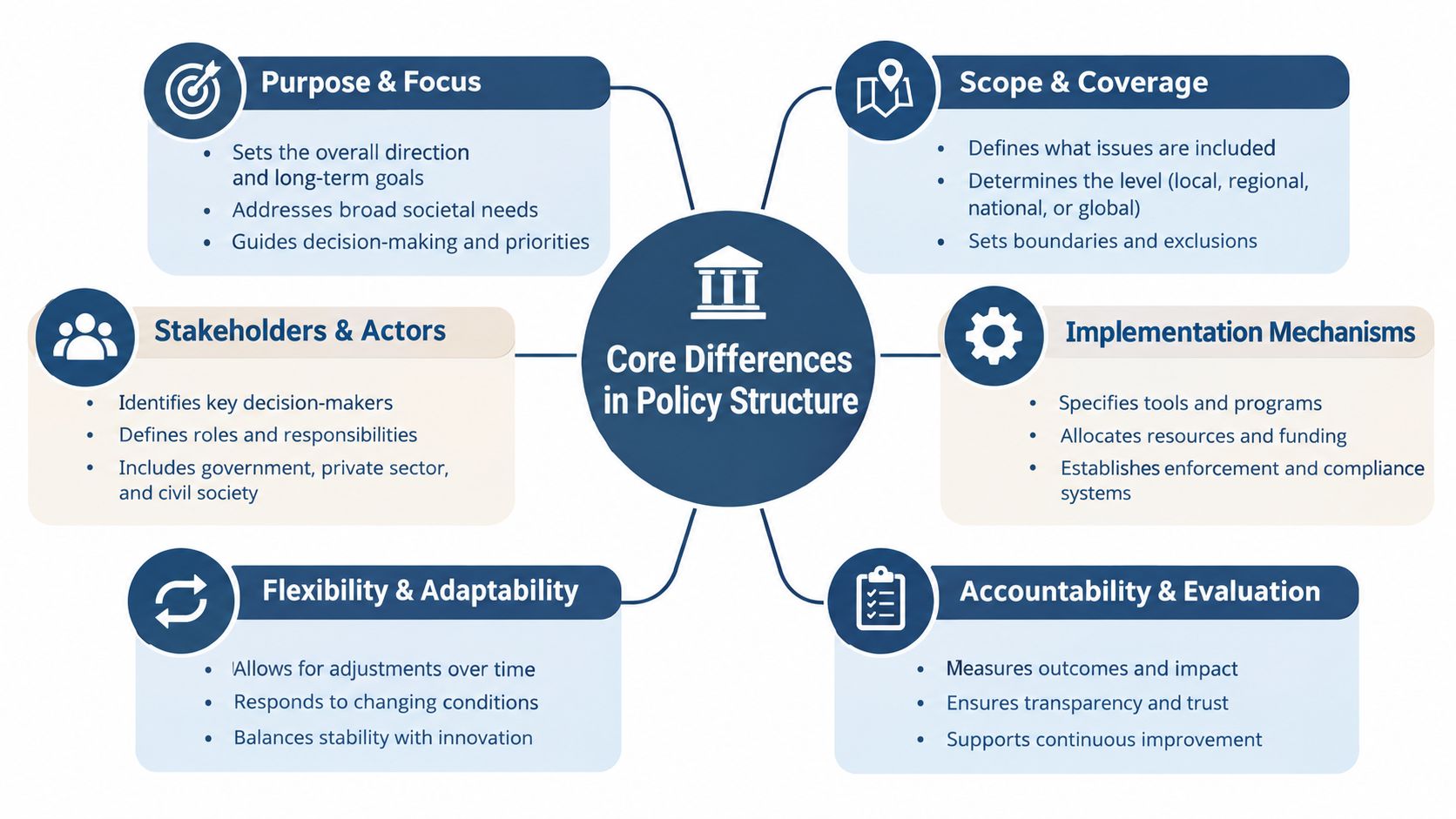
Core Differences in Policy Structure
Term insurance is a fixed-duration protection contract. You select a coverage period, pay the required premium, and receive a death benefit if you die while the policy is active. It generally has no cash value, and surviving the term normally means the coverage ends without a refund of premiums, as described by AAA's term and permanent life comparison.
Universal life operates differently. It's a permanent policy with a death benefit and a cash-value account. Premium dollars above the cost of insurance can support accumulation, while the policy's internal charges are deducted over time. The policy remains in force only if its funding and cash value are sufficient to cover those deductions under the contract.
Why term dominates insured dollars
Term's market position reveals how buyers use it. In 2024, 39.3% of new individual life policies were term policies, equal to about 3.8 million policies. Those policies represented $1.45 trillion, or 72.1% of the total individual life face amount issued, according to the American Council of Life Insurers Fact Book.
That difference between policy count and face amount matters. Term may be selected for large temporary obligations, such as replacing a business owner's income, supporting children, or protecting a mortgage. It's often the most efficient way to buy substantial protection during the years when a household faces its greatest financial exposure.
Universal life belongs to the permanent category alongside whole life and variable products. Its defining feature is flexibility, not low cost. You may have room to adjust premiums or, depending on the policy design, the death benefit. Those adjustments operate within contractual limits and don't eliminate the need to fund the policy carefully.
A newer product design
Universal life is also historically recent. The Society of Actuaries' product development history notes that universal life contracts were introduced in 1979, combining a monthly renewable term insurance rider with an accumulation fund. By the end of 1983, nearly all major insurers had introduced at least one universal life product.
That history helps explain the product's purpose. Universal life wasn't created as a simpler version of term insurance. It was engineered to combine lifelong protection with a more adjustable funding structure. For a detailed explanation of how the policy works, see this guide to what a universal life insurance policy is.
| Feature | Term Life Insurance | Universal Life Insurance |
|---|---|---|
| Coverage period | Fixed period selected at purchase | Permanent, subject to adequate funding |
| Main purpose | Temporary income and debt protection | Lifelong protection and flexible cash accumulation |
| Cash value | None | Cash-value account |
| Premium structure | Generally lower and designed for the term | Higher upfront, with flexible funding within policy rules |
| Death benefit | Paid if death occurs during the active term | Paid under the policy while coverage remains in force |
| Management | Relatively straightforward | Requires monitoring of charges, funding, and cash value |
Comparing Costs and Cash Value Mechanics
Term is usually the lowest initial-cost way to buy a large death benefit for a defined period. You're paying for protection during the selected term, not for a cash account or a lifelong funding arrangement. That makes the policy easier to budget for, especially when your income fluctuates or when your family needs the largest amount of protection during a limited stage of life.
Universal life generally costs more upfront because each premium serves more than one purpose. One portion addresses the cost of insurance, while another portion can support cash-value accumulation. The policy may permit flexible premium payments, but flexibility doesn't mean you can pay whatever you want indefinitely. Internal charges continue, and the cash value must remain adequate to support the contract.
Practical rule: A flexible premium is not the same as a flexible obligation. Before reducing payments, understand how the policy's charges will affect cash value and future coverage.
The Investopedia explanation of universal life insurance highlights the central risk. The cost of insurance tends to rise as you age. If funding is inadequate, those increasing charges can consume cash value and jeopardize long-term coverage. A policy that looks comfortably funded in an early illustration may require closer attention later.
Compare the internal economics
| Feature | Term Life Insurance | Universal Life Insurance |
|---|---|---|
| Initial premium | Typically lower | Typically higher |
| Premium flexibility | Usually limited to the contract schedule | Flexible within policy provisions |
| Cash value | No accumulation account | Cash-value component funded through premium allocation |
| Coverage duration | Ends when the term expires unless another option applies | Designed to continue for life if adequately funded |
| Cost behavior | Predictable during the selected term, with renewal risk afterward | Internal insurance charges generally rise with age |
| Policy management | Relatively simple | Requires active review of funding and policy performance |
| Main risk | Outliving the coverage period | Underfunding and eventual lapse |
The cash value isn't free money. It exists because you're paying for a more complicated contract, and the account is subject to policy charges. Accessing the value can also affect the death benefit or the policy's ability to stay active, depending on the contract and the transaction.
For a self-employed professional, the practical question is whether the premium commitment fits uneven revenue. A universal policy may offer room to vary funding during a slow business period, but lowering payments without reviewing the policy can create a future problem. Term may be less adaptable, yet its simpler structure can be safer for someone who wants predictable protection without tracking an internal account.
This term life insurance cost guide can help frame the initial affordability question. Don't stop at the first-year premium, though. Compare the funding required to keep universal life active, the length of the protection you need, and the consequences if your income changes.
The Hidden Risk of Outliving Your Coverage
Term insurance solves a temporary problem extremely well. The danger begins when buyers treat the expiration date as someone else's problem. If you still need life insurance when the term ends, you may face a renewal price based on your older age, a new application, or a conversion decision made under pressure.
Health changes make that timing especially uncomfortable. A self-employed contractor may lose access to work-based benefits while also experiencing irregular income. An early retiree may have stopped earning wages but still need to protect a spouse. If the original term ends during one of those periods, the buyer may be less insurable and less able to absorb a sharply higher premium.
The conversion data should change how you plan. About 95% of term policyholders never convert to permanent coverage, and annual conversion rates remain below 1% for most of the policy life before rising sharply near the end of the term, according to MoneyGeek's analysis of outliving term life insurance.
Build the backup before you need it
Don't assume you'll automatically convert later. Check the policy now and write down:
- Conversion deadline: Identify when conversion rights end and which permanent products are available.
- Renewal terms: Ask how renewal works and how the premium changes after the selected term.
- Future need: Decide whether your family will still depend on a death benefit after the policy expires.
- Health contingency: Consider what happens if a diagnosis or treatment makes a new application difficult.
- Funding capacity: Test whether your future budget could support permanent coverage if conversion becomes necessary.
For many families, the answer remains term. If your children will be independent, your mortgage will be manageable, and your retirement assets can support your spouse, permanent coverage may not be necessary. But if you need protection for a lifetime, waiting until the final part of the term to investigate options is poor planning.
Universal life can serve as a hedge against that longevity risk, but only if you can maintain it. A permanent policy doesn't remove financial risk. It replaces the risk of expiration with the risk of inadequate funding, rising internal charges, and poor policy oversight.
The cheapest policy today isn't necessarily the cheapest solution if you still need coverage after it expires.
Situational Recommendations for Real Buyers
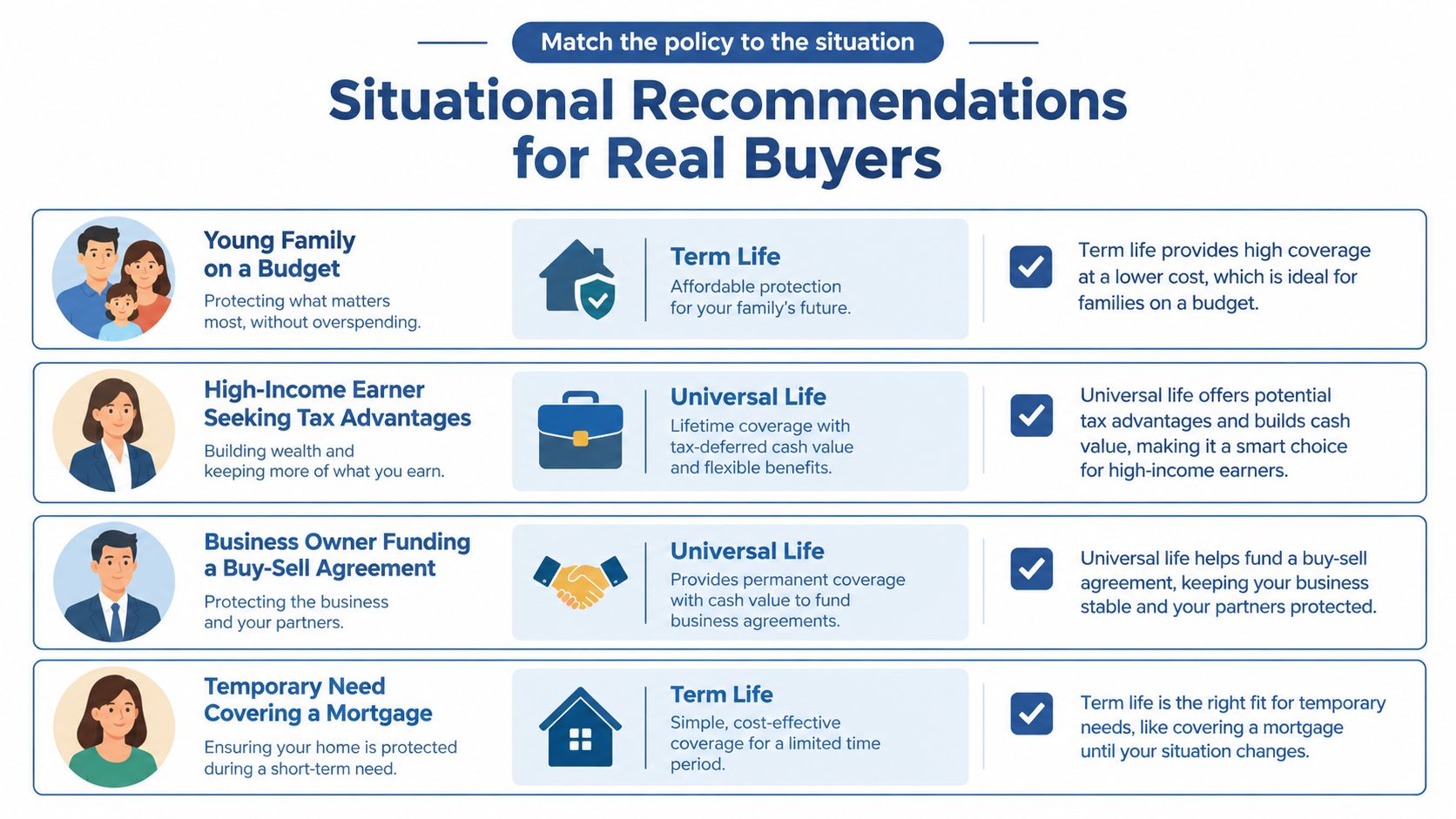
The right answer changes with the purpose of the insurance. Start with the event that would create the financial loss, then match the policy duration to that event.
Working families with temporary obligations
A working-class family with a mortgage, dependent children, and limited room in the monthly budget should usually start with term. Choose a period that matches the years when income replacement matters most, rather than buying permanent coverage just because it sounds more complete. Term policies are commonly offered in 10-, 15-, 20-, 25-, or 30-year terms, and they generally have no cash value, as explained by AAA's comparison of term and permanent life insurance.
A 20-year term may fit a family whose major financial exposure is expected to decline as children grow and a mortgage is paid down. A longer term may be more appropriate if the primary earner starts a family later or expects dependents to rely on income for longer. The policy should follow the obligation, not an arbitrary product preference.
Self-employed professionals and contractors
A 1099 worker should treat life insurance as part of the personal safety net that an employer would otherwise help provide. Term is often the better foundation when the priority is replacing business income and protecting household cash flow. Add a conversion review to the policy calendar, especially if future health or income is uncertain.
Universal life becomes more relevant when the buyer has a permanent need, wants flexible premium funding within policy rules, and can monitor the policy over time. It isn't a substitute for emergency reserves or disciplined retirement saving. If revenue varies, ask the advisor to show how reduced funding affects cash value and coverage rather than accepting a single optimistic illustration.
Early retirees and family protection
An early retiree may no longer need the same income-replacement amount used during peak working years. But retirement doesn't automatically eliminate every insurance need. A younger spouse, a lifelong dependent, final expenses, or a planned inheritance can justify permanent protection.
Parents buying coverage for adult children should define the purpose before choosing the policy. If the child has a temporary debt or a limited period of financial dependence, term may be appropriate. If the child has a lifelong dependency or a need that will continue regardless of employment, permanent coverage deserves a serious review.
For Medicare clients referring coverage for a younger spouse, focus on the surviving spouse's actual financial gap. A short-term need may call for term. A permanent dependency or estate objective may justify universal life, but the funding plan must be realistic after retirement income replaces employment income.
Tax Implications and Estate Planning Benefits
Life insurance can serve two separate purposes. Term is primarily a straightforward death-benefit tool for income replacement. Universal life adds a cash-value structure that may support broader planning, but its tax and estate benefits only work if the policy remains properly funded and the owner follows the contract.
Universal life permits flexible premium funding and, in many designs, adjustable death benefits. Those features can help a business owner or high-income professional align coverage with changing cash flow and long-term estate objectives. They also create obligations. Policy rules and internal charges limit the flexibility, and the cost of insurance generally rises with age, as described in Investopedia's universal life overview.
Estate ownership deserves careful attention
Permanent insurance can provide liquidity for beneficiaries or support a planned transfer of wealth. Ownership, beneficiary designations, policy control, and trust arrangements all affect the result. Before placing a policy in a trust or transferring ownership, review the legal structure with qualified professionals and consult this trust property compliance guide for useful background on trust property and corpus.
Term can still fit an estate plan when the obligation is temporary, such as replacing income during working years or protecting a debt. It does not create the same cash-value component or lifelong policy framework. Universal life may offer more planning tools, but more tools also mean more ways to make an expensive mistake.
Don't buy universal life solely because someone calls it tax-advantaged. Ask what happens if premiums are reduced, cash is withdrawn, or a policy loan remains outstanding. Then coordinate the insurance with your retirement accounts, business succession documents, and beneficiary designations. This guide to using life insurance for estate planning can help you prepare better questions for your advisor.
Final Decision Framework and Next Steps
Use this decision process before applying:
- List the financial loss. Include household income, debts, housing costs, business obligations, and dependent care.
- Separate temporary from permanent needs. Mark which obligations should decline and which may remain for life.
- Test your budget. Decide whether you can sustain a higher universal life premium during an uneven business year or retirement.
- Review your health outlook. If future insurability concerns you, investigate conversion rights before buying term and record the deadline.
- Demand policy-level detail. For universal life, review charges, funding assumptions, cash-value projections, death-benefit options, and lapse scenarios.
- Compare personalized quotes. Generic estimates can't account for your health history, occupation, lifestyle, coverage amount, or policy design.
My recommendation is direct. Choose term when your main job is protecting income during a defined period and your budget needs efficiency. Choose universal life only when the need is genuinely permanent and you're prepared to manage the policy, fund it adequately, and review it as your circumstances change.
If you already own term insurance, don't wait for the expiration notice. Pull out the policy, confirm its conversion and renewal provisions, and schedule a review while you still have choices.
My Policy Quote offers a way to compare life insurance options, including term and universal life, through a licensed broker process. Review your current protection, request a personalized comparison, and visit My Policy Quote to take the next step.