

You're probably doing what a lot of people do now. You open a few tabs, type in your ZIP code, start an online quote, and hope the cheapest number on the screen is the one you'll pay.
That works sometimes. It also goes sideways all the time.
I've seen it with self-employed couples who need coverage before the next specialist visit, with a 62-year-old who retired early and suddenly has to buy insurance without employer help, and with parents trying to help an adult child compare options without overpaying. The problem usually isn't that they failed to get a quote. The problem is that they got a fast quote that wasn't comparable, wasn't fully explained, or left out terms that changed the cost later.
A good insurance quote online should do more than spit out a low number. It should help you understand what you're buying, what you'd owe if something happens, and what details could change the final price before you enroll.
Why Getting an Accurate Insurance Quote Online Matters Now
At 8:30 at night, after the kids are finally settled, a self-employed couple sits down to compare insurance quotes online. One option shows a lower monthly number, so it looks like the easy choice. Ten minutes later they notice the deductible is thousands higher, paying month to month costs extra, and canceling early could trigger a fee. The cheapest-looking quote is no longer the lowest-cost choice.
That happens a lot, especially for people buying coverage without an employer doing part of the sorting for them. If you are self-employed, retired before Medicare, or covering a family on a tight monthly budget, quote accuracy matters because small details can change what you spend.
Recent U.S. industry data found that shoppers now receive an average of 3.5 quotes per shopping trip, and nearly half of new auto policies were purchased digitally, up from 36% five years earlier, according to J.D. Power's U.S. Insurance Shopping Study. Older research has also found that online shopping can reduce the time and effort it takes to gather quotes compared with traditional agent-based shopping. Speed is useful. It just does not help much if the quote leaves out terms that raise your real cost later.
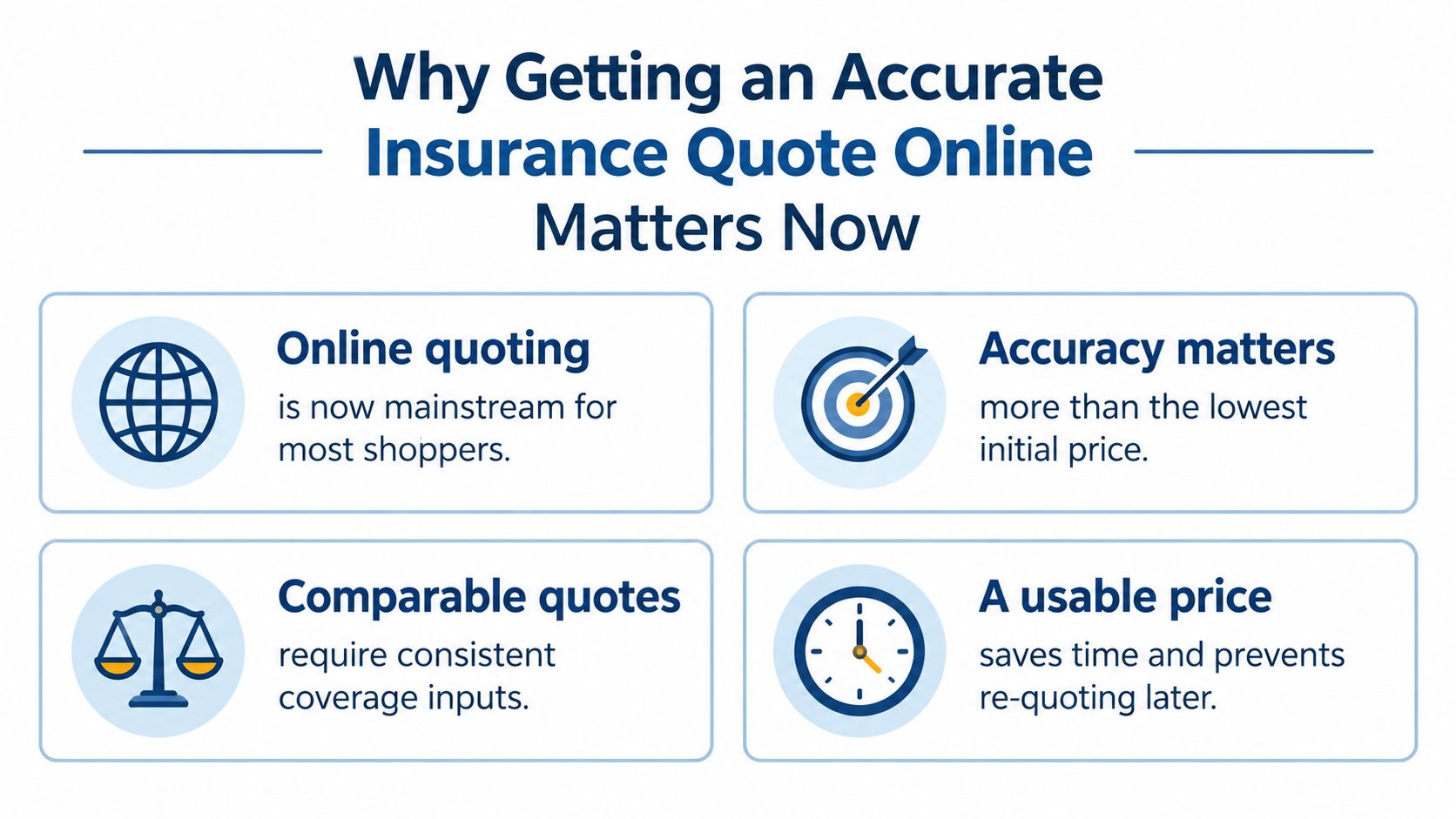
Cheap-looking isn't the same as affordable
Insurance works a lot like buying a plane ticket. The first number gets your attention. The final price depends on baggage fees, seat choices, and change rules.
Online quotes can work the same way. A low premium can hide a high deductible. A manageable monthly payment can include installment fees. A policy that seems flexible can have strict cancellation terms or limited coverage that shifts more risk back to you. For a 63-year-old bridging the gap to Medicare, or a freelancer with uneven monthly income, those trade-offs matter more than shaving a few dollars off the headline rate.
Practical rule: A useful insurance quote online still holds up after you check the deductible, payment fees, excess charges if they apply, and the cancellation terms.
What an accurate quote should tell you
A quote is only helpful if it lets you compare the full deal, not just the first number on the page.
Before you trust it, make sure you can answer these questions:
- What coverage am I pricing? Limits, deductibles, exclusions, and add-ons should match across quotes.
- What will this cost if I pay monthly instead of in full? Installment fees can change the math.
- What would I owe before coverage starts paying? A lower premium paired with a deductible you cannot comfortably handle is a budgeting problem waiting to happen.
- What happens if I cancel or need to change the policy? Fees and timing rules can affect the cost.
- What details could change the quote later? Household information, income, claims history, and plan selections often trigger revisions.
Accurate quotes save money in a less flashy way. They help you avoid buying a policy that looks good on screen but strains your cash flow when you use it, change it, or need to keep it for the rest of the year.
What to Gather Before You Request an Insurance Quote Online
Most bad quotes start before the first screen loads. People guess. They round. They use last year's paperwork. Then the quote changes later and they think the tool was broken.
A little prep solves most of that.
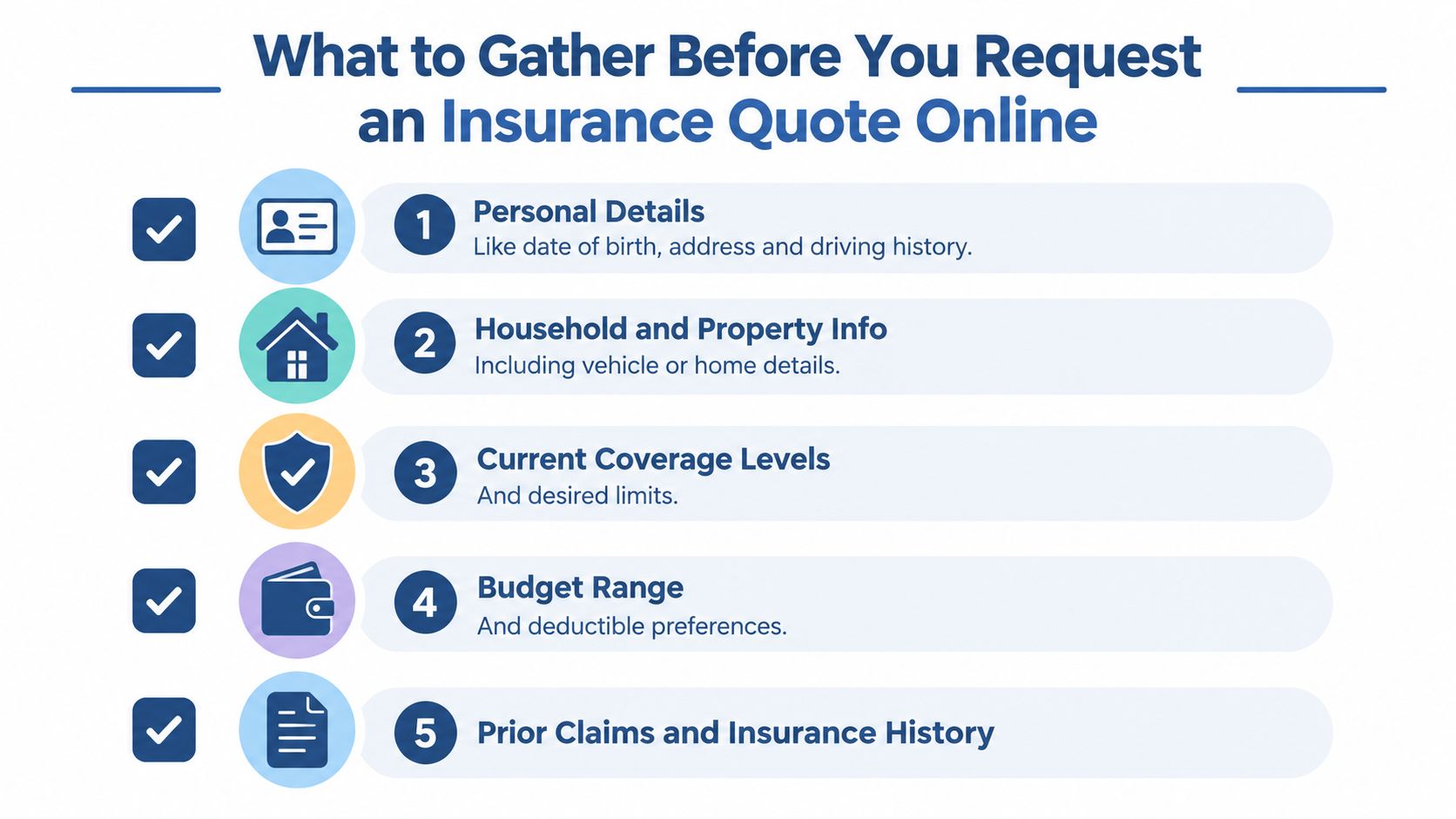
Your quote prep checklist
Keep one note, folder, or PDF packet ready before you start.
- Personal details: Full legal names, dates of birth, home address, and contact details for everyone who needs to be included.
- Household details: Who lives with you, who needs coverage, and whether anyone should be listed on an application or policy.
- Income information: Especially important for self-employed households, part-time workers, or anyone with changing monthly income.
- Current insurance information: Existing carrier, current coverage levels, renewal date, and any recent notices.
- Claims or incident history: Prior claims, gaps in coverage, tickets, or other issues that might affect pricing.
- Coverage preferences: Deductible range you can realistically afford, preferred payment style, and any must-have benefits or protections.
- Property or vehicle details when relevant: Exact year, make, model, address details, or other specifics the quote tool will ask for.
If your paperwork is scattered, a simple way to organize forms before quoting is to use PDFKing's fillable form guide. It's useful when you want one clean document where household members can fill in their parts without retyping everything from scratch.
Three real-world prep examples
A 1099 contractor often gets tripped up on income. If your income changes month to month, don't just type what you made last week. Use your best current estimate based on what the application is asking for, and have backup records nearby.
A 62-year-old early retiree usually needs more than a premium estimate. They need medication lists, doctor preferences, and a realistic monthly budget. A cheap quote that doesn't fit existing care needs isn't really cheap.
A family with kids needs to slow down on household questions. Who is applying, who needs coverage, and whether another parent has access to other insurance can all affect quote accuracy.
A small habit that prevents rework
Create a one-page “quote sheet” before you begin. Put your names, dates of birth, address, income estimate, current coverage, and deductible target on it. Then use that same sheet for every platform so your answers stay consistent.
For a broader document checklist, this guide on what documents you need to get insurance is a practical reference.
If you have to stop halfway through an application, save your answers somewhere you control. Memory is usually less accurate than people think.
How to Use Online Quote Tools Without Getting Misleading Prices
Once you're inside the quote tool, the biggest mistake is treating every field like it's harmless. It isn't. Small entries can shape the price, the eligibility result, or whether the quote has to be corrected later.
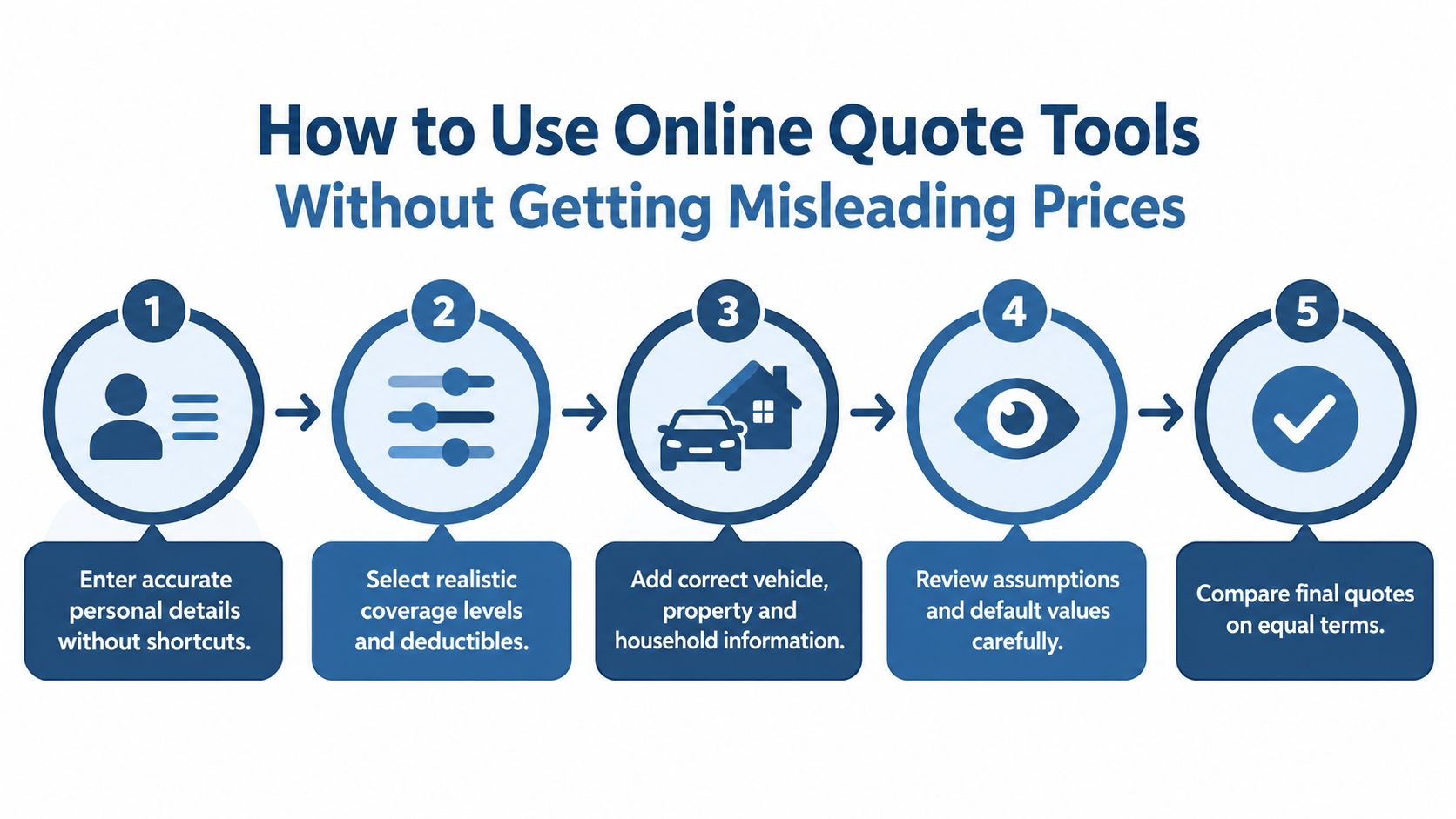
Start with exact details, not fast guesses
The first screens usually feel easy. Name, address, birth date, household information. Rushed shoppers often create problems that follow them through the whole quote.
Type what's true, not what's close enough. If the address format matters, use the exact residence details. If the question asks about who is in the household or who needs coverage, answer carefully. Don't leave a gray area just to keep moving.
Watch the defaults
Most online systems want to keep you moving. That means they may preselect coverage levels, payment methods, or options that aren't ideal for your situation.
Check these items slowly:
- Deductible selection: A higher deductible can make a quote look better on screen, but it raises what you may need to pay before coverage helps.
- Monthly versus other payment setups: The monthly option may feel easier for cash flow, but you need to see whether it changes the total amount you'll pay.
- Optional features and riders: Some are useful. Some just make side-by-side comparison harder if you don't add them consistently.
- Auto-filled assumptions: If a field preloads an answer, make sure it matches your life, not the system's guess.
Here's a practical walkthrough if you want to see a straightforward quote process before diving in: how to do a quote.
After you've seen the basic flow, this short video can help you think more clearly about online quote steps before you submit:
Save before you submit when the answers get fuzzy
If you hit a question about income, household status, prior coverage, or a term you don't fully understand, stop and save if the platform allows it. Don't force a guess to get to the next page.
That matters because form friction and follow-up support can change real outcomes. In a U.S. health insurance marketplace field experiment, a basic reminder increased take-up by 11%, a reminder with subsidy or penalty information increased take-up by 19%, and the full intervention set increased enrollment by 16% over control, according to this NBER working paper on marketplace enrollment nudges. A broader evidence review also found that reducing compliance burden outperformed information-only approaches by about 4x, with measurable lift from personalized outreach in the studies summarized by the GSA evidence review on ACA enrollment.
That's a strong reminder that if you stall, the answer isn't always “start over alone.” Sometimes the right move is brief human help, cleaner forms, or a saved draft.
Use quote tools as tools, not verdicts
You can use a direct carrier site, a marketplace, or a quote-request form. For example, My Policy Quote offers a quote request form that lets people submit their information for personalized insurance quotes. That can be useful when you'd rather not re-enter the same basics repeatedly across separate tools.
A quote tool is good at calculating based on inputs. It is not always good at noticing when your inputs don't reflect your real situation.
How to Compare and Interpret Insurance Quotes Like a Pro
This is the point where many shoppers lose money. They collect several quotes, line up the monthly premiums, and choose the smallest one. That's comparison by headline, not by value.
A better method is to compare each quote on matching terms.
Use an apples-to-apples checklist
| Feature to Compare | What to Check Across Each Quote |
|---|---|
| Premium | Check whether the price shown is monthly, total, or tied to a specific payment method |
| Deductible | Confirm the deductible is the same or very close across each quote |
| Coverage limits | Make sure protection levels are aligned, not stripped down in one quote |
| Out-of-pocket exposure | Review what you could owe when you actually use the policy |
| Provider access or fit | For health-related coverage, confirm doctors, prescriptions, and practical access needs |
| Monthly payment terms | See whether paying monthly changes the real total cost |
| Cancellation terms | Check what happens if you need to cancel early or change plans |
| Add-ons and riders | Verify whether optional features are included, excluded, or priced separately |
| Household assumptions | Make sure the same people and same facts were used each time |
What makes one quote non-comparable
A quote isn't really comparable if one of these things changes:
- The deductible changed
- The coverage level dropped
- A useful add-on disappeared
- The payment structure changed
- The household information wasn't entered the same way
That's common in online quoting. One reason is that quote tasks can vary a lot in digital insurance experiences. J.D. Power has found that quote-related tasks are among the biggest sources of variability in digital experiences, as discussed in reporting on quote clarity and hidden policy costs in Insurance Business coverage of Defaqto's findings.
Bottom line: The lowest premium wins only if the quotes are built on the same assumptions and the policy still works for your real-life risks.
Ask for a revised quote when needed
Don't be shy about saying, “Please rerun this quote with the same deductible and same coverage as the other one.” That's not being difficult. That's doing the comparison correctly.
If you want another practical framework for side-by-side review, this expert guide to comparing quotes is a useful supplement, especially for checking whether policy details match. You can also use this internal resource on how to compare insurance rates when you want a simple review process you can repeat.
Common Pitfalls That Make Online Insurance Quotes Inaccurate
A self-employed couple can enter the same basic information into two quote tools on the same night and still end up with prices that are not comparable. One quote may look lower because it shifts more cost to a higher deductible, adds a fee for paying month by month, or makes cancellation more expensive later. The screen looks simple. The policy terms are doing more work than many shoppers realize.
That is why quote accuracy matters so much for households with tight margins. If one surprise bill would force you to use a credit card, borrow from savings, or put off care, a quote is only useful when it shows what you would owe in the situations that are most likely to strain your budget.
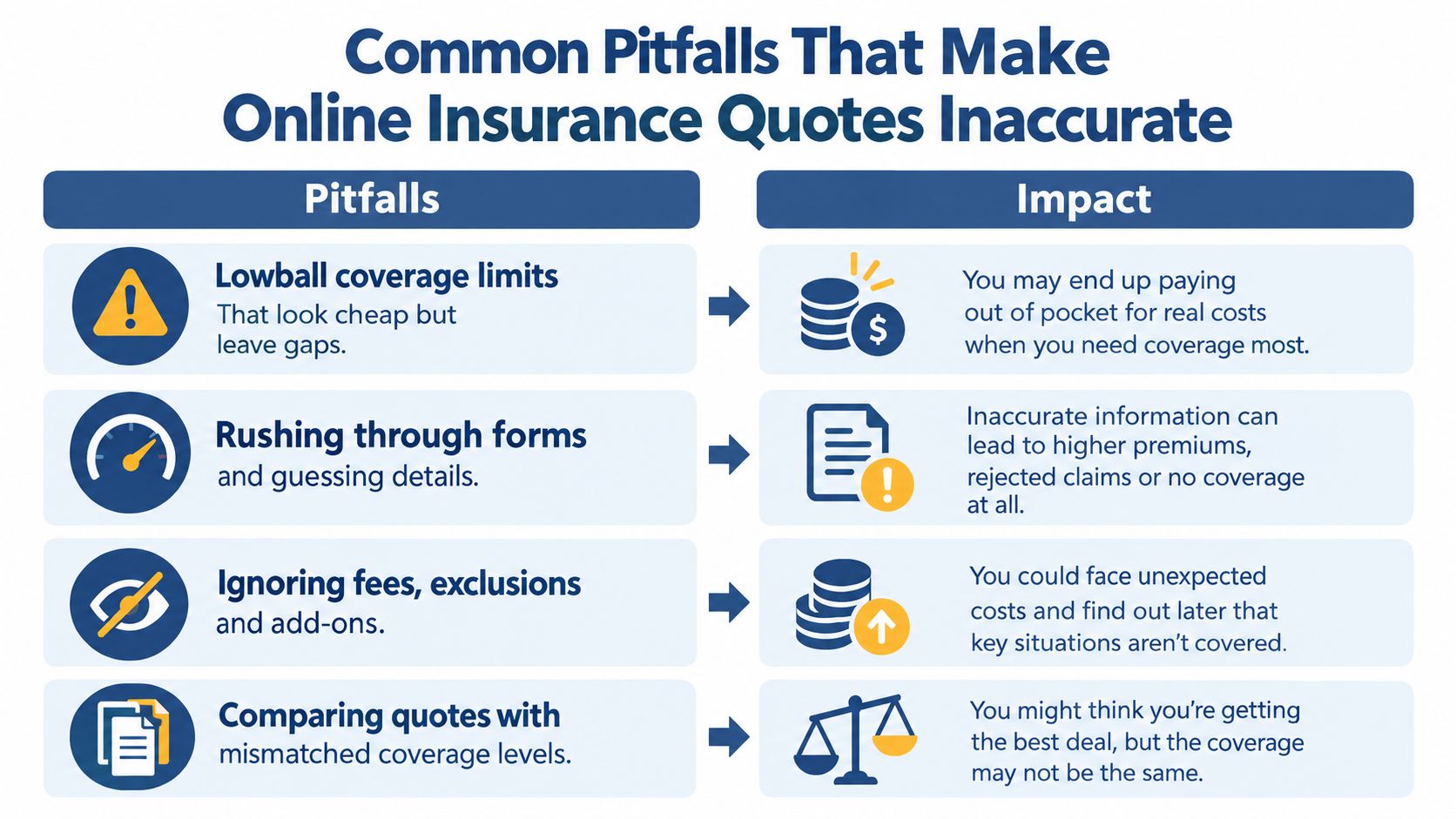
Four places shoppers get tripped up
- Deductibles and excesses: A lower premium often comes from pushing more of the first-dollar risk back onto you. If the deductible or excess is high enough that you would hesitate to use the policy, the quote may be cheaper on paper but weaker in practice.
- Monthly payment costs: Paying monthly can help with cash flow, especially for independent workers and adults bridging the years before Medicare. But monthly billing can carry installment fees or finance charges, so check the total cost, not just the monthly amount.
- Cancellation terms: Some shoppers focus on getting covered now and miss what happens if income changes, a move forces a plan switch, or a policy no longer fits. A low starting premium can lose its appeal if leaving early costs more than expected.
- Add-ons that sound useful: Optional coverage can solve a real problem, or just pad the price. The key question is not whether an add-on sounds smart. It is whether it matches a risk you have.
Add-ons often create the foggiest quotes
GAP insurance is a good example. It works like filling the gap between what a car is worth and what you still owe after a total loss. That can matter for a financed vehicle, but it does not fit every driver. As noted in Go.Compare's GAP insurance guide, prices can vary widely for similar cover.
That spread matters because an add-on can make one quote look much less competitive without improving the protection you need. Before accepting it, ask a plain question. If this problem happened to me, would this extra coverage solve a risk I face?
A short do-not-do list
- Don't treat a lower premium as a better deal until you check the deductible or excess.
- Don't assume monthly billing is just a payment preference.
- Don't skip the cancellation terms because you expect to keep the policy all year.
- Don't accept add-ons during checkout without asking what problem they solve.
- Don't rush past unclear wording. Five extra minutes can prevent months of regret.
A good quote should hold up after you read the fine print, not just while the big price is on the screen.
Next Steps After Your Insurance Quote Online and When to Buy
Once you have a quote that looks promising, stop treating the process like a race. Your next move should be verification, not panic-shopping.
A solid buying decision usually comes after you can answer three plain questions. Does this quote match the coverage you intended to request? Can your budget handle both the premium and the likely out-of-pocket exposure? If you needed to use the policy soon, would the terms still feel reasonable?
Signs you're ready to buy
You're usually in good shape to move forward when:
- The quote assumptions are confirmed: Names, household details, income, and coverage choices are accurate.
- The trade-offs are acceptable: You know what the deductible, payment terms, and cancellation rules mean for your budget.
- The fit is practical: Your doctors, prescriptions, household needs, or property concerns line up with the policy.
- You've stopped finding meaningful differences: More shopping is only worth it if the next quote is likely to be different, not just dressed up differently.
Good questions to ask before enrollment
Use these questions with an agent, advisor, or support rep:
- If anything in my application is verified later, what is most likely to change?
- Are these payment terms the same total cost I saw in the quote?
- What happens if I need to cancel or change coverage early?
- Does this option still make sense for my current doctors, prescriptions, or household situation?
If you're moving toward health coverage, this guide on how to apply for health insurance can help you turn a good quote into a cleaner application.
Save a copy of every quote you seriously consider. Screenshots, PDFs, and notes about assumptions can save you a lot of confusion later.
For parents helping adult kids, advisors helping clients, or Medicare households helping a younger spouse bridge a coverage gap, a brief second review is worth it. Not because online tools are bad, but because real life is more detailed than a headline premium.
If you want help turning quote results into something you can compare, My Policy Quote offers a way to request personalized insurance quotes without relying only on the first number a tool shows you. It's a practical next step when you want to check coverage details, compare terms more carefully, and move forward with fewer surprises.