
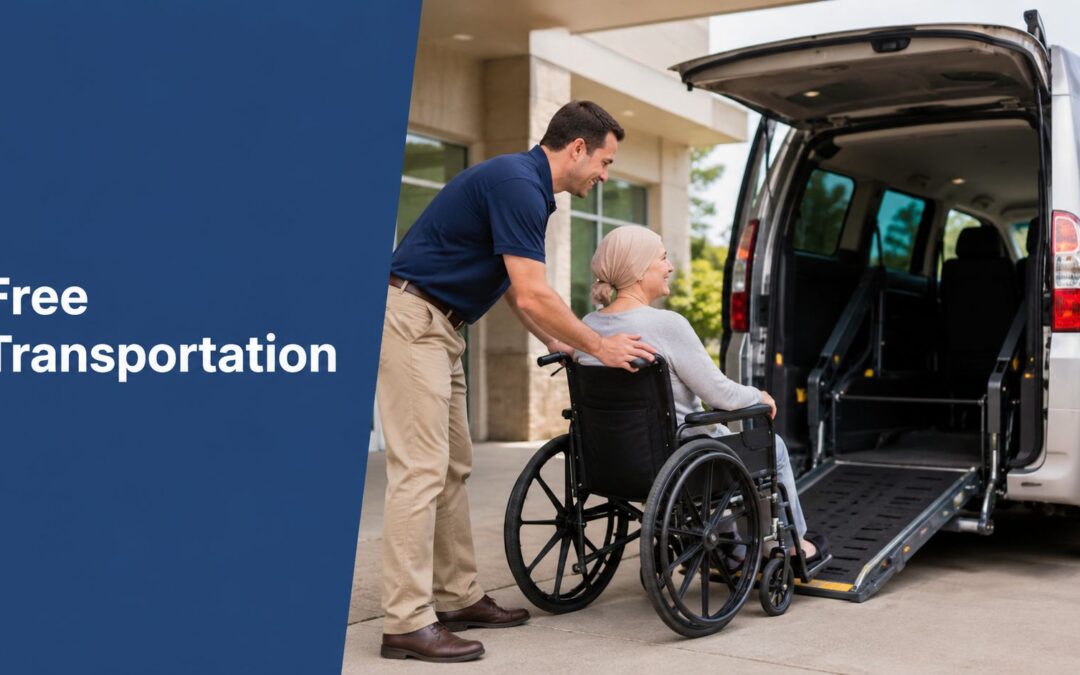
You can have insurance, a treatment plan, and a worried family, and still miss chemotherapy because nobody can get you there. That's the part many don't understand until they're already stuck, waiting on a relative, calling a clinic to reschedule, or trying to piece together a ride at the last minute. Free transportation for cancer patients exists because cancer care falls apart fast when travel breaks down.
The hard truth is that getting help isn't always simple. Some programs are free, some are restricted, and some technically exist on paper but are hard to use in real life. If you're insured but still can't access a ride, or if your treatment center is far away and local options don't fit, you need a plan that matches the way these programs work.
Why Transportation Barriers Derail Cancer Treatment
A patient can do everything right and still get derailed by one missed ride. The appointment is scheduled, the oncology team is ready, the scan or infusion matters, and then the car falls through, the bus route does not line up, or the only family member who drives has to work. That is how treatment gets pushed back, not because the care is unavailable, but because the ride is not.
Transportation is not a side issue in oncology. It affects whether people show up at all, and it affects whether they finish what was prescribed. In a four-month cancer-center pilot, adding a transportation hub reduced overall no-shows by 48%, from 6.1% to 3.2%, and the participating patients' no-show rate stayed under 1% (ACCC implementation guidance). The same ACCC implementation guidance also summarizes a matched cohort study of hospital-provided rideshare for radiation therapy, where completion rates were 96% versus 81% for non-rideshare users, and 98% versus 78% in curative-intent treatment. The message is simple. Once transportation gets organized around treatment, more patients make it through care.
What this looks like in real life
The families I have seen struggle most are not always the ones with no insurance. They are the ones who assumed their coverage would make the ride problem disappear, then found out they still needed prior approval, a specific provider network, or a narrow appointment type to qualify. That is the friction point no one warns people about, especially when a patient is insured but still cannot get a ride that fits the rules.
Free ride programs, voucher systems, and coordinated transport services matter because they close the gap between having a plan and being able to use it. If you want a practical example of how nonprofits organize help around cancer care, the specific nonprofit details on page from Alignmint is a useful model for how local support gets documented and routed. The point is not the page itself. The point is that transportation help works best when it is tied to a real care workflow, not left as an afterthought.
Long-distance and air transport are a different tier altogether. Local rides, vouchers, and volunteer drivers can get someone to infusion or radiation, but they will not solve a cross-state treatment plan or a referral to a distant specialty center. Once the trip gets bigger, eligibility gets tighter, scheduling gets slower, and the first call should go to the program that matches the distance and the medical need, not the one that is easiest to find.
Practical rule: if the next treatment matters more than the ride you are arranging today, ask for help now, not tomorrow.
Types of Free and Low-Cost Transportation Programs
A patient can have insurance and still be stuck without a ride. That usually happens because the benefit only works for a narrow set of trips, the clinic has to certify the need first, or the program only covers one type of transport. The right program depends on distance, medical urgency, and how much lead time you have before the appointment.
Road To Recovery from the American Cancer Society is one of the most recognizable volunteer-driver models. It matches cancer patients with drivers at no charge, and the program has been in place for decades (ACS Road To Recovery overview). Many cancer centers also use ride vouchers or direct ride coordination. According to a review of cancer center resources, a National Cancer Network survey found that 83% of centers called rides for patients, and 75% provided transportation vouchers for taxi or public transit use (MedicalXpress report).
Transportation Program Types at a Glance
| Program Type | Eligibility | Coverage Area | Typical Wait Time |
|---|---|---|---|
| Volunteer driver programs | Cancer diagnosis, treatment-related trip, usually no safe ride option | Local or regional, depends on volunteers | Often needs advance scheduling |
| Hospital-based programs | Patient screened by clinic or social work team | Usually tied to a specific cancer center or health system | Varies by internal capacity |
| Medicaid non-emergency medical transportation | Medicaid enrollment and approved medical trip | State-based, rules vary by plan and geography | Often requires advance booking and authorization |
| Voucher or rideshare partnerships | Clinic eligibility rules, insurance status, or financial need | Usually local metro coverage | Can be faster when rides are already contracted |
Best fit matters: if you need recurring local treatment, a hospital-linked or Medicaid-based ride system is usually more reliable than a one-off volunteer request.
Hospital programs usually work best for patients already in care because the social worker can see the schedule and coordinate around it. A 2024 report on a major academic cancer center described a transportation service that had run for five years, provided free rides to hundreds of cancer patients, and later expanded to screening visits such as colonoscopies and mammograms (MedicalXpress report). That is the kind of support that holds up under real treatment schedules, because it is built into the clinic workflow instead of bolted on at the last minute.
Insurance-based help can still be worth pursuing, but the rules are strict. Medicaid non-emergency medical transportation can cover medically necessary trips when the plan approves them, and that can save a patient who has no other ride. Medicare and Medicaid both have limits, though, and insured patients often still end up depending on nonprofit rides, clinic vouchers, or family backup.
If you are trying to stretch beyond local rides, use the program that matches the trip, not the one with the easiest brochure. Long-distance travel usually calls for a different set of resources than a short hop to infusion, and if you need help sorting caregiving, errands, and transportation at home, the get non-medical home care support option can help families coordinate the pieces that keep treatment on track.
How to Apply for Transportation Assistance
Start before the appointment gets close. That sounds obvious, but too many people wait until the day before infusion or radiation, then act surprised when nobody can move fast enough. Transportation programs are usually designed for planning, not emergencies, and that means your paperwork needs to be ready.
Gather the right documents first
Most programs move faster when you already have the basics in one folder. You'll usually want proof of diagnosis, your treatment schedule, insurance information, and any financial documents the program asks for. A doctor's letter or clinic verification often helps too, especially if the ride is tied to a specific treatment.
Keep one clean file: the fewer times a navigator has to chase missing paperwork, the faster your ride gets approved.
The intake process is often built around transportation insecurity screening. In practice, that means your clinic may ask about whether you have a car, whether you can drive, whether you rely on family, and whether the ride problem is likely to repeat. Patient navigation matters here because navigators spend real time on transportation issues, and the evidence base shows they connect patients to local resources while reducing administrative friction (transportation hub implementation guidance).

What to do when you call
Ask for the social worker, patient navigator, or transportation coordinator, not just the front desk. Then be direct. Say you need help getting to cancer treatment, you want the least expensive option that fits your situation, and you need to know how far in advance rides must be booked. If your clinic uses Medicaid or a brokered ride system, ask whether they handle the scheduling for you or whether you must call the transportation vendor yourself.
Use this internal resource if you're also sorting out basic medical access questions, how to get care when you don't have insurance. It won't solve the ride problem by itself, but it can help you understand how clinics think about access when coverage is messy.
Common mistakes are easy to avoid. Don't submit partial documents and hope someone will “work with it.” Don't assume your appointment automatically means your ride is approved. And don't leave the first request until the day before treatment, because that turns a scheduling problem into a denial problem.
Navigating Insurance and Eligibility Roadblocks
This is the part most patient handouts skip, and it's the part that traps people. You may be insured and still not be able to use the transportation benefit. That's not rare. It happens because transportation is often tied to plan rules, prior authorization, trip purpose, geography, and approved providers, not just to the fact that you have coverage.
Medicare and Medicaid transportation exists in some form, but it isn't universal in practice. If the ride is for a trip your plan doesn't classify as covered, or if the provider isn't in the network, the answer can be no even when you technically have transportation benefits. That's why the answer to “is it free?” is often sometimes, but only if you fit a narrow set of criteria.
Questions that cut through the fog
Ask your insurer these questions in plain language:
- Is transportation covered for this appointment type? Don't let anyone use vague language about “medical necessity” without defining it.
- Do I need prior authorization? If yes, ask who gets it and how long it takes.
- Which transportation vendors are in network? A benefit you can't book is not a usable benefit.
- Can I get recurring rides? This matters for chemotherapy and radiation, where repeated trips are the whole point.
- What happens if I'm denied? Ask for the denial reason in writing and ask how to appeal.
If the insurer makes you hunt for the answer, ask the oncology social worker to call with you. Two people on the line usually get a clearer response than one stressed patient calling alone.
The broader problem is that access depends on whether your plan, your geography, and your trip purpose line up. That's why nonprofit support still matters even when insurance is active. If you need help sorting out the money side of treatment more broadly, explore options for cancer financial support from Hirschfeld Oncology and compare it with what your plan pays for.
Use this internal guide when you're trying to understand eligibility rules on the insurance side, how to qualify for Medicaid. Medicaid can open the door to transportation benefits, but you still have to confirm the ride rules, not just the enrollment rules.
The honest answer is that many insured patients need a layered plan. Use insurance first if it works. If it doesn't, use the clinic, the nonprofit, the voucher system, or the volunteer program that best fits your schedule. Don't wait for one source to magically solve all of it.
Long-Distance and Air Transport Options
When treatment pulls you hundreds of miles from home, local ride programs stop being enough. That's when the decision changes from “who can get me across town?” to “what is the safest, fastest way to get me to a specialized center and back?” The answer might be a bus pass, a train ticket, a gas card, a volunteer flight, or a corporate jet seat, depending on the patient and the trip.
The big mistake is treating all free travel the same. It isn't. Ground programs work best when you can manage a long but practical drive or ride, while air programs are reserved for patients who need to get to distant treatment and can safely travel by plane. A neutral cancer-resource page notes that programs can include bus, train, gas cards, volunteer pilots, corporate aircraft, and commercial flight support, but the documentation and eligibility differ by program (cancer travel assistance overview).
How to choose the right model
If the trip is regional and you can travel upright, a ground solution is usually the first thing to try. If the trip crosses state lines or the local center can't do the treatment, air support may be the better fit. If you need medical equipment, a companion, or a highly controlled schedule, ask early, because flight programs can be stricter about mobility and timing than local ride systems.
Decision rule: use the least complicated option that still gets you to treatment safely. Don't reach for air support if a coordinated ground ride is enough.
Volunteer-driver programs often need advance requests and have limited driver availability. Air programs are even more schedule-sensitive, because they depend on donated capacity and route matching. That's why patients who wait until the last minute often end up with no usable option, even if the program exists.
Use this internal resource if you're comparing plan options while you sort out travel coverage, what a Medicare Supplement plan is. It won't book a ride, but it can help you understand what parts of your medical burden are being absorbed elsewhere.
The practical takeaway is simple. If you need long-distance travel, ask for help early, ask whether the ride can be paired with lodging, and ask what documents the program wants before it will even review the request. That's how you avoid finding out too late that the best-fit option was available, but not on your timeline.

Scheduling Tips and Accessibility Considerations
Rides fall apart most often because timing was sloppy, not because the program failed. The pickup was fine, but the appointment moved. The vehicle was available, but nobody said a wheelchair lift was needed. The caregiver assumed they could ride along, then found out the program had a different policy.
Book early and confirm often. For recurring treatment, don't treat each visit as a fresh emergency. Set the schedule as soon as you have it, and then recheck it when the clinic changes the time. If you're dealing with a program that uses volunteer drivers or paratransit, build in extra room because these services often work on pickup windows, not exact doorstep timing.
Accessibility details you should say out loud
Tell the coordinator if you use a wheelchair, walker, cane, oxygen, or anything else that affects the vehicle. If you need a companion, say that before the ride is assigned. If standing at the curb is hard after infusion or radiation, make that clear too. Dispatchers can't solve problems they don't know about.
If your treatment schedule shifts, call immediately. Don't assume the transport team will see the clinic change in time. When rides are booked through a tight local system, a late change can cancel the whole chain and force you to start over.
The most useful operational habit is to create a backup. Keep the ride vendor, the clinic transportation office, and one backup contact in the same note on your phone. If one service fails, you shouldn't be digging through old voicemails while already late.

Your Action Plan for Securing Rides to Treatment
Start with the cancer center social worker or patient navigator. That person is closest to your treatment schedule and usually knows which local ride programs are available, not just listed somewhere online. If you have Medicaid or a Medicare Advantage plan, call the plan next and ask whether transportation is covered for your specific appointment.
Then move outward. Check the local nonprofit options, ask about voucher programs, and get on the waitlist early if a volunteer-driver service is involved. For long-distance treatment, ask about ground travel, lodging coordination, and air options at the same time, because those pieces often have to be matched together.
A simple order that works
- Call the clinic social worker.
- Ask your insurer what transportation benefit is usable now.
- Apply for the local nonprofit or voucher option.
- Gather your documents before the next appointment.
- Follow up until the ride is confirmed.
Use this internal guide if you're trying to keep the rest of your coverage organized while you do it, how to find affordable health insurance. Transportation is only one piece of the burden, and many families need help with the whole picture.

If you're sorting through insurance, treatment logistics, and ride options at the same time, visit My Policy Quote for straightforward insurance guidance that helps you make the rest of the plan work. Bring your transportation question, your coverage question, and your treatment timeline, and use that information to move faster instead of guessing.