
A medical bill arrived before the claim explanation. What now?
A medical invoice and an insurer’s explanation can arrive on different days. That mismatch is a reason to check the claim, not proof that coverage failed. Before deciding what the bill means, line up the patient, service date, provider and claim information. A short conversation can establish which organization needs to answer the next question.
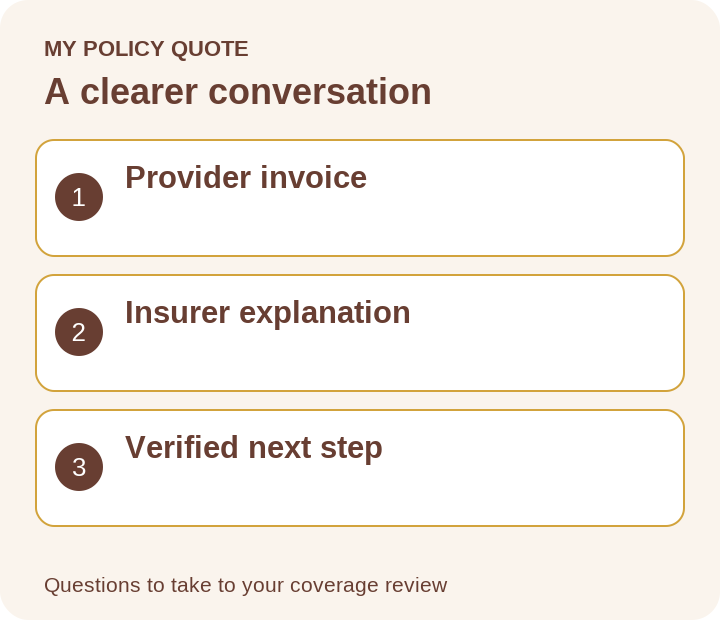
Identify what you received
A provider’s bill requests payment. An Explanation of Benefits describes how an insurer processed a claim and is generally not itself a bill. Read the document’s heading rather than judging by the amount printed in large type. If the insurer has not processed the service yet, the provider’s current balance may not reflect a final benefit determination.
That does not mean you should ignore an invoice or assume you owe nothing. Ask the provider whether the claim was submitted, which insurer received it and whether the account is awaiting insurance processing. Confirm that the correct member information and service date were used. Keep any payment deadline in view while the organizations clarify the account.
Ask about the status before arguing the result
Call the insurer through the verified member contact and ask whether the claim is received, pending, processed or denied. If something is missing, find out which party must supply it. A provider coding question, a membership issue and an adverse coverage decision need different responses. Record the reference number and the next step rather than accepting a general instruction to call someone else.
If the insurer has processed the claim, compare its explanation with the invoice. Check adjustments, insurer payments and the amount described as your responsibility. Ask about differences instead of assuming the largest number is final. If there is a denial, read the actual reason and the applicable review or appeal instructions. The governing plan and its procedures matter.
Keep the paperwork connected
Store the invoice, benefit explanation and relevant correspondence together. If a corrected claim is submitted, ask how you will know when it has been reprocessed. Do not send sensitive records to an unfamiliar address just because a message refers to a bill. Verify the organization and use its appropriate secure route.
These habits can make a current billing issue easier to follow. They also reveal what matters in a future plan review: clear claims contacts, understandable benefits and a product structure you recognize. A limited-benefit policy may not pay a bill the way comprehensive coverage does. My Policy Quote can help explain that distinction while the provider and insurer handle the actual account and claim.
Related reading: Reading a Summary of Benefits and Coverage.
Ask a useful next question
Call (855) 469-1883 or request a coverage review if the way your current arrangement pays benefits is unclear. Your insurer and provider remain the sources for the actual claim and balance. Call My Policy Quote or send an inquiry.
Sources and further reading
- U.S. Department of Labor: Filing a health or disability claim
- Washington OIC: How health-insurance claims work
- CMS: Medical bill rights when using insurance
- CMS: How to read an explanation of benefits
Claire M. is an MPQ editorial pen name. Sources reviewed November 24, 2026. General education; actual policy terms, eligibility, location and applicable rules govern. This article provides no individual medical, tax or legal determination.