
A quiet year of claims is not the whole renewal decision
A year with very few claims can feel like proof that almost any health plan will do. It is useful information, but it describes the care you received during one period. It does not tell you whether you can keep a preferred doctor, what happens when you need a prescription, or how a different type of policy pays. Give that quiet year a second look before allowing it to make next year’s decision for you.
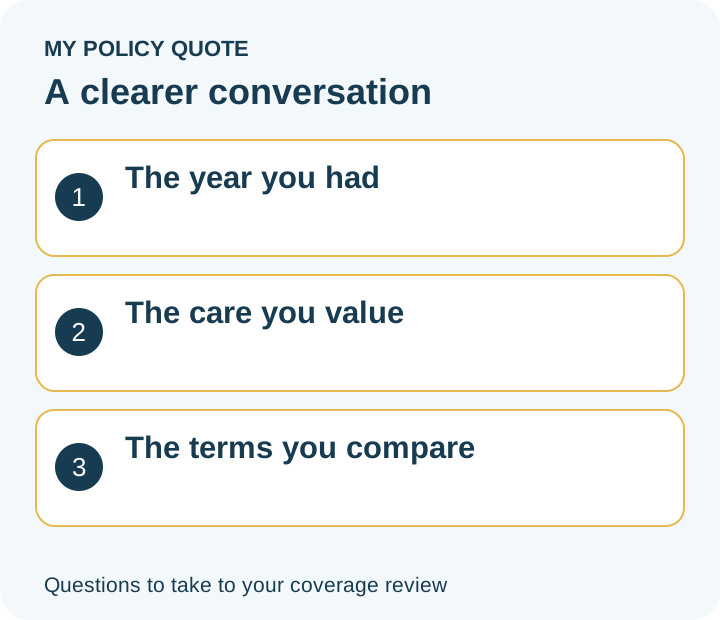
Notice what the claims record leaves out
Start with the appointments you actually had, then consider whether anything was postponed. A clean claims history might reflect good health, a busy schedule, care paid outside insurance or an unresolved question about cost. These are possibilities to discuss, not conclusions anyone should draw from an empty claim list. You do not need to predict a diagnosis to identify the services you would want to understand.
Ask yourself which doctor you would call first and which hospital or pharmacy you normally use. Check those details against the exact prospective plan. A familiar insurance-company name is not enough. The applicable network, benefit year and product can change the answer. An insurer and the provider’s office can help resolve the specific access question.
Compare the promise, not just the payment
A lower recurring premium can be attractive. Put it beside the plan’s explanation of covered services and your share of costs. The Summary of Benefits and Coverage can help with applicable comprehensive plans. A limited-benefit policy may instead pay specified amounts under a benefit schedule. Those arrangements answer different questions, even when both involve an insurance company.
For a fixed-indemnity option, ask what a covered event pays and what expenses remain your responsibility. Do not assume it pays every medical bill or includes the protections of ACA major medical coverage. For comprehensive coverage, check the deductible, relevant copayments and network rules rather than relying on a premium alone. The useful comparison concerns the actual documents offered to you.
Give renewal one practical next step
Choose one ordinary care situation, such as a visit to your usual clinician, and ask how each option would handle it. You do not need to invent a large future claim or turn a renewal conversation into a spreadsheet contest. A clear answer about one relevant service often reveals which questions still need work.
Keep the current policy and a proposed replacement separate until the new arrangement’s acceptance, effective date and any enrollment requirements are confirmed. A quiet year gives you breathing room to compare thoughtfully. It does not require you to keep the same plan or to change it. If you want help organizing the comparison, tell My Policy Quote which part of your current coverage you would most like to understand.
Related reading: Reading a Summary of Benefits and Coverage.
Ask a useful next question
Call (855) 469-1883 or request a review. Ask us to compare how your current plan and an available alternative handle the care you actually use. Call My Policy Quote or send an inquiry.
Sources and further reading
- HealthCare.gov: Getting regular medical care
- HealthCare.gov: Summary of Benefits and Coverage
- Washington OIC: ACA versus non-ACA coverage options
Natalie S. is an MPQ editorial pen name. Sources reviewed November 13, 2026. General education; actual policy terms, eligibility, location and applicable rules govern. This article provides no individual medical, tax or legal determination.