
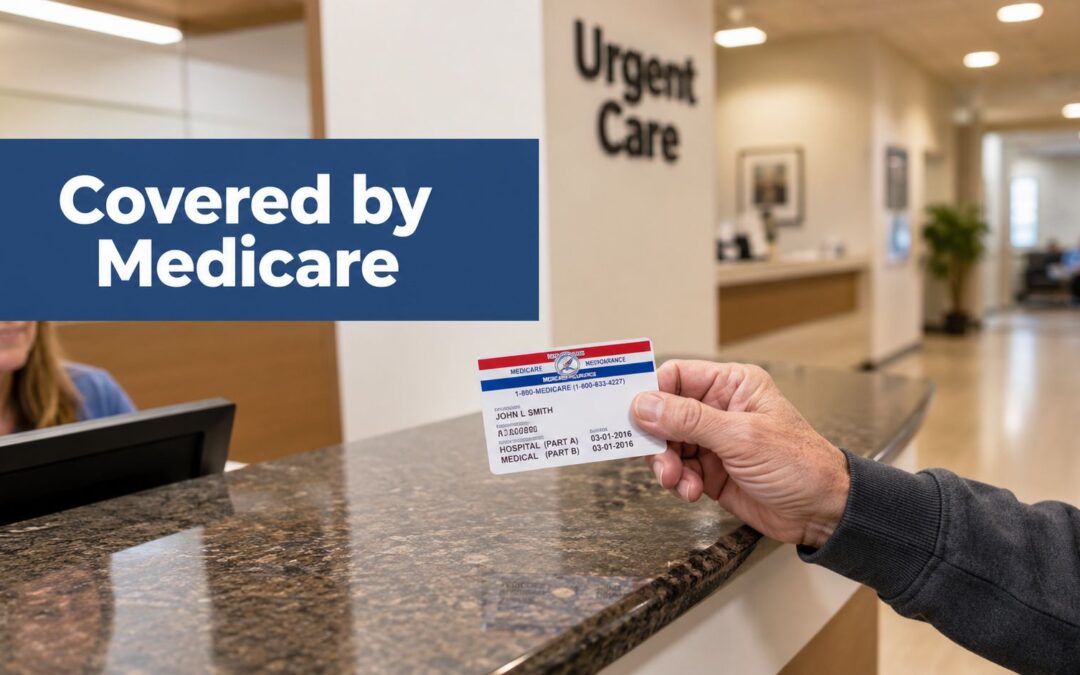
Yes, Medicare covers medically necessary urgent care through Part B. In 2026, the Part B deductible is $283, then you typically pay 20% of the Medicare-approved amount under Original Medicare, or a flat copay if you're in Medicare Advantage.
That answer matters when you're sitting at home with a sprained wrist, a fever that won't quit, or a cut that needs attention and you're trying to decide whether to drive across town or wait until morning. The rules are simple in concept, but the bill can still surprise people if they don't know whether they have Original Medicare or a Medicare Advantage plan.
The Short Answer for Anyone in a Hurry
A sprained ankle after work, a cough that will not ease up, a cut that probably needs stitches. Those are the kinds of situations that send people to urgent care, and Original Medicare does cover that care when it is medically necessary and meets Medicare's definition of urgently needed care. Medicare describes it as treatment for a sudden illness or injury that is not an emergency, but also cannot wait for a routine appointment, and it is billed under Part B after the deductible is met (Medicare's urgent care coverage page).
The payment rules matter because they shape the bill long before the checkout desk does. Under Original Medicare, once you have met the 2026 Part B deductible of $283, Medicare generally pays 80% of the Medicare-approved amount and you pay the remaining 20%. If the urgent care center is part of a hospital outpatient department, a separate copayment can also apply.
For people who use Medicare Advantage, the answer is still usually yes, but the math changes. These plans often use flat copays instead of coinsurance, and the amount can rise if you go outside the plan's network. A visit that looks simple on the surface can cost more than expected if the clinic is not set up the way your plan requires.
What counts as urgent care
Medicare places urgent care between routine visits and emergency care. A sudden infection, a minor fracture, or a high fever on a weekend can fit that category if the problem needs prompt treatment but does not rise to an ER issue. That classification matters because it sends the claim through Part B instead of a routine office visit path or an emergency-room billing path.
Practical rule: If you would wait for a scheduled primary care visit, it is probably not urgent care. If you think the problem could threaten life or limb, skip urgent care and go to the ER.
Routine care is for a checkup, a planned follow-up, or a medication review. Emergency care is for severe chest pain, trouble breathing, stroke-like symptoms, or other life-threatening situations. Urgent care sits in the middle, like the lane for problems that need same-day attention but do not require a full emergency department.
Readers often ask why they should not just compare the visit to a private cash-pay price. If you want context on what clinics charge people without insurance, urgent care costs without insurance gives a useful outside comparison. For Medicare members, the more important questions are whether the service is covered and how the plan shares the cost.
For a broader Medicare planning checklist, see this Medicare FAQ resource.

What You'll Pay Under Original Medicare
The bill under Original Medicare follows a clear order. First comes the $283 Part B deductible in 2026. After that, Medicare generally pays 80% of the Medicare-approved amount and you pay 20% of that amount. The key phrase is Medicare-approved amount, because that is not always the same as the clinic's billed charge.
A plain-English example
Suppose the Medicare-approved amount for an urgent care visit is $300. If you have not met your deductible yet, that $300 may go toward the deductible first. Once your deductible is satisfied, your share is usually 20%, which would be $60 on a $300 approved amount. The clinic may still bill more than that in some situations, but Medicare only bases payment on the approved amount.
That is why two visits that look identical on paper can still lead to different out-of-pocket totals. A hospital-owned urgent care center can also add an outpatient facility copay, which sits alongside the Part B deductible and coinsurance rules. If you want a closer look at that billing flow, this urgent care copay guide is a helpful companion.
The charges people miss
A visit may include more than the base evaluation. Labs, X-rays, and supplies can each generate separate charges, and those charges can flow through Part B rules too. That is why a quick strep test or a wrist X-ray can change the final bill even when the front-desk copay looked manageable.
The safest mindset is to ask for the Medicare-approved amount before you sit down, not after the claim posts.
If you like to compare Medicare billing with broader office-visit rules, My Policy Quote also has a practical Medicare planning guide that helps readers think through coverage before they need care. That kind of preparation saves real time when symptoms hit on a weekend.
If you want context on what clinics charge people without insurance, urgent care costs without insurance gives a useful outside comparison. For Medicare members, the more important questions are whether the service is covered and how the plan shares the cost.
Medicare Advantage and the Network Trap
Medicare Advantage covers urgent care too, but the billing can feel much less predictable. Most plans use flat copays, and those copays vary by plan, by network status, and by whether the clinic bills the visit as urgent care or something else. That's where many people get blindsided, because the word covered doesn't always mean covered at the same price everywhere.

Why network status matters so much
With an Advantage plan, the question is rarely just “does Medicare cover urgent care visits.” The core question is whether your plan covers that clinic today, and under what cost-sharing. Many plans do cover urgently needed care outside the network, but the out-of-pocket cost can be higher, and some situations can lead to denial if the visit doesn't meet the plan's urgent-care definition. For people comparing plan structures, this comparison of Medicare Advantage and Original Medicare gives useful background.
A retiree who's visiting family in another state, for example, may assume any nearby urgent care center will work. Sometimes it does. Sometimes the clinic bills differently, or the plan treats the site as out of network, and the member's cost-share jumps.
What to check in your plan documents
Your Evidence of Coverage is the document that settles most of these questions. So does the member services number on the back of your card. If you have an HMO, urgent-care routing can be tighter than with a PPO, which is why the same clinic can produce different results for different members.
Video guidance can help if you're trying to understand the difference between plan types and billing rules.
If you've ever wondered why a clinic that “takes Medicare” still sent a bigger bill than expected, this is usually why. The network rule is doing the work, not just the Medicare label.
Confirming Coverage Before You Walk In
A few minutes of checking can prevent a lot of billing frustration later. Start by asking whether your symptoms belong in urgent care rather than the ER. Then check whether the clinic fits your coverage rules, because Original Medicare and Medicare Advantage handle the visit differently.

A quick checklist you can actually use
- Confirm the symptoms fit urgent care. If the problem looks life-threatening, go to the ER.
- Check whether the clinic is in your plan's network. That matters much more under Medicare Advantage.
- Ask for the expected copay or coinsurance. Don't settle for “we take Medicare,” ask what that means for your exact plan.
- Bring your card and ID. The red, white, and blue Medicare card matters for Original Medicare, and the plan card matters for Advantage.
If you're on Original Medicare, the billing path is usually simpler, but the clinic still needs to bill it correctly. If you're on Medicare Advantage, ask whether the clinic accepts your plan name specifically, not just Medicare in general. A center that takes one Advantage contract may not take another.
For more detail on how clinics handle billing behind the scenes, this urgent care billing resource can help you ask better questions at check-in.
What to bring with you
Bring a photo ID, your Medicare or plan card, and a current medication list. If you use insulin, blood thinners, or other important medications, that list can speed up care and reduce mistakes. A small note with your primary care doctor's name and pharmacy can help too.
If the front desk can't tell you the network answer clearly, call your plan before you sign paperwork.
That one step is often enough to avoid a surprise bill after a simple weekend visit.
Three Real Scenarios You Might Recognize
A 63-year-old self-employed spouse often sits in a gray zone. They may be helping a parent on Original Medicare while still sorting out their own pre-Medicare coverage. If their parent has a sudden infection and the clinic says the visit is medically necessary urgent care, the billing usually follows the Part B path, which is more predictable than a random cash-pay walk-in center.
A 67-year-old retiree on Medicare Advantage can have a different experience. If they slip on ice while visiting grandchildren out of state, the nearest urgent care may be fine, or it may be out of network. The smartest move is to call the plan's member services line before heading in, unless the injury looks serious enough that the ER is the only sensible option.
A working-class family helping an older dad decide between urgent care and the ER on a Sunday should think in terms of risk first, not billing first. If he has chest pain, breathing trouble, or stroke symptoms, urgent care is the wrong stop. If it's a painful but stable problem, urgent care may be the right middle ground, and the family can then check the plan rules once the immediate issue is handled.
The pattern is the same in all three cases, but the decision point changes. Ask three questions in order. Is it an emergency? Is the clinic in network? What will I owe under this plan? That sequence is usually enough to keep people out of the worst billing surprises.
Finding Urgent Care That Accepts Medicare
The phrase accepts Medicare sounds reassuring, but it can hide a lot of detail. A clinic may take Original Medicare, accept assignment, participate in a specific Advantage network, or bill patients up front and let them seek reimbursement later. Those are not the same thing.
One useful place to start is the official Medicare Care Compare tool, then cross-check your Advantage directory if you have one. If you need help interpreting the billing side, CPT codes for urgent care can give you a more technical sense of why different visits are priced differently. You don't need to become a coder yourself, but it helps to know that billing follows the service, not just the waiting room sign.
Four questions to ask on the phone
- Do you accept Original Medicare assignment? That tells you whether the clinic agrees to Medicare's payment terms.
- Do you participate in my exact Medicare Advantage plan? Saying “we take Medicare” is too vague.
- What's the usual urgent care copay for Medicare patients here? Ask for the plan-specific amount.
- Do you bill Medicare directly, or do I pay at the visit? That answer changes the front-desk experience.
Hospital-owned urgent care centers deserve extra attention because they can bill differently from freestanding clinics. That can affect the amount charged and whether a separate facility fee shows up later. If you travel often, it's worth saving a few in-network clinics in your phone before you need them.
Common Assumptions Worth Correcting
A lot of confident advice about Medicare and urgent care misses the details that affect the bill. The biggest mistake is assuming urgent care is always cheaper than the ER. Usually it is, but not always, especially if the visit triggers extra facility charges or you land in the wrong network.

Five common myths, corrected
- Myth, out-of-network urgent care under Medicare Advantage is never covered. Reality, it's often covered at a higher cost-share, depending on the plan.
- Myth, the Part B deductible resets every visit. Reality, it's annual.
- Myth, any clinic that says it accepts Medicare treats every member the same. Reality, assignment and network participation still matter.
- Myth, telehealth urgent care is automatically covered in every case. Reality, coverage depends on the service and the plan.
- Myth, urgent care and the ER follow the same billing rules. Reality, they don't.
Each correction points to the same practical habit, slow down and verify the billing path before you go. The faster you assume, the easier it is to end up with a bill that doesn't match what the front desk implied. That's especially true for Medicare Advantage members, where one clinic can mean two very different cost experiences.
If you remember only one thing, remember this. The label on the door matters less than the way the visit is billed.
Questions People Ask After the Main Guide
If an urgent care visit is later reclassified as emergency care, the cost-sharing can change. That happens because the claim may move into a different billing category after the fact, so the amount you owe isn't always finalized at check-in.
Medicare coverage during international travel is a separate issue. Original Medicare generally doesn't cover routine care outside the U.S., with only limited exceptions. That's one reason travelers should never assume an overseas urgent care center will work the same way as a local clinic at home.
Telehealth urgent care is another common question. Coverage exists in many plans, but the visit still has to fit the service rules and the plan's cost-sharing structure. A virtual visit may be convenient, but it doesn't erase network or benefit limits.
HMO members often ask whether they can go to any urgent care center. The short answer is no, not without checking. Some plans are stricter than others, and an in-network clinic is usually the safer route unless the situation is urgent enough that you have no real choice.
The cleanest habit is to treat urgent care like any other covered service, verify first, then walk in.
For help comparing plan choices, reading network rules, and making sense of Medicare tradeoffs before you need care, visit My Policy Quote. It's a useful place to sort through Medicare questions, urgent care billing, and plan decisions in one place.