

Choosing a health insurance plan can feel overwhelming. With countless carriers, confusing terminology, and shifting regulations, it is easy to get lost in a sea of options. This guide simplifies the process by breaking down the 7 best health insurance companies and platforms for 2025, providing a clear path to finding the right coverage for your specific needs.
Our goal is to equip you with the clarity and confidence to select a plan that protects your health without breaking your budget. We move beyond simple lists to provide actionable insights into each company's strengths, weaknesses, and ideal user profile, helping you make a truly informed decision. When evaluating different health insurance companies, it's crucial to understand their commitment to protecting your sensitive health data, including their HIPAA compliant document sharing practices.
This comprehensive roundup is designed for everyone, whether you are:
- Self-employed or a 1099 contractor
- An early retiree or a pre-Medicare adult (ages 60-64)
- Supporting a working-class family
- Navigating a job change with unstable employer coverage
Inside, you will find detailed profiles for each of the top platforms, complete with screenshots and direct links to get you started. We cut through the noise to focus on what truly matters: cost, network access, plan benefits, and user experience, so you can quickly compare your options and secure the best coverage for your situation.
1. Health Insurance 4: Best for Simplified Value Comparison
Navigating the health insurance marketplace can feel overwhelming, with countless plans offering a complex web of deductibles, copayments, and network restrictions. Health Insurance 4, a curated plan category available through My Policy Quote, cuts through this complexity. It is designed as a powerful benchmark for individuals and families who prioritize a clear, straightforward balance between essential coverage and predictable costs, making it one of the best health insurance companies to consider for value-focused shopping.
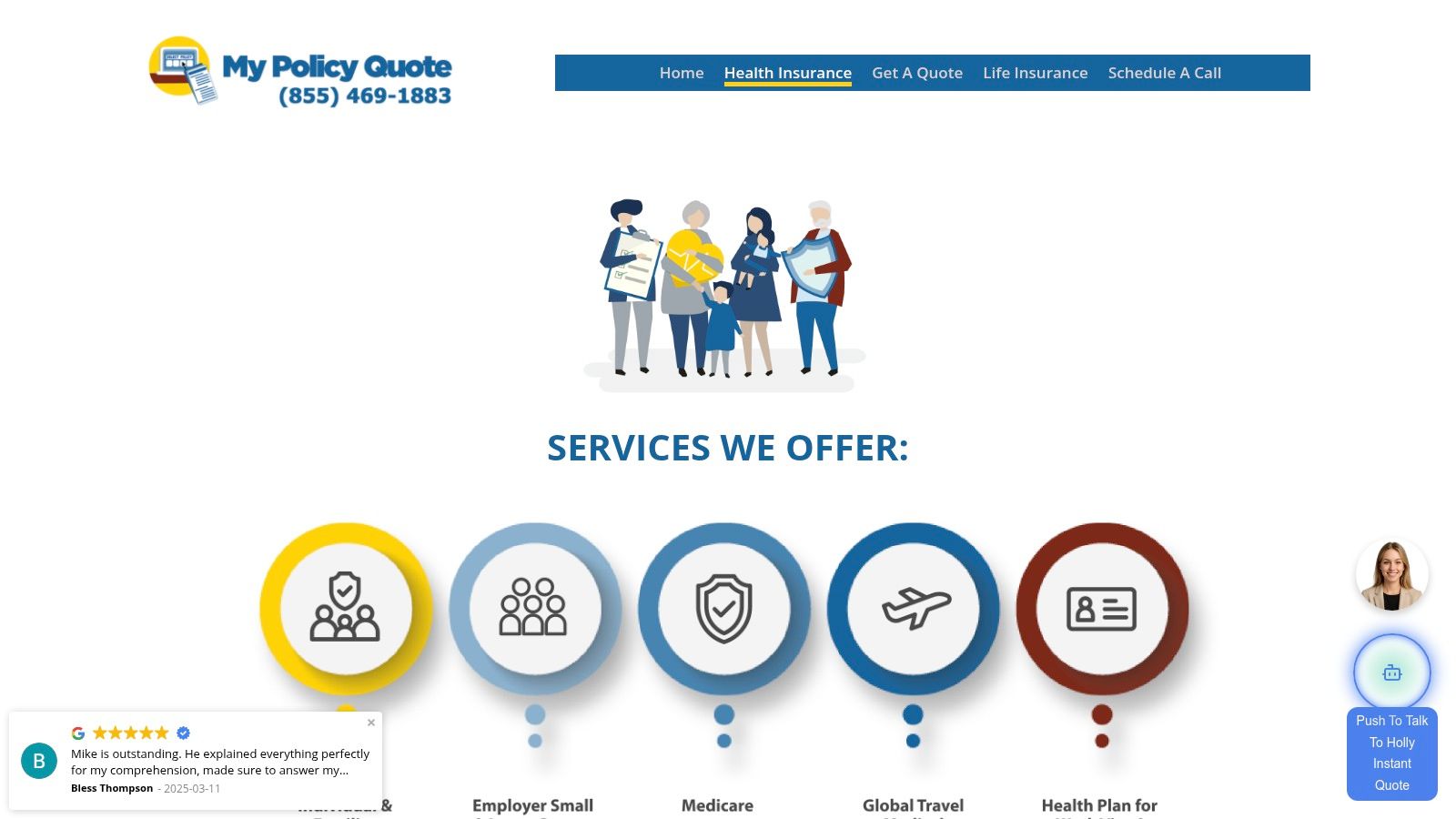
Unlike a traditional carrier, Health Insurance 4 represents a specific type of mid-tier plan structure that simplifies the comparison process. It serves as an ideal starting point for first-time insurance buyers or anyone who wants to quickly understand the core trade-offs between monthly premiums and out-of-pocket expenses. By presenting a balanced package upfront, it helps you make a more informed decision without getting lost in technical jargon.
In-Depth Analysis: Why Health Insurance 4 Stands Out
Health Insurance 4’s primary strength lies in its role as a comparison tool. When you receive a multi-plan quote, this option acts as a clear middle ground. It immediately illustrates what a moderate investment gets you, allowing you to easily see how a lower-premium plan might increase your deductible or how a higher-premium plan adds more comprehensive benefits. This approach is especially valuable for self-employed professionals and families managing a strict budget.
This model is particularly effective for evaluating coverage priorities. The plans in this category emphasize high-value, frequently used benefits that matter most for day-to-day health management.
Key Coverage Focus Areas:
- Preventive Care: Includes annual check-ups, screenings, and immunizations at little to no out-of-pocket cost.
- Primary Care Visits: Ensures you can see your primary care physician for routine check-ins or minor illnesses with predictable copayments.
- Telehealth Access: Provides convenient, remote access to medical professionals, a crucial feature for busy individuals or those in rural areas.
By focusing on these essentials, Health Insurance 4 helps you secure foundational coverage that promotes long-term wellness while keeping costs manageable. Understanding this balance is a critical step, and for more guidance, you can explore our comprehensive guide on choosing the right health insurance plan.
Features and Practical Benefits
The user experience is streamlined through the My Policy Quote platform, which facilitates quick comparisons. This is a significant advantage over visiting individual carrier websites, which can be time-consuming and confusing. Instead, you get a clear, side-by-side view that empowers faster, more confident decision-making.
| Feature | Practical Benefit for Shoppers |
|---|---|
| Mid-Tier Benchmark | Serves as a clear reference point, making it easier to evaluate cheaper and more expensive plans. |
| Streamlined Quoting | Access and compare plans quickly online without navigating multiple carrier websites. |
| Focus on Core Benefits | Ensures your coverage prioritizes essential services like preventive care, primary visits, and telehealth. |
| Flexible Cost Options | Easily see how adjusting your deductible or premium impacts your overall financial responsibility. |
Pros and Cons
Pros:
- Simplifies Decision-Making: Acts as a clear mid-tier option in a multi-plan quote, making it easier to weigh your choices.
- Quick Online Comparison: The My Policy Quote platform allows you to find competitive pricing and plan structures efficiently.
- Balanced Coverage Focus: Prioritizes essential, high-use benefits like preventive care, primary care, and telehealth.
- Budget-Friendly Flexibility: Helps you understand the trade-offs between deductibles and premiums to find a plan that fits your finances.
Cons:
- Requires a Quote for Details: The landing page lacks specific plan information (like deductibles and copays); you must request a full policy summary.
- Coverage Varies by Location: The actual carriers, pricing, and provider networks available under this category depend on your state and eligibility.
Website: https://mypolicyquote.com/health-insurance-4/
2. HealthCare.gov (Federal Health Insurance Marketplace)
HealthCare.gov is the official health insurance marketplace for the U.S. government, established under the Affordable Care Act (ACA). It serves as the primary online portal for individuals and families in most states to shop for, compare, and enroll in private health insurance plans. Its core function is to provide a standardized, transparent platform where consumers can access Qualified Health Plans (QHPs) and, crucially, determine their eligibility for government financial assistance.
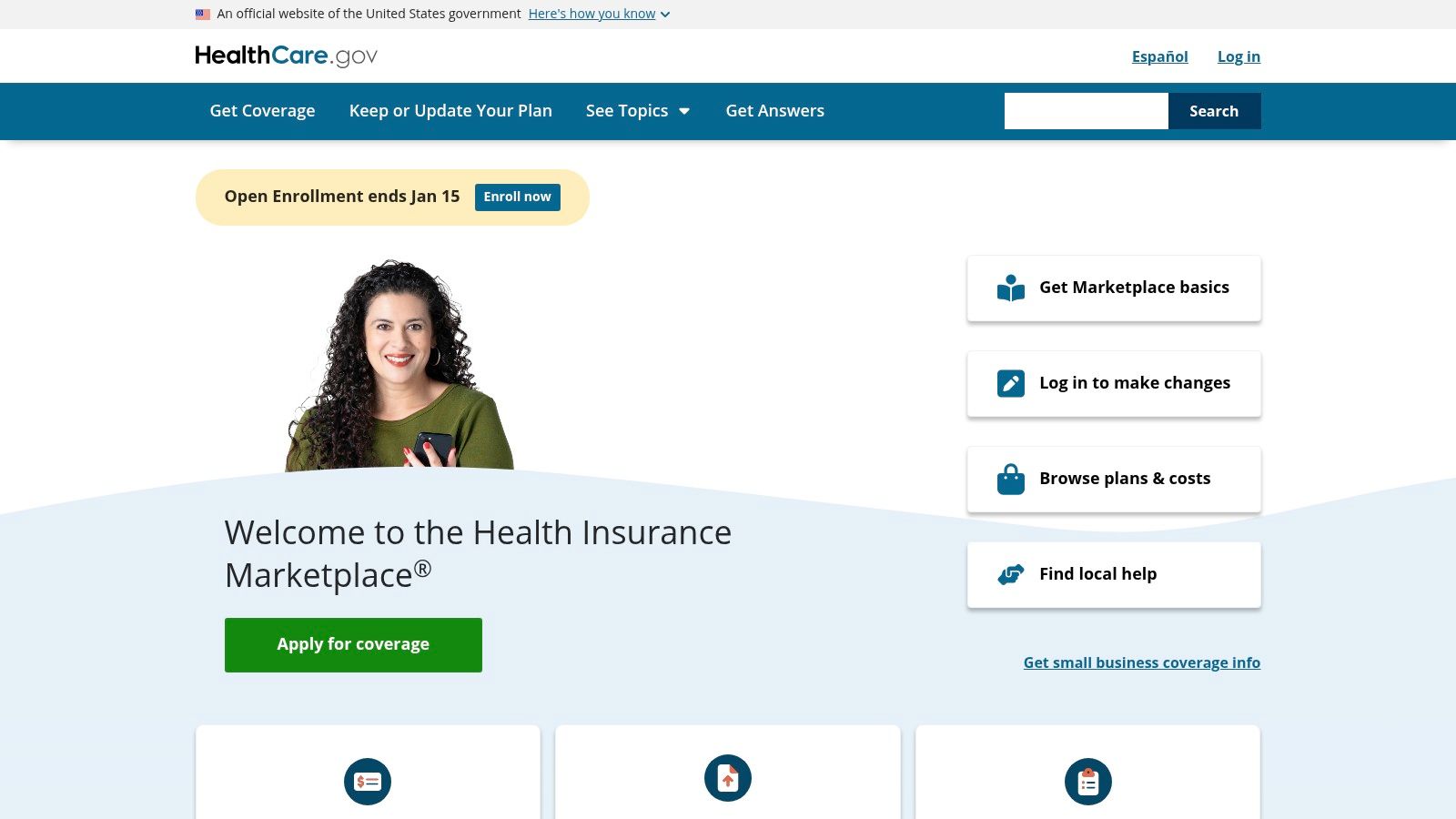
This platform isn't an insurance company itself but a centralized marketplace. Its inclusion in our list of the best health insurance companies is due to its indispensable role in making coverage accessible and affordable for millions, particularly those without employer-sponsored options like freelancers, gig workers, and early retirees. It is the only place to receive official premium tax credits and cost-sharing reductions.
What Makes HealthCare.gov Unique
The standout feature of HealthCare.gov is its integrated eligibility and enrollment system. After you complete a single application detailing your household size and income, the platform automatically screens you for two key affordability programs:
- Premium Tax Credits (Subsidies): These credits directly lower your monthly insurance payments. The website calculates your estimated credit and applies it to the plan prices you see, giving you a clear picture of your out-of-pocket premium costs.
- Cost-Sharing Reductions (CSRs): For those with lower incomes, CSRs reduce deductibles, copayments, and out-of-pocket maximums on Silver-level plans, making healthcare services more affordable to use.
This direct link to federal financial aid is what separates HealthCare.gov from commercial insurance websites. You also get authoritative information on enrollment periods, including the annual Open Enrollment Period and qualifying life events for Special Enrollment Periods (like losing a job or getting married).
How to Use HealthCare.gov Effectively
To get the most out of the federal marketplace, start by using the "window shopping" feature. This allows you to preview plans and estimated prices in your area by entering just your zip code, household income, and family details without creating an account. Once you're ready to apply, you'll create a secure account to complete the full eligibility application.
Pro Tip: Pay close attention to the metal levels (Bronze, Silver, Gold, Platinum). If you qualify for Cost-Sharing Reductions, you must choose a Silver plan to receive those extra savings on your deductible and copays.
While the user interface can feel more like a government form than a modern e-commerce site, the tools provided are robust. You can filter plans by insurer, metal level, deductible amount, and even check if your specific doctors or prescriptions are covered.
| Feature | Description |
|---|---|
| Eligibility Screening | Official determination for tax credits and cost-sharing reductions. |
| Plan Comparison | Side-by-side view of QHPs from various insurers in your state. |
| Enrollment | Secure online enrollment with multiple assistance channels available. |
| Key Dates | The authoritative source for all ACA enrollment deadlines. |
Website: https://www.healthcare.gov/
3. Medicare.gov Plan Finder
Medicare.gov is the official U.S. government website for Medicare, the federal health insurance program for people who are 65 or older and certain younger people with disabilities. Its Plan Finder tool is the definitive, unbiased resource for comparing and enrolling in Medicare Advantage (Part C) and Medicare Part D (prescription drug) plans. It is the primary platform for beneficiaries to make informed decisions during the annual Medicare Open Enrollment Period.
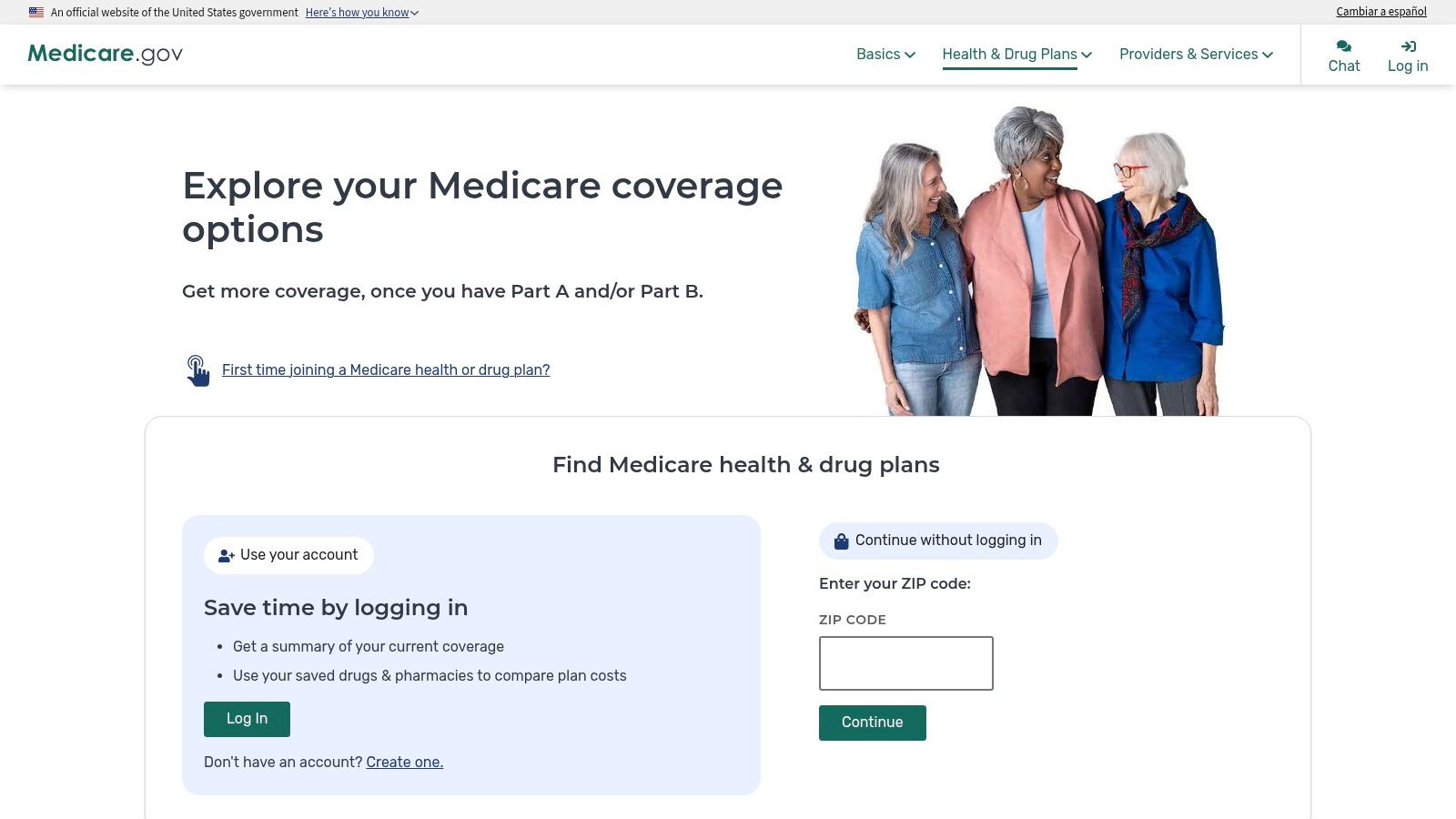
While not an insurance company, Medicare.gov's inclusion among the best health insurance companies is essential due to its role as the authoritative source for millions of Americans. It provides the most comprehensive and trustworthy data on plans from private insurers, empowering seniors to find coverage that fits their specific health needs and budget without the influence of sales commissions or third-party marketing.
What Makes Medicare.gov Unique
The standout feature of the Medicare Plan Finder is its integrated quality rating system and personalized cost estimates. The platform uses a five-star rating system to score Medicare Advantage and Part D plans on factors like customer service and quality of care, providing a simple yet powerful metric for comparison.
Users can create a secure account, enter their prescription drugs and preferred pharmacies, and the tool will calculate estimated annual costs for each available plan. This level of personalization is critical for finding the most cost-effective coverage. The site also provides information on Medigap (Medicare Supplement Insurance) policies, though you must enroll in those directly with private carriers. For those trying to decide between these options, you can learn more about the differences between Medicare Advantage and Medigap plans.
How to Use Medicare.gov Effectively
To get the most value from the Plan Finder, create a MyMedicare account. This allows you to save your drug list and pharmacy information, which makes the annual comparison process much faster. When comparing plans, don't just look at the monthly premium; check the estimated total annual cost, which includes deductibles, copays, and drug expenses.
Pro Tip: Use the star ratings as a primary filter. A plan with a lower premium but a one or two-star rating may result in poor service and difficulty accessing care. Aim for plans with four or more stars whenever possible.
The user interface is straightforward and government-focused, but the comparison tools are incredibly powerful. You can compare up to three plans side-by-side, viewing detailed breakdowns of costs, benefits, and provider networks.
| Feature | Description |
|---|---|
| Plan Comparison | Official, unbiased comparison of local Medicare Advantage and Part D plans. |
| Star Quality Ratings | Integrated five-star rating system to evaluate plan quality and performance. |
| Personalized Costs | Estimates total annual out-of-pocket costs based on your specific medications. |
| Enrollment | Secure online enrollment tools and 24/7 support via 1-800-MEDICARE. |
Website: https://www.medicare.gov/plan-compare/
4. HealthSherpa
HealthSherpa is a privately-owned technology company and an official partner of the federal government, certified as an Enhanced Direct Enrollment (EDE) platform. It allows consumers to shop for, compare, and enroll in the exact same Affordable Care Act (ACA) plans available on HealthCare.gov, often with a more streamlined and user-friendly interface. It offers the same official plans, prices, and federal subsidies without redirecting users to the government marketplace.
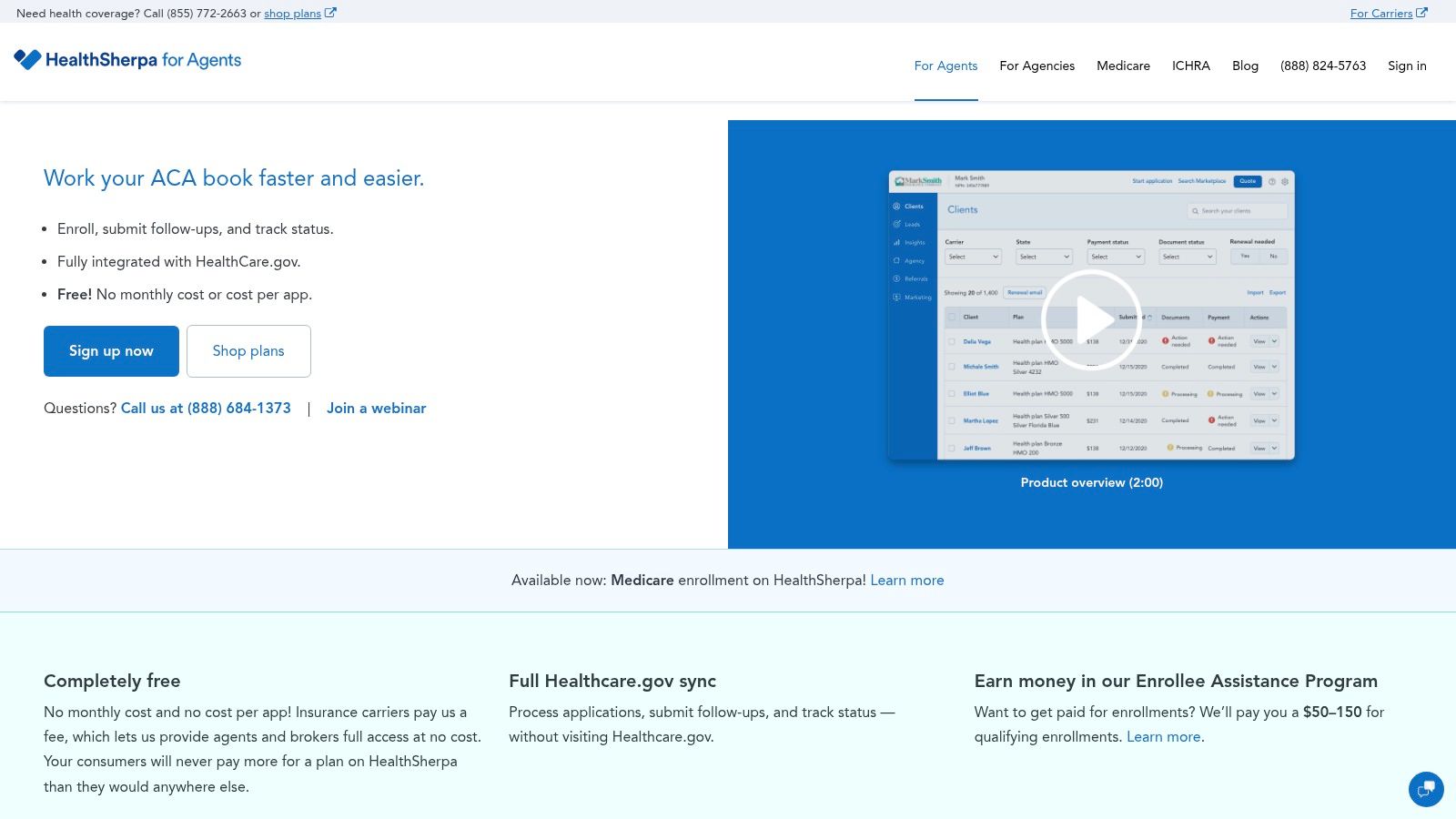
While not an insurer, HealthSherpa's inclusion on our list of the best health insurance companies is due to its significant role in simplifying the ACA enrollment process. It provides an alternative front-end to the federal marketplace that many self-employed individuals, families, and gig workers find faster and easier to navigate. The service is completely free for consumers, as the company is compensated directly by insurance carriers.
What Makes HealthSherpa Unique
HealthSherpa’s primary advantage is its user experience, which is designed to be more intuitive than the federal portal. The application flow is often quicker, and it offers value-added features that simplify post-enrollment management. Key differentiators include:
- Simplified Application: The enrollment process is condensed, guiding users through the necessary steps with clear instructions and a clean interface.
- Document Management: Users can easily upload and track the status of required verification documents (like proof of income) directly within their HealthSherpa dashboard.
- Post-Enrollment Support: The platform provides clear next steps after you enroll, such as direct links to make your first premium payment to the insurer and confirmation of your enrollment status. It also offers year-round phone and email support.
This focus on a smooth, end-to-end consumer journey-from quoting to managing coverage-makes it a powerful tool, especially for those who find government websites cumbersome. It effectively combines federal authority with private-sector technology.
How to Use HealthSherpa Effectively
Begin by entering your zip code, income, and household details to immediately see subsidy-adjusted plan prices. The layout is designed for quick comparison, allowing you to filter by carrier, metal level, or whether your doctor is in-network. The entire application and enrollment can be completed on the site for most states that use the federal marketplace.
Pro Tip: Use the HealthSherpa dashboard after enrolling to keep track of important notices and deadlines. It centralizes your application status and provides a clear path to paying your first premium, which is a crucial step to activate your coverage.
While HealthSherpa is available in all states served by HealthCare.gov, its functionality may differ in states that operate their own exchanges. In some cases, you might be redirected to the state's official website to complete your enrollment.
| Feature | Description |
|---|---|
| Streamlined Enrollment | A faster, user-friendly application process for official ACA plans. |
| Subsidy Integration | Applies the same premium tax credits as HealthCare.gov. |
| Post-Enrollment Tools | Dashboard for document uploads, payment links, and status tracking. |
| Consumer Support | Free phone and email assistance from enrollment specialists. |
Website: https://www.healthsherpa.com/
5. eHealth Insurance
eHealth Insurance is a prominent online health insurance broker that offers a broad marketplace for individuals and families to compare and purchase health coverage. Unlike a direct carrier or a government-only site, eHealth provides a wide array of plans from numerous national and regional insurance companies. It serves as a one-stop shop for not only ACA-compliant plans but also for ancillary products like dental, vision, and short-term health insurance.
Its inclusion as one of the best health insurance company resources comes from its versatility. eHealth is particularly useful for consumers who want to see both on-exchange (Marketplace) and off-exchange plans side-by-side. This is especially valuable for those who don't qualify for subsidies or are looking for temporary coverage to bridge a gap, such as between jobs or while waiting for Medicare eligibility.
What Makes eHealth Insurance Unique
eHealth's primary advantage is its extensive product breadth combined with licensed agent support. While it facilitates enrollment in ACA plans, its marketplace truly shines by also offering a comprehensive selection of non-ACA products. This allows users to solve for unique situations that government marketplaces don't address, such as:
- Short-Term Medical Plans: For individuals needing temporary coverage for a few months to bridge an employment gap.
- Ancillary Coverage: Easily add standalone dental and vision plans from various carriers to complement a medical plan.
- Off-Exchange Options: Compare plans sold directly by insurers that aren't available on HealthCare.gov, which can sometimes offer different network configurations.
This wide selection empowers consumers to build a more customized coverage portfolio. The platform also provides access to licensed insurance agents via phone or online chat, offering personalized guidance that can be crucial when navigating the complexities of different plan types.
How to Use eHealth Insurance Effectively
Begin your search on eHealth by entering your zip code and basic demographic information to see a list of available plans. The interface allows you to filter results by carrier, metal level, and plan type (like HMO or PPO). This makes it easy to narrow down options based on your specific needs and preferences.
Pro Tip: If you think you might qualify for a government subsidy, be sure to enter your income information accurately. eHealth can estimate your potential tax credit and, in many states, can help you enroll in a subsidized plan directly. However, always verify that the plan you choose is an official Qualified Health Plan (QHP) to secure those savings.
Pay close attention to the plan details. eHealth clearly labels whether a plan is ACA-compliant or a short-term policy. Understanding the difference is critical, as short-term plans do not have the same consumer protections or comprehensive benefits. For more clarity on plan structures, you can learn more about the differences between HMO and PPO plans.
| Feature | Description |
|---|---|
| Broad Product Selection | Compares ACA, off-exchange, short-term, dental, and vision plans. |
| Multi-Carrier Quoting | View options from a wide range of national and local insurers in one place. |
| Licensed Agent Support | Free access to knowledgeable agents for personalized help and enrollment. |
| Coverage Flexibility | Ideal for finding temporary solutions or building a custom benefits package. |
Website: https://www.ehealthinsurance.com/individual-family-health-insurance
6. Stride Health
Stride Health is a health insurance enrollment platform and benefits partner designed specifically for the modern independent workforce. It focuses on serving freelancers, gig workers, rideshare drivers, and other 1099 contractors who need to secure their own coverage. Functioning as an enhanced direct enrollment partner with HealthCare.gov, Stride offers the same official ACA marketplace plans at the exact same prices, but wraps them in a user-friendly experience tailored to the unique financial and lifestyle needs of self-employed individuals.
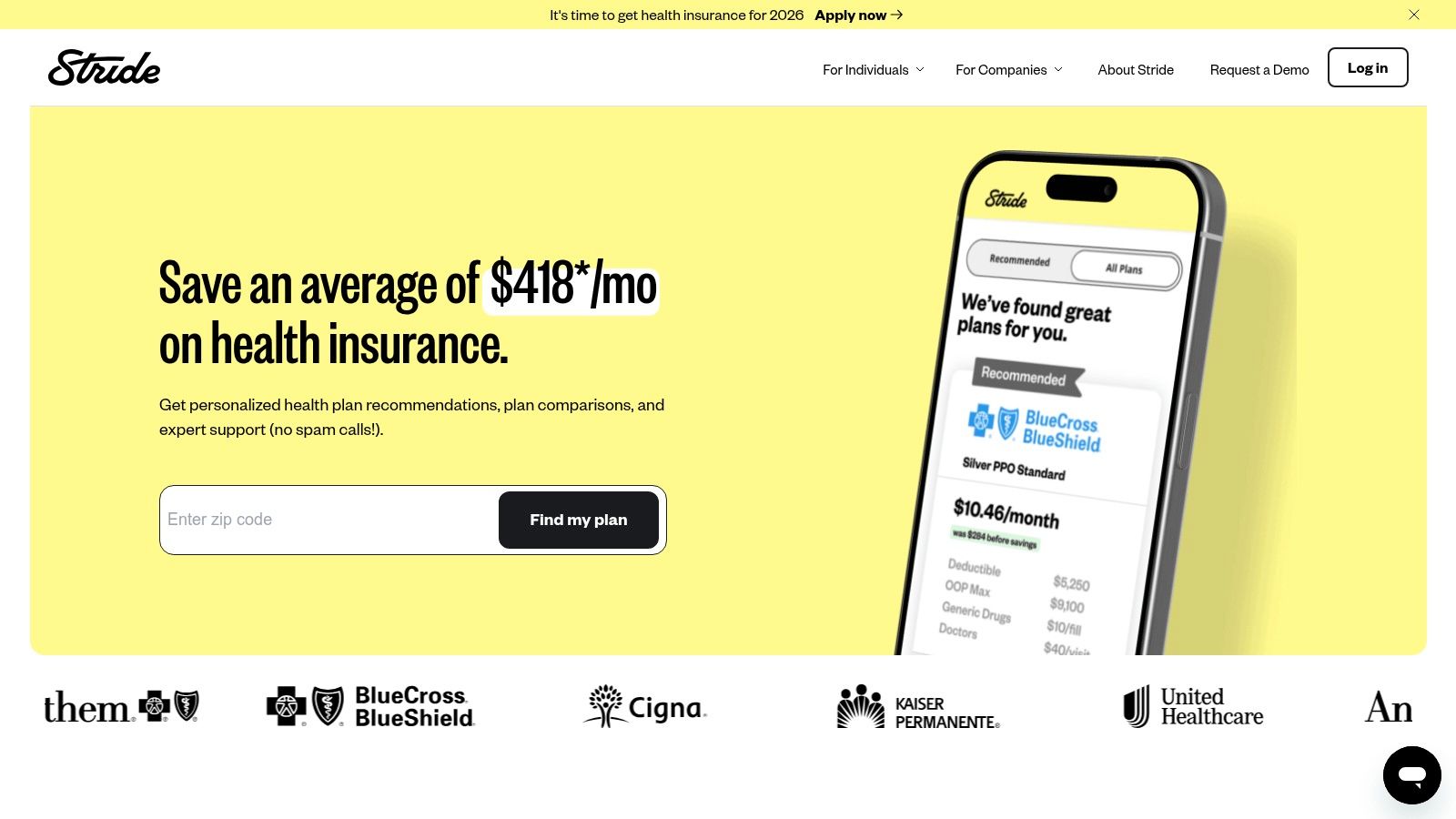
Stride's inclusion in our list of the best health insurance companies comes from its specialized approach to a growing, and often underserved, segment of the population. It simplifies the complex process of finding coverage when you have a variable income and no HR department. The platform combines technology with human support to provide personalized plan recommendations and guidance, making it a critical resource for portable benefits.
What Makes Stride Health Unique
Stride Health's primary distinction is its laser focus on the independent worker. The entire platform is built to address the pain points of this demographic, from estimating a fluctuating income to finding doctors that accept marketplace plans. Its recommendation engine is a key feature:
- Personalized Plan Recommendations: After you provide details about your income, health needs, and preferred doctors, Stride's algorithm analyzes available plans and suggests the most cost-effective option for your specific situation.
- Integrated Benefits: Beyond major medical plans, Stride makes it easy to add on essential dental and vision coverage, creating a more comprehensive benefits package from a single, streamlined portal.
- Gig Economy Partnerships: Stride partners with major platforms like Uber, DoorDash, and Instacart, providing their independent contractors with direct access to benefits tools and enrollment support.
This tailored experience removes the guesswork often associated with shopping on the federal or state marketplaces, providing clear, actionable advice. Its focus on the self-employed makes it an excellent starting point for anyone navigating this landscape; you can find more information about the best insurance for the self-employed on our dedicated page.
How to Use Stride Health Effectively
To maximize your experience on Stride, begin by entering your zip code and some basic information to start browsing plans. The key is to be as accurate as possible when estimating your annual income, as this directly impacts your eligibility for subsidies. Stride provides tools and guidance to help you calculate a realistic net income figure from your self-employment work.
Pro Tip: Use Stride's built-in doctor and prescription search tools before you enroll. This ensures the plan you choose not only fits your budget but also includes your preferred healthcare providers and medications in its network.
The platform's interface is clean and far more intuitive than many government-run websites. Once you select a plan, Stride guides you through the official enrollment process, often completing it directly on their site. In states with their own marketplaces, they will seamlessly redirect you to finalize the application.
| Feature | Description |
|---|---|
| Personalized Recommendations | Algorithm-based suggestions for the most cost-effective ACA plan. |
| Subsidy Screening | Calculates eligibility for premium tax credits just like the marketplace. |
| Advisor Support | Access to licensed advisors for unbiased help and enrollment guidance. |
| Portable Benefits Focus | Designed for freelancers and gig workers needing individual coverage. |
Website: https://www.stridehealth.com/health
7. HealthMarkets
HealthMarkets is a national insurance brokerage that bridges the gap between digital self-service and personalized human guidance. It functions as an online marketplace where individuals can compare ACA-compliant plans from over 200 insurance carriers, but its true value lies in its hybrid approach. The platform is ideal for consumers who want to start their research online but prefer the safety net and expertise of a licensed agent to finalize their decision.
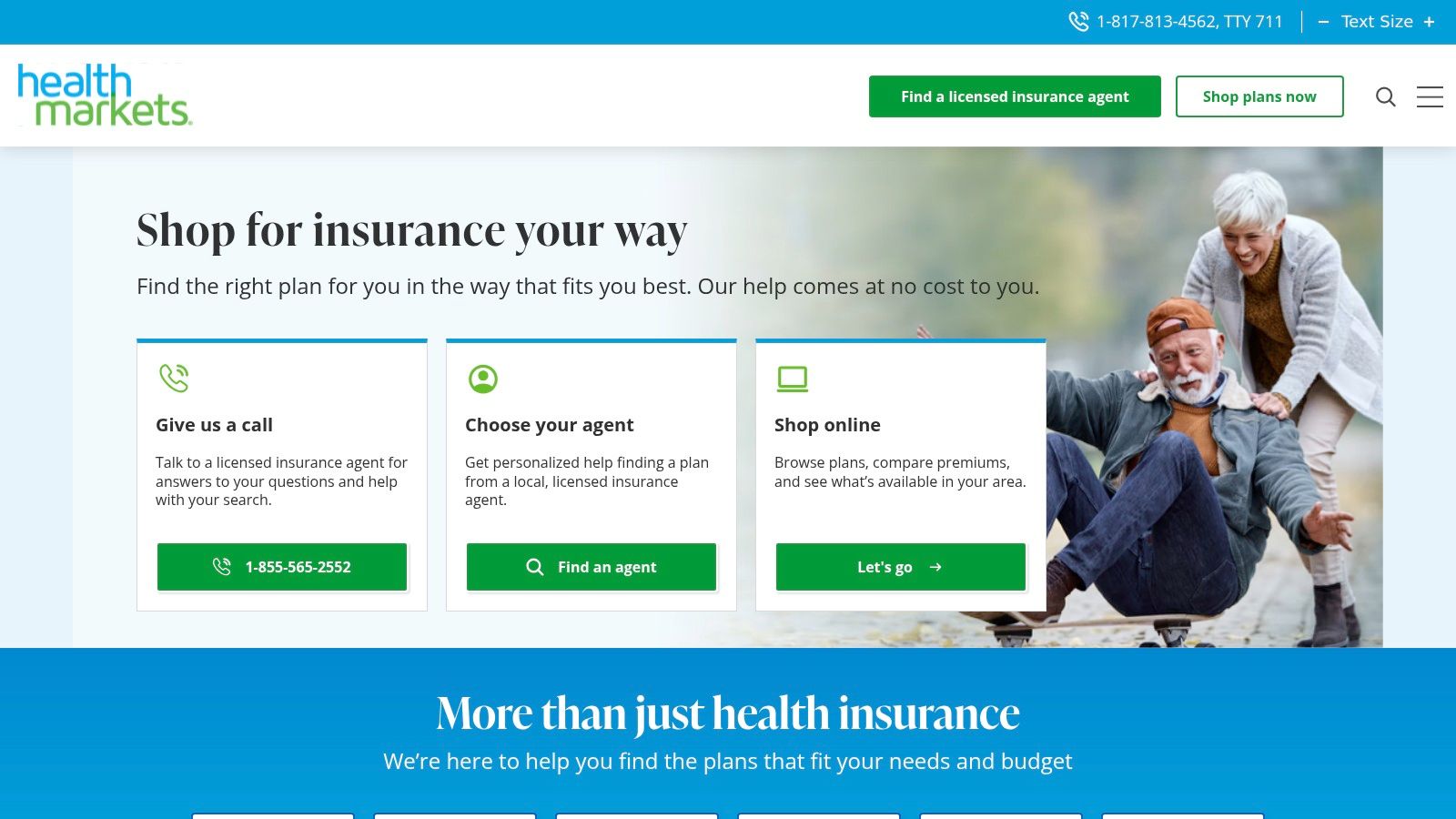
Unlike direct-to-carrier websites or the federal marketplace, HealthMarkets offers a guided experience at no extra cost to the consumer. This makes it a strong contender among the best health insurance companies for those new to the individual market, such as early retirees or families navigating complex coverage needs. The combination of a broad selection of plans and a network of over 3,000 local agents provides a comprehensive support system for shoppers.
What Makes HealthMarkets Unique
The standout feature of HealthMarkets is its flexible, multi-channel enrollment process. Users are not locked into one path; they can choose the method that best suits their comfort level. This flexibility is powered by:
- Online Self-Service: The website provides a straightforward, ZIP code-based tool to compare ACA plans side-by-side, similar to other marketplaces.
- Licensed Agent Network: This is the core differentiator. You can connect with a local agent for one-on-one assistance via phone or in-person meetings. This is invaluable for understanding plan nuances, network restrictions, and subsidy eligibility. For those utilizing local agent support, understanding basic customer profiling strategies can offer a unique perspective on how agents tailor recommendations.
- Broad Carrier Access: By contracting with numerous national and regional insurers, HealthMarkets often presents a wider variety of plans than a single carrier's website.
This hybrid model ensures that users who feel overwhelmed by complex insurance terminology can receive expert help, while those who are confident in their choices can enroll quickly and efficiently online.
How to Use HealthMarkets Effectively
Start by using the online quote tool to get a preliminary look at the plans and prices available in your area. This initial search will give you a solid foundation for a more detailed discussion. If you find the options confusing or have specific needs, take the next step and request to speak with an agent.
Pro Tip: Before talking to an agent, prepare a list of your non-negotiables: your preferred doctors, essential prescription drugs, and your budget for monthly premiums and potential out-of-pocket costs. This will make the consultation far more productive.
Be aware that filling out a contact form will likely result in a follow-up call from an agent, as this is central to their service model. Treat this as an opportunity for a free consultation rather than an unwanted sales call.
| Feature | Description |
|---|---|
| Multi-Channel Enrollment | Choose between online self-service, phone support, or in-person agent assistance. |
| Agent Network | Access to over 3,000 licensed agents nationwide for personalized guidance. |
| Carrier Selection | Compare plans from over 200 contracted national and regional insurance companies. |
| Cost | The service, including agent assistance, is provided at no extra cost to the consumer. |
Website: https://www.healthmarkets.com/
Top 7 Health Insurance Providers Comparison
| Service | Enrollment Complexity 🔄 | Resource Requirements ⚡ | Expected Outcomes ⭐📊 | Ideal Use Cases 💡 |
|---|---|---|---|---|
| Health Insurance 4 | Medium — online quote; limited page details; follow‑up needed | Minimal online inputs; request full policy summary from carrier | Mid‑tier coverage focus (preventive, primary care, telehealth); value-oriented (⭐⭐⭐) | Budget‑conscious individuals/families seeking straightforward mid‑tier option |
| HealthCare.gov (Federal Marketplace) | Medium–High — formal ACA flow, eligibility & SEP screening | Income/docs for subsidy checks; phone/local assisters available | Official QHP pricing and subsidy determinations; broad plan availability (⭐⭐⭐⭐) | Anyone needing accurate subsidy eligibility, official enrollment and ACA compliance |
| Medicare.gov Plan Finder | Medium — Medicare‑specific flows; Medigap handled off‑site | Medicare ID/info and medication list for Part D comparisons; 24/7 support | Comprehensive MA/Part D comparisons with star quality ratings (⭐⭐⭐⭐) | Adults 65+ or disabled individuals comparing Medicare Advantage and Part D |
| HealthSherpa | Low — streamlined EDE integration; faster consumer UX | Basic documents upload; dashboard and phone support | Same marketplace plans/prices with faster enrollment and clear tracking (⭐⭐⭐⚡) | Self‑employed, families, or users who want a simpler Healthcare.gov experience |
| eHealth Insurance | Medium — broker platform with ACA and off‑exchange options | May use licensed agents; compares multiple product lines (dental, short‑term) | Wide product breadth for ACA + non‑ACA needs; variable outcomes by product (⭐⭐) | Shoppers comparing ACA vs off‑exchange plans or seeking COBRA/short‑term solutions |
| Stride Health | Low–Medium — tailored flows for gig workers; personalized recommendations | Income/subsidy screening; advisor support and partner integrations | Marketplace‑priced plans with gig‑worker guidance and perks (⭐⭐⭐) | Independent/1099 workers needing portable benefits and personalized advice |
| HealthMarkets | Medium — ZIP‑based shopping + agent network; multiple enrollment channels | Access to local licensed agents; online, phone, or in‑person options | Broad carrier access and personalized agent help; good for complex comparisons (⭐⭐⭐) | Buyers who want digital quotes plus hands‑on agent assistance |
Your Next Step: From Comparison to Confident Enrollment
You’ve navigated the landscape of the best health insurance companies and the tools designed to connect you with them. From the comprehensive federal resource of HealthCare.gov to the niche, user-friendly focus of Stride Health, the path to coverage has more entry points than ever before. But reading about your options is just the beginning. The real work starts now: translating this knowledge into a confident, informed decision that protects your health and financial future.
This guide was designed to move you beyond simple brand recognition. We didn't just list names; we mapped out specific use cases. The key takeaway is that the "best" platform is entirely dependent on your personal situation. An early retiree's needs differ vastly from a gig worker's, just as a family seeking comprehensive benefits requires a different approach than a young adult looking for a catastrophic plan.
From Information Overload to Actionable Insight
Before you click "enroll" on any platform, it’s crucial to internalize the core principles of a smart health insurance search. Let this checklist guide your final decision-making process, ensuring no critical detail is overlooked.
- Verify Your Network: A top-rated plan is useless if your preferred doctors, specialists, and hospitals are out-of-network. Use the plan’s provider directory tool to search for every one of your essential healthcare providers before you commit. Do not skip this step.
- Scrutinize the Formulary: Similarly, check the prescription drug formulary (the list of covered medications). Look for your specific prescriptions to understand their tier level and associated copay or coinsurance. A low premium can be quickly offset by high out-of-pocket drug costs.
- Calculate Your True Costs: Look beyond the monthly premium. Add up the deductible, copayments, coinsurance, and the plan’s out-of-pocket maximum. This total figure represents your worst-case financial exposure for the year and gives a much more accurate picture of the plan’s affordability.
- Re-Estimate Your Income: If you are eligible for an Affordable Care Act (ACA) plan, your subsidy is based on your Modified Adjusted Gross Income (MAGI). Be as accurate as possible. Overestimating could mean you leave money on the table, while underestimating could result in owing money back during tax season. For self-employed individuals, this requires careful forecasting of your business income and deductions.
Matching the Tool to Your Unique Needs
Your next action is to select the right platform for your search. Let’s distill the options down to their core strengths:
- For the DIYer Who Wants Official Access: Go directly to HealthCare.gov. It’s the source of truth for ACA plans and subsidies, offering a direct, no-frills enrollment experience.
- For the Gig Worker or Freelancer: Stride Health is your best bet. Its platform is specifically designed to estimate income, track expenses, and find plans tailored to the unique financial realities of 1099 contractors.
- For Maximum Choice and Broker Support: HealthMarkets or eHealth provide a wider net, including non-Marketplace plans. These are ideal if you know you won’t qualify for a subsidy and want to compare every possible option, often with the help of a licensed agent.
- For a Simplified ACA Experience: HealthSherpa offers a streamlined, user-friendly interface for enrolling in official Marketplace plans, making it a great alternative if you find the federal site overwhelming.
Making a final choice can still feel daunting. The terminology is complex, and the weight of the decision is significant. This is where seeking unbiased, expert guidance becomes not a sign of weakness, but a mark of smart financial planning. You don't have to finalize this process alone.
Navigating the websites of the best health insurance companies is complex, but you don't have to do it by yourself. At My Policy Quote, our licensed experts provide personalized, no-cost assistance to help you compare plans from top carriers and secure the right coverage. Get a free, no-obligation quote today and enroll with the confidence that you've made the best possible choice for your needs.