
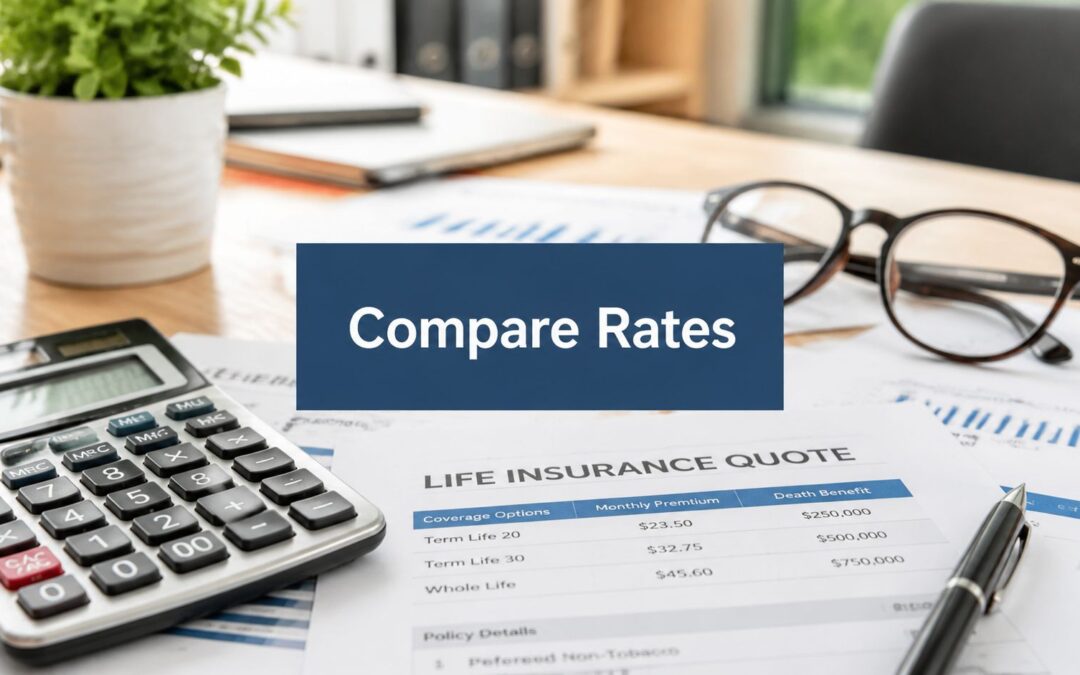
Many people delay life insurance for one simple reason. They assume it costs far more than it does.
That mistake matters. If you think coverage is out of reach, you won't compare options, and you won't see how different policy types can fit a real household budget. A careful life insurance cost comparison often starts with correcting the sticker shock in your head before you ever look at a quote.
Early on, keep one idea in mind: the cheapest policy isn't always the right policy, but the wrong assumption about cost can keep you from buying any protection at all.
How Much Do You Think Life Insurance Costs
If you're under 30, there's a good chance the price is much lower than you expect. The 2025 Insurance Barometer Study from LIMRA and Life Happens found that adults age 30 and younger overestimate life insurance costs by 10 to 12 times the actual price.
That gap creates a psychological wall. People don't say, “I compared policies and decided against them.” More often, they never start because they assume the answer will be no.

Why the cost myth hits working people hard
This matters even more if you're self-employed, between jobs, or buying coverage without benefits through work. When money feels tight, your brain filters out anything that sounds optional or expensive. Life insurance often gets pushed into that category before you've looked at one real quote.
For many families, the issue isn't refusal. It's misinformation.
Practical rule: Don't decide life insurance is unaffordable until you've looked at actual quotes for your age, health, and coverage amount.
A lot of readers start with broad questions like “What does life insurance usually cost?” That's a smart place to begin. If you want a basic starting point before digging into policy types, this guide on how much life insurance costs can help frame the conversation.
What a better question sounds like
Instead of asking, “Can I afford life insurance?” ask:
| Better question | Why it helps |
|---|---|
| What kind of policy do I actually need | Cost depends heavily on policy type |
| How long do I need coverage | A temporary need often points to lower-cost term coverage |
| What would my family need if I died this year | This focuses the comparison on real protection, not guesswork |
That shift matters. Once you stop treating life insurance like a luxury product, it becomes easier to compare it the same way you'd compare any other bill: by value, purpose, and fit.
Term vs Whole vs Universal A Quick Cost Primer
The first big pricing difference comes from what you're buying.
A term policy is mostly pure insurance. Whole life and universal life combine insurance with a cash-value feature, which is one reason they cost more. If term life is like renting protection for a set period, permanent policies are closer to buying something long-term and paying for extra features along the way.

Term life
Term life insurance covers you for a specific number of years, often tied to practical goals like raising kids, replacing income, or paying off a mortgage. It doesn't build cash value. That simplicity is why it usually has the lowest upfront cost.
For younger families and budget-focused buyers, term is often the first option worth checking. If you want a straightforward overview of policy categories, this explainer on different types of life insurance breaks them down in plain language.
Whole life and universal life
Whole life insurance is permanent coverage. As long as premiums are paid, coverage is designed to last for life. It also builds cash value, and that added feature increases the premium.
Universal life insurance is also permanent, but it usually offers more flexibility in premiums or death benefit structure. That flexibility can make it useful in some cases, but it can also make the policy harder to compare at a glance.
If you're trying to understand what “affordable” looks like for families who need protection first and complexity second, Select Insurance Group's life insurance resources offer another helpful view of term-focused planning.
A simple way to compare them
Use this lens:
- Term. Best when you need income protection for a defined period and want the lowest cost.
- Whole life. Better suited to people who want lifelong coverage and are comfortable paying more for built-in cash value.
- Universal life. Worth a closer look when flexibility matters, but you need to read the illustration carefully because moving parts can affect long-term cost.
Term keeps the comparison clean. Permanent coverage asks you to evaluate both protection and the savings feature.
That's where many people get confused. They compare a term premium to a whole life premium as if both are selling the same product. They aren't. One is mostly protection. The other includes protection plus policy cash value mechanics.
How to Read Life Insurance Quotes Like a Pro
Two quotes can show the same death benefit and the same term length yet still come back with different prices. That usually happens because of rate class, underwriting, and added policy features.
You don't need to become an actuary to compare quotes well. You just need to know what to look for and what questions to ask when prices don't line up.
Start with the core fields
When you review a quote sheet, check these items first:
- Coverage amount. This is the death benefit. Make sure you're comparing the same amount across all quotes.
- Policy length. A 10-year term and a 30-year term are not interchangeable.
- Policy type. Term, whole, and universal shouldn't be judged by premium alone.
- Premium mode. Some quotes show monthly cost, others show annual cost.
- Riders. Extra features can increase the total price.
If you want practice spotting these differences, this guide to comparing life insurance quotes gives a useful framework.
What rate class means
A rate class is the insurer's way of sorting risk. People in better health usually qualify for better classes and lower prices. People with more risk factors often land in a higher-priced class.
You may see labels like Preferred Plus, Preferred, or Standard. The exact names vary by company, but the basic idea is the same. Better health and lower risk usually lead to lower premiums.
That's why one insurer can look cheaper than another. It may not be more generous across the board. It may view your profile more favorably.
What underwriting is really doing
Underwriting is the process insurers use to decide how risky it is to insure you. They may review your health history, prescriptions, driving record, tobacco use, work risks, and sometimes family medical history.
This can feel invasive, especially if you're already stressed. But the practical point is simple: underwriting determines the rate class, and the rate class shapes the price.
If a quote seems surprisingly low, check whether it assumes a better health class than you're likely to receive after underwriting.
A clean apples-to-apples checklist
Before you choose the “cheapest” quote, confirm that each option matches on the details that matter:
| Checkpoint | What to verify |
|---|---|
| Same death benefit | The coverage amount is identical |
| Same policy type | You aren't comparing term against permanent |
| Same term length | The years of coverage match |
| Same underwriting assumptions | Health class and smoking status are comparable |
| Same extras | Riders and fees aren't inflating one quote |
A quote is only useful if it's comparable. Price without context leads people into bad decisions fast.
A Real-World Life Insurance Cost Comparison
Many adults overestimate the cost of life insurance. Real quote benchmarks help shrink that mental barrier fast.
For a healthy 40-year-old, NerdWallet's average life insurance rates page shows that a $500,000, 20-year term policy averages about $26 per month. A whole life policy with the same death benefit averages about $252 per month. In plain terms, one choice may fit into a streaming-and-groceries budget, while the other can feel closer to a car payment.

The surprise gets even bigger for younger buyers. NerdWallet also notes that a healthy 30-year-old can often get a $250,000 term policy for under $200 per year.
That number matters because many younger workers and self-employed professionals rule out coverage before they ever ask for a quote. They expect life insurance to be expensive, so they never test the assumption. In many cases, the sticker shock they fear belongs to permanent insurance, not basic term coverage.
A simple side-by-side benchmark
| Example buyer | Policy | Typical benchmark cost |
|---|---|---|
| Healthy 30-year-old | $250,000 term life | Under $200 per year |
| Healthy 40-year-old | $500,000 20-year term life | About $26 per month |
| Healthy 40-year-old | $500,000 whole life | About $252 per month |
A table like this does not tell you what your exact quote will be. It does give you a reality check.
For example, a self-employed parent may want enough coverage to replace income until the children are older or the mortgage is smaller. In that situation, term life often lines up with the specific job the policy needs to do. Paying ten times more for permanent coverage may not solve a problem that family has.
A different buyer may want lifelong coverage, estate planning support, or a guaranteed payout no matter when death occurs. That person may still choose whole life or universal life. The key is choosing the higher premium on purpose, not by accident or confusion.
Cost also changes sharply with age. NerdWallet's benchmark page shows that premiums rise as applicants get older, especially for longer term lengths. Waiting can turn a manageable monthly bill into a much harder budget decision.
A short video can help if you prefer a visual explanation before comparing quotes in detail.
How professionals compare value, not just the premium
One useful method is to compare the yearly cost per $1,000 of death benefit. That works like comparing grocery prices by unit cost instead of just looking at the total on the shelf. It helps you see whether one policy is cheaper for the amount of protection you get.
For permanent insurance, professionals may also compare how the cash value performs alongside the insurance cost. As noted earlier, one policy review framework rates the savings side as stronger when returns are higher and weaker when they are lower. That matters because a permanent policy asks you to commit much more money over time.
A calm question helps here: How much protection am I buying, and what am I paying for features I may not need?
That question can keep a stressful decision from turning into an expensive one.
Cost Scenarios for Your Life Stage
General rules help. Personal context helps more.
The right policy for a freelancer with small kids won't look like the right policy for a pre-retiree with grown children and a paid-off house. Here's how life insurance cost comparison changes when the life stage changes.
The self-employed professional
A contractor, consultant, or small business owner often has uneven income and no employer life insurance. In that situation, monthly affordability matters because cash flow can swing from one season to the next.
A term policy often fits this buyer well because it focuses the budget on protection during the peak earning years. If the goal is replacing income, covering business debts, or buying time for a spouse to adjust, keeping the premium lean may matter more than building cash value inside the policy.
Common priorities for this buyer:
- Income protection if clients disappear because the owner dies
- Debt coverage for personal loans or business obligations
- Budget control when monthly revenue isn't predictable
The young family on a tight budget
This buyer usually needs the most coverage for the lowest cost. There may be a mortgage, child care, one parent doing unpaid labor at home, and very little room in the budget.
Term life often makes the most sense because the need is large but temporary. The family may need protection until the children are older and the mortgage balance is lower. Paying much more for permanent coverage can crowd out other priorities like emergency savings or retirement contributions.
A policy that stays in force is more valuable than a bigger, more expensive one that strains the budget every month.
A useful comparison mindset for young families is to ask, “What problem am I solving?” If the answer is “replace income during the next few decades,” that usually points toward term.
The early retiree or pre-retiree
This buyer's needs are different. Income replacement may matter less than final expenses, leaving money to family, or helping a surviving spouse cover taxes or debts.
In this stage, some people still prefer term if they only want short-term protection. Others may look at small permanent policies if the goal is lifelong coverage. The key is matching the policy to the purpose.
Questions that matter more here:
| Life stage question | Why it matters |
|---|---|
| Do I still have people depending on my income | This shapes whether large coverage is still necessary |
| Am I trying to cover a temporary or permanent need | This points toward term or permanent insurance |
| Can I comfortably keep paying this premium long-term | Permanent insurance only works if the payment fits |
The parent buying for an adult child
Some parents look into life insurance for an adult child who is healthy now but may not always be. The cost conversation here is often less about today's family budget and more about locking in insurability while options are open.
That doesn't automatically mean permanent coverage is the answer. It means the buyer should be crystal clear about the goal. Is it low-cost protection now, or long-term guarantees that justify a higher premium?
The strongest choices usually come from simple needs, clearly named.
Actionable Tips to Lower Your Premiums
You can't control every pricing factor. You can control more than many believe.
The biggest win often comes from actions you take before you apply, not after the insurer sends the offer.

Focus on the factors that move the needle
The clearest example is smoking. For a 40-year-old male, available benchmark data shows a smoker pays about $1,489 annually for a $500,000 term policy, while a nonsmoker pays about $331 annually for the same coverage. That's more than four times less for the nonsmoker, based on the verified market benchmark noted earlier in this article.
That kind of pricing gap tells you where to focus.
Five practical ways to reduce cost
- Apply while you're younger and healthier. Age and health both affect what insurers charge. Waiting can reduce flexibility and increase cost.
- Choose the right term length. Longer terms can cost more because the insurer covers you for more years. Buy coverage for the years you need.
- Keep the policy simple first. Riders can be useful, but extra features can increase the premium. Start with core protection, then add only what solves a real problem.
- Compare multiple insurers. Companies don't all underwrite the same way. One carrier may view your health history or work profile more favorably than another.
- Review your options with a quote platform or advisor. A comparison service such as My Policy Quote's guide to reducing insurance premiums can help you think through how term length, policy design, and underwriting affect the final cost.
A note on permanent policies
If you're shopping for whole or universal life, lowering premiums gets more complicated because you're not only adjusting protection. You may also be changing how the cash-value side works.
That's one reason permanent insurance deserves slower review. With term, cost comparison is usually more direct. With permanent coverage, lower premium doesn't always mean better value.
Before you chase the lowest premium, make sure you're not stripping out the exact feature you wanted the policy for.
The goal isn't just to pay less. The goal is to pay wisely.
Smart Questions to Ask Your Insurance Advisor
Many people hesitate on life insurance because the price feels unknown. A good advisor helps turn that fog into numbers you can weigh.
You do not need to ask perfect questions. You need questions that show whether a quote is affordable, realistic, and built for your life.
That matters even more if you are younger or self-employed. A policy can sound expensive in the abstract, then look much more manageable once someone explains what is driving the price.
Questions to Reveal the True Comparison
Use these to get past the surface price:
- Why is this policy cheaper than the others you showed me?
- What rate class is this quote based on?
- If underwriting comes back differently, how much could the premium change?
- Are any riders included that I may not need?
- If this is permanent insurance, how does the cash value affect what I pay over time?
These questions do one simple job. They help you see whether you are comparing the same product in different wrappers, or truly different policies.
For example, two quotes can look far apart for a reason that has nothing to do with better value. One may assume top health rates. Another may include extra features you did not ask for. One may also be priced low now but built to cost more later.
Questions That Help You Avoid Expensive Surprises
These often tell you more than the brochure:
| Ask this | Why it matters |
|---|---|
| Can you show me guaranteed and non-guaranteed values? | Shows what is fixed and what depends on future projections |
| What happens if I stop paying early? | Helps you understand the downside, especially with permanent policies |
| Are there surrender charges? | Shows the cost of exiting the policy |
| Is this policy convertible? | Gives you flexibility if your needs change later |
| Why does this policy fit my situation better than a term policy? | Pushes the recommendation back to your actual needs |
If the answers are clear, that is a good sign.
If the conversation keeps drifting toward features, bonuses, or vague promises, slow the process down. Insurance should feel understandable. Confusion is often a cue to ask for a simpler explanation or a second quote.
A helpful way to frame the conversation is this: ask your advisor to explain the policy as if they were walking a friend through a monthly budget. That keeps the focus on what you pay, what you get, and what could change later.
You are not trying to win a debate. You are trying to lower the mental cost barrier that keeps many people stuck. Once the numbers are plain, the decision usually feels less intimidating.
If you're ready to compare real options, My Policy Quote offers a practical starting point for reviewing life insurance quotes and seeing how policy type, term length, and underwriting assumptions affect cost.