
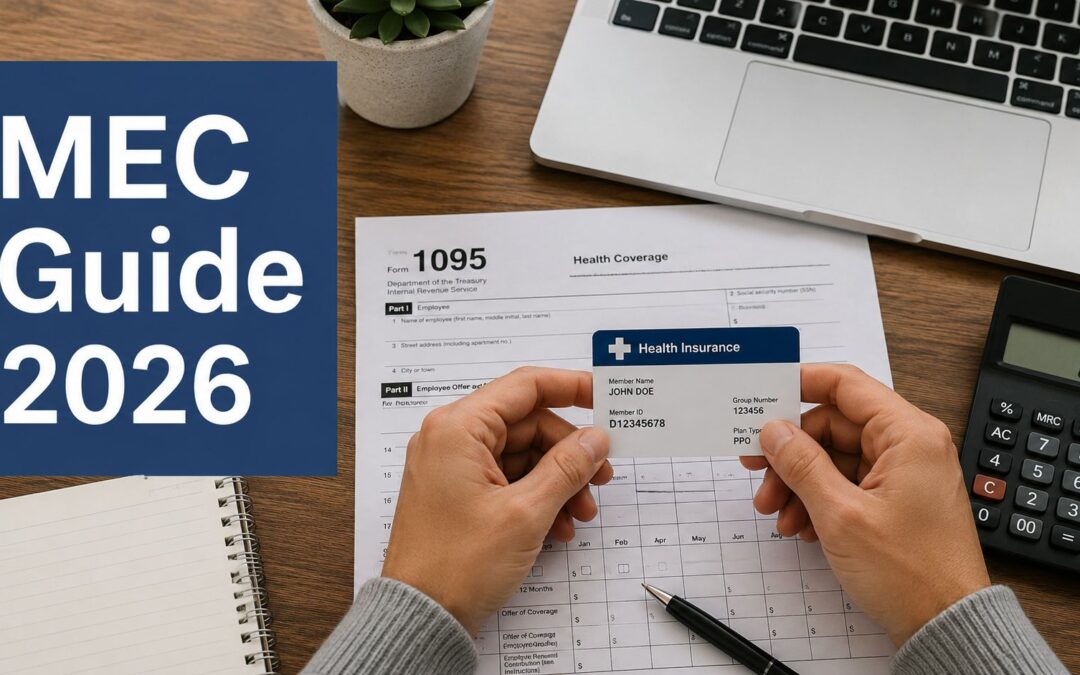
Minimum essential coverage is a health plan that meets the Affordable Care Act's basic requirements, and it matters because it can affect both your taxes and whether you can get help paying for coverage. If you're self-employed, between jobs, or retired before Medicare starts, knowing whether your plan counts can save you from expensive mistakes.
A lot of people run into this term when they're doing taxes, reviewing a Marketplace application, or trying to replace coverage after leaving a job. The phrase sounds bureaucratic, but the core question is simple: Does your health plan count as real ACA-recognized coverage, or not?
That question matters more when you don't have a traditional employer handling benefits for you. If you're a freelancer, consultant, small business owner, gig worker, or early retiree, you're usually the one making the coverage decision, tracking the paperwork, and dealing with the consequences if something gets missed. That can feel unfair, especially when the rules aren't written in plain English.
This guide translates the term into everyday decisions. You'll see what qualifies, what usually doesn't, how Form 1095 fits in, when state rules can still create penalties, and what to do if you're trying to bridge the gap until Medicare.
What Is Minimum Essential Coverage and Why It Matters
If you've ever stared at a tax form or health insurance application and thought, “I have coverage, but is it the right kind of coverage?” you're asking the exact question minimum essential coverage is meant to answer.
Minimum essential coverage means health insurance that satisfies the ACA's baseline coverage requirement. In plain language, it's the kind of coverage the government recognizes as qualifying health insurance, not just a medical discount card, a limited-benefit policy, or a temporary stopgap plan.
For people outside traditional employment, this matters for two practical reasons.
First, some states still care whether you had qualifying coverage. The federal penalty tied to the old individual mandate no longer applies to individuals, but some states have their own rules. If you live in one of those states, having coverage that counts can matter when you file your state return.
Second, financial help is tied to qualifying coverage choices. If you're shopping on the Marketplace because you work for yourself or retired before Medicare, the difference between a qualifying ACA-style plan and a non-qualifying alternative can affect whether you can use premium tax credits and other forms of assistance.
People also confuse minimum essential coverage with broader ACA plan standards. They overlap, but they aren't always the same conversation. If you want a helpful companion read on what ACA plans are supposed to cover, see essential health benefits.
Practical rule: If a plan sounds much cheaper because it strips out major protections, treats coverage as temporary, or only pays limited benefits, slow down and verify whether it counts as minimum essential coverage before you enroll.
A good working test is this: Would this plan hold up as your main health insurance for the year, or is it really a side product dressed up like health insurance? That question catches a lot of problems early.
Health Plans That Qualify as MEC
The easiest way to understand minimum essential coverage is to sort plans into buckets. If your coverage fits one of the recognized categories below, it usually counts. If it lives outside those categories, you need to look closer.
A qualifying health plan for MEC purposes is coverage the ACA recognizes as satisfying the requirement to have basic health insurance.

Employer and former employer coverage
Many people assume this section doesn't apply to them if they're self-employed now. But it often matters during a transition year.
- Employer-sponsored group plans count if you're enrolled through your own job or a spouse's job. This is the standard workplace health insurance often considered primary.
- COBRA continuation coverage generally counts too. If you left a job and kept the same plan through COBRA, that's usually still qualifying coverage.
- Retiree health coverage can also count when it comes from a former employer.
If you're comparing job-based coverage with buying your own plan, it helps to understand how individual policies work in the current market. This overview of individual and family health plans is a useful companion.
Individual market plans
This is the category many freelancers and early retirees rely on.
- Marketplace plans count as minimum essential coverage. These are the ACA-compliant plans sold through the federal or state Marketplace.
- Plans bought directly from an insurer can count if they are real ACA-compliant major medical plans.
- Most student health plans may count, but you should confirm the plan's status rather than assume it does.
- Catastrophic plans can qualify in limited situations, usually for people who meet the eligibility rules for that type of plan.
People often get tripped up here. They hear “individual plan” and assume any policy bought on their own must qualify. That's not true. Some individually purchased products are still limited plans and don't count.
Government programs
Government coverage often qualifies, but not every version of every program does.
- Medicare Part A counts.
- Medicare Advantage plans, also called Part C, count.
- Most Medicaid coverage counts.
- CHIP counts for children who are enrolled through that program.
- Most TRICARE coverage counts.
- Certain qualifying VA health programs count.
- Some niche categories, such as Peace Corps coverage and certain recognized high-risk or special government programs, may also count.
If you're in a special program, don't guess. Ask the plan administrator or issuing agency whether the coverage is treated as minimum essential coverage.
Quick reference table
| Plan Type | Qualifies as MEC? |
|---|---|
| Employer group health plan | Yes, generally |
| COBRA | Yes, generally |
| Marketplace ACA plan | Yes |
| Direct ACA-compliant major medical plan | Yes, generally |
| Medicare Part A | Yes |
| Medicare Advantage Part C | Yes |
| Most Medicaid | Yes, generally |
| CHIP | Yes |
| Most TRICARE | Yes, generally |
| Certain VA health programs | Yes, generally |
| Most student health plans | Often, but confirm |
What usually does not count
This can lead to costly misunderstandings.
- Short-term health insurance usually does not count.
- Health care sharing ministries generally do not count.
- Stand-alone dental or vision plans do not count as your main qualifying health coverage.
- Accident supplements, critical illness policies, and fixed-indemnity plans usually do not count.
- Medical discount programs do not count.
If a plan pays only for a narrow slice of care, fills a gap, or works as a supplement, it usually isn't minimum essential coverage.
That distinction matters a lot for someone trying to save money between jobs or before Medicare. A low-premium product may feel like a practical bridge, but if it doesn't count as MEC, it can create tax, subsidy, and coverage problems later.
How to Report Coverage with Form 1095
Form 1095 is one of those documents people receive, set aside, and then panic about later. The good news is that it's mostly a record-keeping form. Its main job is to show what kind of health coverage you had and when you had it.

If you're self-employed or recently retired, the form you get depends on where your coverage came from. If you changed coverage during the year, you might receive more than one version.
Form 1095-A
You get Form 1095-A if you enrolled in a Marketplace plan.
This is the most important version for people who receive premium tax credits. It shows the Marketplace policy details and the information used to reconcile your subsidy when you file your federal return. If you bought your own plan through the Marketplace, don't ignore this form. You typically use it to complete Form 8962.
Look closely at the months of coverage listed and make sure they match what took place. If you started or ended coverage midyear, those details matter.
Form 1095-B
You may get Form 1095-B from an insurance company or government program that provided qualifying coverage.
This form usually confirms that you and anyone on your policy had minimum essential coverage for certain months. It's often more of a proof document than an action document, but you should keep it with your tax records.
If you're unsure when to expect it or how to replace it, this guide on how to get a 1095 can help.
Form 1095-C
You may receive Form 1095-C from a large employer.
This form is common if you worked for a larger company for part of the year, even if you later became self-employed or retired. It reports the offer of coverage made by the employer, and sometimes the months you were enrolled.
The most common mistake here is assuming the form proves you had Marketplace coverage or subsidy eligibility. It doesn't. It documents what the employer offered.
Here's a simple visual overview of how the reporting process works:
What you should actually do with it
- Open every 1095 form you receive and compare the listed months to your own records.
- Keep the forms with your tax documents even if you're not required to mail them in.
- Use 1095-A carefully if you had Marketplace subsidies, because that information is part of your tax filing.
- Ask questions early if the form shows the wrong months, the wrong household members, or coverage you never had.
Your 1095 form is less about “filing a health insurance form” and more about verifying that your tax return matches your actual coverage story.
Understanding Exemptions and State Mandates
Many people still think the federal government charges a penalty if you go without health insurance. That used to be a widespread concern. Today, the federal individual penalty for lacking coverage is no longer enforced for individuals, but that doesn't mean the topic is irrelevant.
State rules can still matter, and exemptions can still matter in specific situations.
What an exemption means
An exemption is a recognized reason you weren't required to have qualifying coverage for a period of time. The details depend on the context, but common examples may involve affordability problems, certain hardship situations, or a short gap in coverage.
Why would you care about an exemption now?
Because if your state has its own individual mandate, an exemption may help protect you from a state tax consequence. It can also help you explain a gap in a way that fits the rules rather than hoping it won't matter.
People often hear “the federal penalty is gone” and stop there. That's too simplistic if you live in a state with its own coverage requirement.
States with their own mandate rules
Some places still have individual coverage requirements at the state level. These include:
- California
- Massachusetts
- New Jersey
- Rhode Island
- Washington, D.C.
- Vermont, which has a mandate requirement but no penalty
If you live in one of these places, minimum essential coverage still has direct tax relevance at the state level.
A side-by-side way to think about it
| Issue | Federal level | State level |
|---|---|---|
| Individual penalty for going without MEC | Not enforced for individuals | May still apply depending on where you live |
| Need to review local rules | Less urgent for penalty reasons | Very important in mandate states |
| Exemptions | May still matter in some contexts | Often important if your state requires coverage |
Don't assume national headlines answer your state tax question. State returns follow state rules.
If you moved during the year, this gets even more confusing. A person can spend part of the year in a mandate state and part elsewhere. In that case, save your enrollment records, cancellation dates, and proof of address changes. Those details matter more than broad assumptions.
For self-employed people, this is one more reason not to rely on a short-term or bare-bones product without checking whether it counts. Saving money on premiums can feel smart in the moment, but it can create a problem on the state tax side.
How MEC Unlocks Health Insurance Subsidies
For many people buying their own health insurance, minimum essential coverage isn't just a compliance term. It's the doorway to affordability.
A useful analogy is this: minimum essential coverage is the ticket, and Marketplace financial help is the theater. If you want access to the subsidy system, you need to be in the right kind of coverage setup.

Why this matters for people outside traditional jobs
If you work for yourself, your monthly premium likely comes from your own bank account, not an employer payroll deduction. If you retired before Medicare, the same thing is true. That means subsidy eligibility can make the difference between a plan feeling manageable and feeling out of reach.
The key point is simple. Marketplace premium tax credits are tied to enrollment in eligible Marketplace coverage. If you choose a non-MEC product instead, you're generally stepping outside that structure.
People often get seduced by alternatives. A short-term plan may advertise a lower premium. A health sharing arrangement may sound flexible. But those options usually don't plug you into the ACA subsidy system the way a Marketplace plan can.
The second layer of confusion
Some readers mix up these two questions:
- Does the plan count as minimum essential coverage?
- Do I qualify financially for subsidy help?
Those are related, but they are not the same question.
A qualifying Marketplace plan puts you in the right lane. Then your household situation, income estimate, and access to other coverage affect whether you receive premium tax credits or cost-sharing help.
If you want a practical tool for this part of the decision, use a guide to calculate health insurance subsidy.
One choice can cost more than it appears
A non-MEC option can look cheaper on the front end because the sticker price is lower. But that comparison is often misleading. You may be comparing:
- A full Marketplace plan with possible tax-credit support
- A non-qualifying product bought at full cost without that support
Important distinction: The cheapest premium on paper is not always the lowest real cost once tax credits, deductibles, and coverage gaps enter the picture.
That's especially important for self-employed households with fluctuating income. The right move usually isn't “find the lowest monthly premium.” It's “find the plan that keeps you protected and fits the subsidy rules you are able to use.”
A Compliance Checklist for Self-Employed and Pre-Medicare Adults
If you're handling your own coverage, the smartest approach is a checklist, not guesswork. These two groups face different problems. A self-employed designer replacing employer coverage has one set of choices. A retired couple in their early sixties bridging the gap to Medicare has another.

Checklist for self-employed professionals and contractors
- Verify what you have now. If you're currently on a short-term plan, a sharing ministry, or a limited-benefit product, confirm whether it counts as minimum essential coverage.
- Shop the Marketplace first. Even if you expect to buy direct, start with Marketplace options so you can see whether you're eligible for premium tax credits.
- Estimate income carefully. Your subsidy eligibility often depends on your projected household income, so use a realistic estimate rather than a hopeful one.
- Track life changes. Marriage, divorce, moving, losing other coverage, or adding a dependent can affect enrollment timing and your options.
- Keep records all year. Save enrollment confirmations, cancellation notices, premium invoices, and tax forms in one folder.
- Coordinate taxes and coverage. If your income swings, your subsidy picture can change too. Founders and independent workers often benefit from understanding how founders handle tax obligations so health coverage choices and tax planning don't drift apart.
A common pain point here is uneven income. A contractor may earn strongly in one quarter and weakly in another. That doesn't mean Marketplace coverage is a bad fit. It means you need to revisit estimates when your year changes course.
Checklist for early retirees before Medicare
- Map your bridge period. Know how you'll cover the time between leaving employer coverage and becoming eligible for Medicare.
- Compare COBRA with Marketplace coverage. COBRA may let you keep familiar doctors and benefits, but a Marketplace plan may fit better depending on your household income after retirement.
- Review retirement income sources. Pension income, withdrawals, part-time work, and spouse income can all affect affordability and subsidy eligibility.
- Avoid a coverage gap. Don't let employer coverage end before your next plan starts unless you're sure the timing works.
- Prepare for the Medicare handoff. As you approach Medicare eligibility, check enrollment timing carefully so you don't create a break in coverage or a late-enrollment issue.
- Recheck provider networks and prescriptions. The right bridge plan isn't just compliant. It also needs to work with your doctors, specialists, and medications.
A bridge plan should do two jobs at once. It should count as qualifying coverage today and set you up cleanly for your next stage of coverage.
For both groups, the emotional part matters too. People often focus on premium first because that's the most visible cost. But compliance, subsidy access, provider access, and timing usually matter just as much.
Common MEC Questions and Pitfalls to Avoid
What if I only had a short gap in coverage?
Maybe that's manageable, but don't assume it's harmless. A short gap may be treated differently depending on the context and your state's rules. If you live in a state with its own mandate, review whether an exemption might apply and keep documents showing exactly when coverage ended and restarted.
Do short-term health plans count as minimum essential coverage?
No, usually not. This is one of the biggest misunderstandings. Short-term coverage may help with limited temporary needs, but it generally does not count as minimum essential coverage. The same caution often applies to health care sharing ministries and other nontraditional arrangements.
I'm eligible for my spouse's employer plan, but it feels expensive. Can I just buy a subsidized Marketplace plan instead?
Maybe, but eligibility for help gets tricky. The issue isn't only whether you can buy a Marketplace plan. You usually can. The harder question is whether access to other coverage affects your ability to receive premium tax credits. This is one of those areas where “I can enroll” and “I can get subsidy help” are not the same answer.
Does COBRA count?
Yes, generally. If you kept your former employer's plan through COBRA, that usually counts as minimum essential coverage. The separate question is whether COBRA is still your best financial move compared with Marketplace options.
I bought a cheap plan online from a private website. Doesn't that mean it qualifies?
Not necessarily. Buying a plan online tells you nothing by itself. What matters is the plan type. Some direct-to-consumer major medical plans qualify. Many low-cost products sold online do not. Before enrolling, ask plainly: “Is this ACA-compliant major medical coverage, and does it count as minimum essential coverage?”
The safest habit is to pause anytime a plan seems dramatically simpler, cheaper, or faster than standard major medical coverage. Sometimes that's fine. Sometimes it means you're looking at a product that solves one problem, only to create three more.
If you want help sorting out whether your current plan counts, comparing Marketplace options, or finding a practical bridge to Medicare, My Policy Quote can help you review your choices in plain English and avoid costly coverage gaps.