
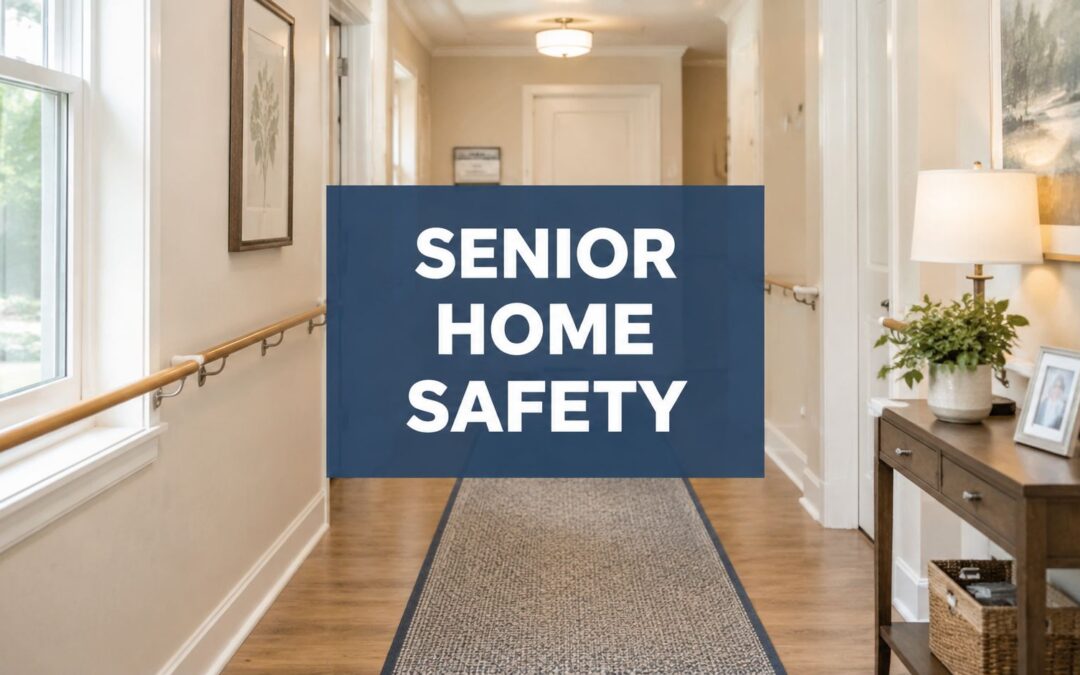
You notice the little things first. A lamp cord stretched across the hallway. A favorite throw rug curled at the edge. A step into the garage that never seemed like a problem until your dad started holding the wall when he crossed it.
Most families don't start by asking for a senior home safety assessment. They start with a worry they can't quite shake. They wonder whether one bad moment in a familiar home could change everything.
Why a Home Safety Assessment Is Your Best Proactive Tool
A senior home safety assessment isn't about proving someone can no longer manage at home. It's about protecting the life they want to keep living there.
That distinction matters. Older adults often hear "safety" as "loss of control." Families often hear "wait and see" as reassurance. In practice, waiting usually means hazards stay invisible until they cause an injury. The home feels normal because it's familiar, not because it's safe.
According to the CDC, falls among adults age 65 and older were the leading cause of injury-related death in 2019, with over 34,000 fatalities nationwide, and nearly 60% of senior falls happen inside the home (CDC summary cited here). That tells you something important. The biggest risks often aren't outside in traffic or on icy sidewalks. They're in the bathroom at night, at the front step, or beside the bed.
Why the home deserves a clinical eye
Family members miss hazards all the time because they know the house too well. Seniors do the same. They compensate without realizing it. They step around the loose rug. They avoid the back stairs. They use the counter to steady themselves. Those workarounds can hide a growing problem.
A proper assessment reframes safety as support for independence. When you improve lighting, add a stable rail, or clear a transfer path, you're not taking anything away. You're reducing the effort it takes to do ordinary things with confidence.
A safer home often preserves dignity better than extra supervision does.
There's also a broader safety mindset to keep in view. Falls aren't the only home hazard that matters in later life. If the home has gas appliances, families should also understand gas appliance safety, especially when memory changes, slower reaction time, or reduced mobility could affect how quickly someone notices a problem.
What makes this proactive instead of reactive
A reactive approach starts after the ER visit, fracture, or sudden decline in confidence. A proactive approach starts when someone is still living at home, still making choices, and still able to participate in planning.
That timing changes the conversation. Instead of asking, "How do we keep this from getting worse?" you ask, "What adjustments will help you stay here safely and comfortably?"
A good assessment gives you a practical map:
- Which hazards are immediate: loose rugs, poor stair support, slippery tub surfaces
- Which changes are simple: brighter bulbs, better furniture spacing, cord management
- Which issues need skilled help: grab bar placement, ramp design, doorway changes
- Which costs need planning: professional assessment fees and larger modification work
That's why I consider a senior home safety assessment one of the strongest early interventions a family can make. It turns vague fear into a plan.
Getting Started with Respect and Consent
The first conversation matters as much as the checklist.
If you lead with fear, defensiveness often results. If you lead with partnership, you get better information and better cooperation. The goal isn't to "convince" a parent that they're unsafe. It's to invite them into decisions that protect their routines, privacy, and control.

What to say first
Start with a recent task, not a global judgment. That keeps the conversation concrete.
You can say:
- "I want to make daily things easier." "Getting in and out of the shower shouldn't take so much effort."
- "I want your home to work for you." "Let's see if a few changes could make walking to the bathroom at night simpler."
- "I'd like a professional opinion." "I'd feel better if someone trained in home safety looked things over with us."
Avoid statements like "You can't live alone like this" or "This house isn't safe anymore." Those phrases usually shut the door.
Why a professional voice can help
Families often get stuck because every suggestion sounds personal. A clinician or aging-in-place specialist can depersonalize the issue. The problem becomes the threshold height, not the person's age. The concern becomes tub access, not "frailty."
One reason that outside guidance carries weight is the level of professional agreement behind it. A major study cited by Age Safe America found that 100% of Emergency Room doctors agreed that an annual Home Safety Assessment is vital for keeping seniors safe at home. That consensus helped move home safety checks into standard geriatric thinking rather than optional advice.
If your loved one tends to trust medical guidance, connect the conversation to routine care. It can help to ask their physician for input or to use preparation steps similar to those you would use when finding a primary care doctor who fits ongoing care needs. People often respond better when safety planning feels like part of healthcare, not family pressure.
Conversation rule: Ask permission before inspecting anything. "Would it be okay if we walk through the bathroom together?" works better than "We need to check your bathroom."
How to preserve dignity during the visit
Respect isn't just tone. It's method.
Use these ground rules:
- Include the older adult in every room-by-room discussion. Don't talk over them.
- Ask about hard tasks, not just visible hazards. "What's the trickiest part of getting dressed?" often reveals more than a visual scan.
- Focus on function. Can they bathe, toilet, transfer, cook, and sleep with less strain?
- Offer choices. A person may refuse a large remodel but accept a rail, shower seat, or furniture rearrangement.
Some resistance is really grief in disguise. A person may hear your concern as evidence that their world is shrinking. Slow the pace. Keep the message steady. The purpose is to help them stay in charge of their life at home for as long as possible.
Your Comprehensive Room-by-Room Safety Checklist
The most effective home reviews don't rely on memory. They use a standardized checklist and avoid two common problems: false confidence, where familiar hazards get overlooked, and product bias, where someone pushes equipment before understanding the actual need. A practical resource on this point notes that the strongest assessments use a checklist with 25+ items, including stair stability, grab bar sturdiness, and bed height appropriateness (Caring Senior Service home safety guidance).
Start with a notebook or phone notes app. Walk the home at the same pace your loved one uses, not your own.
For a visual summary, this room-by-room guide helps families scan key areas quickly.

Entryways and transitions
Start outside and at every doorway. Transitions cause more trouble than families expect.
Check for:
- Uneven thresholds: even a subtle height change can catch a toe or walker
- Step support: rails should feel solid and available where the person places their hand
- Lighting at entrances: the lock, step edge, and path should all be visible after dark
- Clear exterior paths: leaves, hoses, packages, and planters all matter
Watch the person enter the home if possible. Don't just inspect the area standing still. Movement reveals hesitation, balance loss, and awkward turns.
Hallways, stairs, and living areas
False confidence most often manifests here. People know the route so well that they stop noticing the risk.
Look closely at:
- Electrical cords: secure them along walls with non-trip covers
- Furniture spacing: leave enough room for a cane, walker, or steady hand on nearby support
- Loose rugs and mats: especially near turns, transitions, and stair tops
- Stairs: confirm rails are secure and usable through the full route
- Lighting: hallways, bathroom routes, and transition zones need consistent illumination
If a person says, "I just hold onto this table when I walk by," treat that as a warning sign, not a solution.
A stable chair in the living room matters too. Soft, low seating may be comfortable once seated but hard to rise from safely.
A short video can also help families spot hazards they stopped seeing long ago.
Kitchen and bedroom
These rooms are less dramatic than stairs or showers, but they shape daily independence.
In the kitchen, check whether commonly used dishes, pans, medications, and food items sit between knee and shoulder height. Reaching overhead while twisting is a common setup for imbalance. Also look at floor traction near the sink and stove, and remove throw rugs that slide.
In the bedroom, pay attention to:
- Bed height: feet should reach the floor easily during sit-to-stand
- Path to bathroom: no baskets, pet beds, cords, or low furniture in the route
- Lamp and switch access: the person shouldn't have to walk in the dark
- Nighttime essentials: glasses, phone, water, and mobility aid should be within reach
Bathroom and bathing areas
Bathrooms deserve extra scrutiny because surfaces are slick and movements are complex.
Inspect:
- Tub and shower entry: is there a stable handhold and enough room to step in safely?
- Grab bars: not towel bars, not suction devices treated as permanent supports
- Slip resistance: use non-slip surfaces in the wet zone and on the floor where needed
- Toilet transfers: can the person sit and stand without pulling dangerously on nearby fixtures?
- Water temperature: keep it below 120°F to reduce scald risk, as noted in professional guidance summarized in the home safety literature cited above
Clutter counts here too. Extra bins, scales, magazine racks, and decorative items often narrow the very path someone needs to turn and sit safely.
A strong senior home safety assessment doesn't ask, "Does this room look tidy?" It asks, "Can this person move through this room safely at the speed and strength they have today?"
How to Score Risks and Prioritize Modifications
Most families feel overwhelmed after the walk-through. That's normal. Once you start noticing hazards, everything can seem urgent.
Clinicians solve that by ranking problems instead of reacting to them one by one. A formal assessment typically follows a five-step process that ends with a written report containing prioritized recommendations and estimated costs. The assessment itself commonly falls in the $199 to $399 range, and professionals such as Certified Aging-in-Place Specialists and Occupational Therapists tend to produce the strongest results (FellowshipLife home safety overview).
Use a simple matrix at home. Rate each issue on two questions:
- How likely is this to cause a fall or injury?
- If it happens, how serious could the outcome be?
This visual can guide your ranking.

High priority items
Act quickly when both likelihood and potential harm are high.
Examples include:
- Loose rug at the top of stairs
- Unsteady stair rail
- Slippery tub entry with no reliable support
- Poor lighting on the path from bed to bathroom
- Frequently used item stored where climbing is required
These are the issues most likely to lead to a serious injury. Don't save them for a later project list.
Medium priority items
These problems may not cause an immediate crisis, but they increase effort, fatigue, or near-miss risk.
Common examples:
| Issue | Why it matters | Usual timing |
|---|---|---|
| Low, soft chair | Makes sit-to-stand harder | Plan soon |
| Narrow furniture path | Reduces safe turning space | Plan soon |
| Poor kitchen storage layout | Encourages reaching and twisting | Plan soon |
| Minor threshold problem | Can worsen with mobility aids | Plan soon |
Medium priority work often pairs well with budgeting discussions, especially if you're also comparing long-term care insurance costs and planning considerations.
Low priority items
Some findings can wait if they aren't creating active risk.
That might include outdated but functional fixtures, low-use storage problems, or small maintenance issues away from daily walking routes. Low priority doesn't mean unimportant. It means the change won't protect safety as much as a rail, lighting upgrade, or bathroom support would.
Use this filter: Fix first what affects transfers, stairs, bathing, and nighttime walking.
A written list helps. So does grouping each recommendation into one of three buckets:
- Do now
- Schedule next
- Monitor
That structure keeps families from spending money on visible projects that don't improve function. New flooring, decorative updates, and generic gadgets often look productive. Prioritized safety work is what reduces risk.
Quick Fixes Versus Professional Modifications
Not every hazard needs a contractor. Not every job should be DIY either.
The best home safety plans separate simple environmental corrections from installations that must hold weight, meet accessibility needs, or work with a person's movement pattern. That's where families often make expensive mistakes. They buy products first and think about fit later.
What you can usually handle yourself
These are often reasonable DIY tasks if the person doing them is steady, capable, and not rushing:
- Remove throw rugs and clutter
- Reposition furniture to widen walkways
- Add brighter bulbs and nightlights
- Place frequently used items within easier reach
- Secure loose cords along walls
- Move pet bowls or decorative items out of traffic areas
These changes are low cost, low complexity, and often immediately helpful.
What should be professionally assessed or installed
Anything that affects structural support, electrical safety, or accessibility design needs skilled hands.
Here is the clearest way to separate them:
| Modification Task | Recommended for DIY? | When to Call a Professional |
|---|---|---|
| Remove loose rugs | Yes | If flooring underneath is damaged or uneven |
| Add nightlights | Yes | If outlets are poorly placed or wiring is questionable |
| Reorganize kitchen storage | Yes | If cabinets need lowering or reconfiguration |
| Secure electrical cords | Yes | If additional outlets or wiring work are needed |
| Install grab bars | No | Call a professional who can anchor correctly and place them for actual transfers |
| Improve stair railings | No | Call a professional if rails are loose, missing, or poorly positioned |
| Widen doorways | No | This is modification work, not a simple repair |
| Add threshold ramps | Sometimes | Call a professional if mobility devices are involved or grade changes are complex |
A badly placed grab bar can be more dangerous than no grab bar at all.
Who to hire for what
A general handyman may be fine for minor repairs. But a Certified Aging-in-Place Specialist or occupational therapist sees the home differently. They look at the person's gait, transfers, reach, endurance, cognition, and equipment use. That changes where modifications go and whether they'll be used.
If you're comparing examples of larger accessibility projects, these Trademaster accessible home remodels show the kind of work that usually belongs in the professional category rather than on a weekend to-do list.
The right question isn't "Can someone install this?" It's "Will this specific change make this specific person's daily routine safer?"
Funding Home Modifications and Professional Help
Many families often stall at this stage. They accept the safety problem, agree on the recommendations, then freeze when they reach the bill.
The hardest gap often affects people who are still working for themselves or who retired before Medicare starts. For them, the clinical case may be clear while the coverage rules remain muddy. One source focused on OT-led assessments reports that these assessments reduce fall risk by 46%, and that OT-led assessments had 50% implementation at 12 months versus less than 20% for self-assessments. The same source notes that reimbursement for pre-Medicare adults ages 60 to 64 is often opaque, even though professional assessment fees commonly run $199 to $399 (Astra discussion of OT-led home safety assessments).
Where coverage gets confusing
Families often assume one of two things, and both can be wrong:
- "Insurance will probably cover it."
- "Nothing will be covered, so there's no point asking."
The truth depends on the plan, the diagnosis, the provider type, and how the service is billed. That's especially true for self-employed adults, 1099 contractors, and early retirees piecing together private coverage.
A few practical steps help:
- Ask for the provider's credentials in writing. Insurers may distinguish between an OT evaluation and a general home consultation.
- Request an itemized invoice. Broad labels like "home visit" don't help when you're asking about reimbursement.
- Get the medical reason documented. Mobility decline, fall history, transfer difficulty, or post-hospital functional concerns can matter.
- Call the insurer before scheduling larger work. Ask specifically about assessments, durable medical equipment, and home modifications.
- Check related benefits. A policy may exclude one category but allow another.
If you're trying to sort out one specific modification, this guide on whether Medicare covers walk-in tubs is the kind of narrow coverage question worth clarifying before you commit money.
Other funding paths worth pursuing
Insurance isn't the only route. Depending on where you live, families sometimes find help through local aging agencies, Medicaid-related programs, veterans' supports, nonprofit grant programs, or community home repair initiatives. Some families also use care coordination services to identify support options that don't show up in ordinary insurance paperwork.
For broader caregiving support ideas, this Nursing Assessment Australia resource offers useful context on home aide planning, which can matter when supervision and environmental safety need to be addressed together.
Pay first for the changes that remove immediate risk. Then chase reimbursement with complete paperwork instead of delaying the work that protects daily function.
When money is tight, phase the plan. Handle the urgent hazards first. Keep every receipt. Save the written assessment. Ask contractors for separate line items. The families who recover the most value from a senior home safety assessment aren't always the ones with the biggest budgets. They're the ones who document everything and prioritize well.
If you're comparing insurance options before paying for an assessment or home modification out of pocket, My Policy Quote can help you review coverage choices for pre-Medicare adults, self-employed workers, and families trying to close the gap between safety needs and what a policy will pay.