
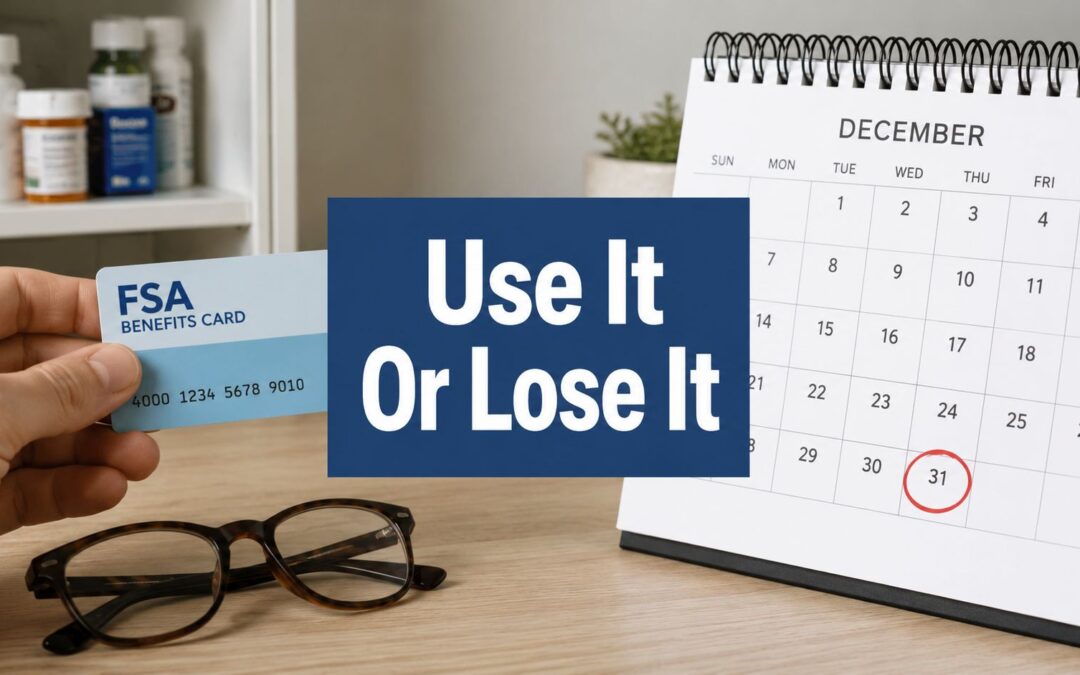
You check your benefits portal, see money still sitting in your FSA, and your stomach drops. It's late in the year. Appointments are hard to book. You vaguely remember hearing that FSA money can disappear if you don't use it, but you're not sure what counts, what the deadline is, or whether your plan has any wiggle room.
That anxiety is normal.
A lot of people hear “use it or lose it” and assume the situation is hopeless. It usually isn't. Most of the stress comes from not knowing which date matters, which expenses qualify, and whether your employer offers an exception that gives you more breathing room.
If you're self-employed now but had an employer plan earlier in the year, or your spouse has an FSA through work, the confusion can get even worse. Most articles talk to someone with one steady W-2 job and one simple benefits package. Real life is messier than that.
That End-of-Year FSA Panic Is Real But You Have Options
Melissa opens her email and sees a reminder from HR. Her FSA deadline is approaching. She logs in and realizes she still has a balance left. Her first thought is a common one: “I'm about to lose my own money.”
Then the scramble starts. She wonders if she should buy random supplies online. She considers booking a vision exam she's been putting off. She texts her spouse to ask whether their child needs a dental visit before the year ends. None of that feels organized. It feels like damage control.
That's where most FSA stress comes from. Not just the rule itself, but the rush and uncertainty around it.
You don't need a panic purchase. You need a plan tied to your actual deadline and your real health needs.
The good news is that the FSA use it or lose it rule is strict, but it isn't always as final as people think. Some plans offer extra time. Some let you carry over a limited amount. Some give you additional time to submit claims you already incurred before the deadline. Those details matter.
For freelancers, contractors, and people moving in and out of jobs, there's another layer. You may not have your own active employer FSA now, but you may still have decisions to make if you recently left a job, picked up short-term work with benefits, or can use a spouse's plan for household expenses that qualify under that plan.
First calm move
Before you buy anything, do these three things:
- Check your plan document or portal: Look for the plan year end date, carryover rules, grace period, and claim submission deadline.
- Review your recent receipts: Many people already have eligible expenses they forgot to submit.
- List care you've delayed: Eye exams, dental work, prescriptions, and replacement items often make more sense than random last-minute shopping.
Once you know the rules of your specific plan, the panic usually starts to shrink.
What Is the FSA Use It or Lose It Rule Really?
An FSA works a bit like a special-purpose gift card tied to health expenses. You put money into it through your employer, usually on a pre-tax basis, and you use that money for eligible costs. The catch is that the card has an expiration rule.
That's the heart of the FSA use it or lose it rule.
The rule dates back to the original cafeteria plan designs under IRS regulations, and it requires that money left in an employee's FSA at the end of the plan year be forfeited to the employer, according to Wikipedia's overview of Flexible Spending Accounts. That same overview notes that analyses estimate forfeitures can absorb up to roughly 14% of total employee contributions in a given year.

The part people often misunderstand
A lot of readers assume unused FSA money goes back to the government. That's not how this rule works. Under the standard framework, forfeited funds go back to the employer.
That sounds harsh because it is harsh. But it also explains why planning matters so much with FSAs. This isn't a general savings account. It's a spending account with guardrails.
If you want a broader primer on how these accounts function, this health care flexible spending account overview gives useful background before you zero in on deadlines.
Why the rule exists
The simplest way to think about it is this. The tax break comes with limits and structure. The account is supposed to be used for qualified expenses during a defined period, not treated like an open-ended personal bank account.
That's why your strategy should be practical, not emotional.
- Don't treat the balance like bonus money: It was set aside for health-related costs.
- Don't assume every deadline is December 31: Many plans use a different plan year.
- Don't guess where the funds go if unused: The default rule is forfeiture to the employer.
Practical rule: If your FSA feels confusing, start by asking one question: “What is the last date my plan allows this money to be used for an eligible expense?”
That question clears up more confusion than almost anything else.
Navigating the Exceptions Grace Period Carryover and Run-Out
You check your FSA balance in late December and feel that familiar jolt. There is money left, the deadline language looks vague, and every benefits term starts to blur together.
This is usually the point where people mix up three very different rules: carryover, grace period, and run-out period. They sound like minor variations. In practice, they answer three separate questions: Can some money roll into next year? Can you keep spending for a little longer? Can you still file paperwork after the deadline?
FSA deadline extensions at a glance
| Feature | Carryover | Grace Period | Run-Out Period |
|---|---|---|---|
| What it does | Moves a limited amount of unused health FSA money into the next plan year | Gives you extra time after the plan year ends to incur new eligible expenses | Gives you extra time to submit claims for expenses incurred before the deadline |
| Can you incur new expenses during it | Yes, in the next plan year, up to the allowed carried amount | Yes, during the extra extension window | No |
| Is it automatic | Only if your employer offers it | Only if your employer offers it | Depends on plan administration |
| Can a plan have this and a grace period | No. A plan can offer carryover or grace period, not both | No. A plan can offer grace period or carryover, not both | Often works alongside the main deadline rules |
| What should you check | The employer's carryover cap and whether your plan includes it | The last date new expenses can be incurred | The final date claims must be filed |
A simple way to sort them out helps. Carryover is leftover money you are allowed to keep. A grace period is extra shopping time for eligible care. A run-out period is paperwork time.
Carryover means some money can stay with you
Some employers let you bring a limited amount of unused health FSA money into the next plan year. For 2025, plans could allow up to $660 to carry over, and for the transition from 2026 to 2027, that maximum rises to $680, according to WEX's explanation of the IRS use-or-lose rule.
The key word is can. Your employer does not have to offer the full amount, or any carryover at all.
That detail matters even more for freelancers and self-employed workers who only have temporary access to an employer plan through a spouse or a short-term job. If your FSA access may end soon, a carryover feature can soften the risk, but only if that specific plan includes it. A friend's plan rules will not help you here.
Grace period means extra time to incur new expenses
A grace period works differently. Instead of preserving part of your balance for the next plan year, it gives you a little more time after the plan year ends to have eligible expenses.
The common version allows up to 2.5 extra months under the plan design described in the WEX source cited above.
Many claims often falter. A grace period extends the time to receive eligible care or buy eligible items. It does not mean you can wait forever to act.
If you want ideas for expenses that may qualify during that window, this list of common FSA eligible expenses can help you match your balance to real health needs. If part of your spending plan includes supportive athletic or recovery gear, Swift Running's guide on eligible footwear may also be useful.
Run-out period means you can still file, not keep spending
A run-out period confuses people because it happens after the plan year too. But it serves a different purpose.
It gives you extra time to submit claims for expenses you already had before the spending deadline.
Here is the clean test:
- Eye exam in December, claim filed in January. Usually fine if the run-out window is still open.
- New glasses bought after the spending deadline, with no grace period. Usually not fine.
The purchase date or service date is the anchor. The filing date is separate.
One plan can have carryover or grace period, not both
Under the standard health FSA rules described in the WEX guidance above, an employer can offer carryover or a grace period, but not both. A run-out period may still exist alongside either one because it handles claim submission, not new spending.
That is why copying advice from a coworker, your spouse, or an online forum can go wrong fast. Two people can both have FSAs and still face different deadlines, different carryover caps, and different filing rules.
Your quick decision checklist
- If your plan has carryover: Check the cap first, then compare it with your current balance.
- If your plan has a grace period: Schedule care or buy eligible items before that extra spending window closes.
- If your plan has a run-out period: Gather receipts for past expenses and submit claims now.
- If you are self-employed and using a spouse's plan or temporary employer coverage: Confirm whether your access continues into the next plan year, because that can affect how useful carryover really is.
The goal is simple. Match your next move to the exact rule your plan uses, and the FSA stops feeling like a trap.
A Smart Spenders Guide to FSA Eligible Expenses
Once you know your deadline, the next question is practical: what should you use the money on?
The best answer is usually not “whatever you can find.” It's better to spend FSA dollars on things you already need, things you've postponed, or items that support care you know you'll use soon.

If you want a broader list to compare against your own needs, this guide to FSA eligible expenses is a helpful reference.
Start with everyday health needs
This category is where many people find easy wins.
- Medicine cabinet basics: Bandages, first-aid supplies, and similar everyday health items can help you use smaller balances wisely.
- Pain relief and practical OTC needs: Approved over-the-counter items are often the easiest way to close out a modest remaining amount.
- Menstrual care products: These are easy to overlook because people often think only doctor visits count.
A common mistake is waiting for a “big” expense. Smaller recurring needs often do the job without waste.
Use it on care you've delayed
This is usually the highest-value option.
Vision and dental costs are often a better use of remaining FSA money than buying backup supplies you may not need for a long time. Think about eye exams, glasses, contact lenses, dental cleanings, fillings, or other treatment you already know belongs on your to-do list.
Some people also use year-end balances for specialist visits, therapy-related copays, chiropractic care, or medical devices and support items that fit their plan's eligible categories.
Buying something useful beats buying something urgent-looking.
Don't miss the less obvious categories
Some expenses surprise people because they feel ordinary rather than medical. Sunscreen is a good example often mentioned in consumer guidance around eligible spending. Diagnostic supplies and support devices are another area people forget until they need them.
If you're active and trying to sort out apparel questions, Swift Running's guide on eligible footwear is worth reading because it helps explain when footwear may fit into HSA or FSA eligibility discussions and when it usually won't.
A simple way to prioritize purchases
Use this order:
Already overdue care
Book the appointment you've postponed.Recurring essentials
Refill or replace items you already use.Household health basics
Restock practical supplies you'll likely need.Only then consider edge-case items
If something seems unusual, verify eligibility before paying.
That last step matters. A lot of FSA frustration doesn't come from missing the deadline. It comes from buying something that sounds medical, then learning the plan won't reimburse it.
Strategic Planning for Your Remaining FSA Funds
Year-end FSA decisions work better when you zoom out. The goal isn't to empty the account in a frenzy. The goal is to match the balance with care you were likely to pay for anyway.

A thoughtful approach can mean scheduling treatment, replacing vision items, or handling planned dental work while the funds are still available. For some households, that may include discussing timing with providers and asking what can be completed before your plan's spending deadline.
Use the balance on needs with staying power
The best strategic spending usually has two traits. It solves a real health need, and it reduces out-of-pocket spending you'd probably face later.
That might mean:
- Finishing delayed care: Dental and vision items are common examples because people often postpone them.
- Replacing worn medical supplies: If you already use a qualifying item, replacement may be more sensible than trying a new product at the last minute.
- Checking family needs together: One child's appointment or one spouse's prescription update can use funds more efficiently than scattered small purchases.
The freelancer and contractor angle most guides skip
Many articles often fall short. Guidance often focuses on stable W-2 employees, while Surency notes that existing content rarely explains how self-employed professionals and 1099 contractors can use spousal plans or think through lapsed plans from recent jobs.
If that's you, focus on real-world situations rather than generic benefits language:
- You're self-employed now, but had a job earlier in the year: Check whether you still have a run-out window to submit claims for eligible expenses incurred while your coverage was active.
- Your spouse has an employer FSA: Review whose expenses the plan can reimburse and how family medical needs can be timed within that plan's rules.
- You picked up short-term or seasonal work with benefits: Don't assume the account works like a long-term savings tool. Verify the coverage period, claim deadlines, and what happens when employment ends.
- You're juggling HSA questions too: Coordination rules can get technical fast. This overview of HSA and HRA options can help you think through account types without mixing them up.
A short explainer can also help if you learn better by listening than reading.
Your best next move if your work is nontraditional
Create a one-page benefits timeline for the year. List when your employer coverage started, when it ended, whether your spouse's plan is active, and which medical expenses happened during each window.
That simple timeline helps answer the questions freelancers ask most often: Which account can reimburse this expense? Did the service happen while I was covered? Do I still have time to file the claim?
When your income and benefits don't arrive in a tidy annual package, your paperwork has to do more of the organizing.
Turn FSA Rules from a Risk into an Advantage
The FSA use it or lose it rule feels punishing when you first hear it. Once you break it into parts, it becomes much more manageable. The key is knowing your specific plan's deadlines, understanding whether you have carryover or a grace period, and using the funds on care you need.
Don't wait for perfect certainty before you act. Start with your plan documents. Confirm the spend-by date, the claim filing deadline, and whether your employer offers any exception. Then look at your real life, not a generic checklist. What appointment have you delayed? What health item do you keep buying anyway? What family need can you handle now instead of paying for later with after-tax dollars?
If your work situation is less traditional, be even more deliberate. A spouse's plan, a recent employer plan, or a short-term benefits window may still create opportunities, but only if you check the dates and rules carefully.
Small actions beat last-minute panic. Review the deadline, gather receipts, and book one needed appointment today.
If you also want to compare how a different health spending account works, this plain-English guide on what you can use your HSA for can help you avoid mixing up the rules.
If you want help sorting through health coverage choices, spending accounts, and the insurance decisions that affect your bigger financial picture, My Policy Quote offers educational resources designed for families, freelancers, early retirees, and people navigating benefits without a simple employer plan.