
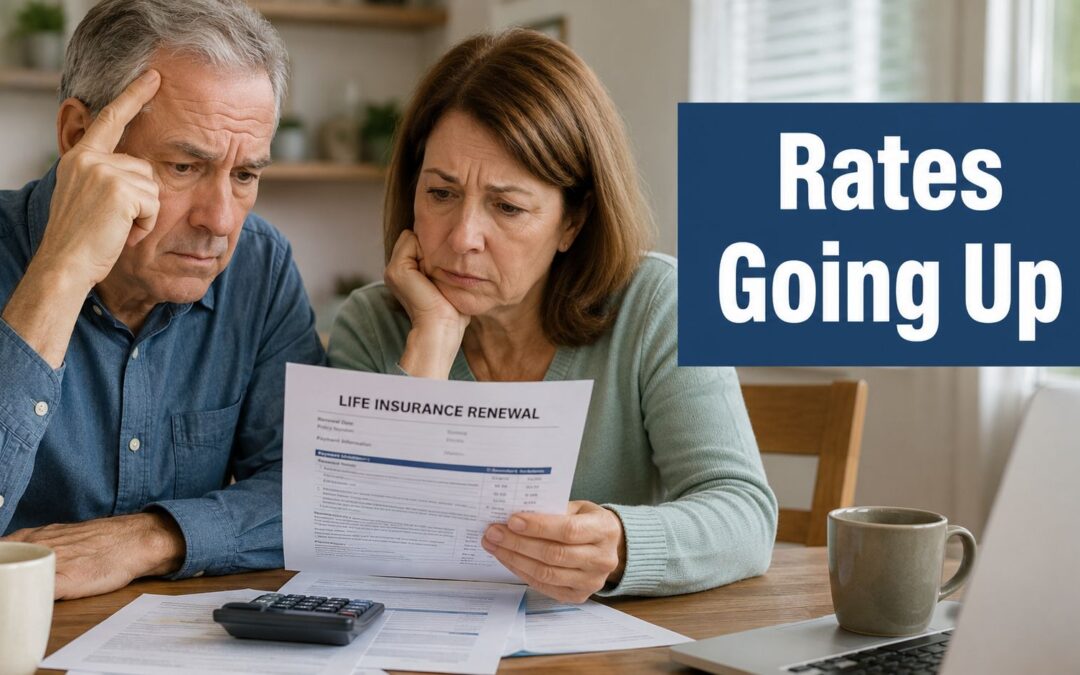
You open your email, see the updated life insurance quote, and your first reaction is simple: that can't be right.
Maybe you applied a few years ago and decided to wait. Maybe your current policy just renewed. Maybe nothing in your life feels dramatically different, yet the premium in front of you looks much higher than you expected. That moment creates real stress, especially if you're already juggling mortgage payments, rent, groceries, or a shaky self-employed income.
The good news is that a higher premium doesn't always mean the same thing. Sometimes you're seeing a market-driven increase on a new purchase. Other times, you're dealing with a policy-specific premium jump built into the contract you already own. Those are two different problems, and they require two different responses.
That distinction's importance is often overlooked. If you treat every increase as “inflation” or “I got older,” you can miss the actual fix.
Feeling the Sticker Shock of a Higher Insurance Quote
A lot of people dealing with life insurance rates going up are in one of two situations.
The first is the shopper who ran quotes last year, comes back now, and finds today's pricing less forgiving. The second is the policyholder who gets a renewal notice and suddenly wonders whether the policy was ever designed to stay affordable long term. Both situations feel the same at first. Both land as sticker shock. But they don't come from the same place.
That broader pressure is real. The OECD reported that average nominal insurance premium growth reached 11.9% in 2024, nearly double 6.5% in 2023, and it also noted projections for total global life insurance premiums to rise from USD 3.1 trillion in 2024 to USD 4.8 trillion by 2035 in its global insurance market trends report.
So if you're feeling blindsided, you're not imagining things. Insurance costs have been moving up across markets.
What that higher number might actually mean
A new quote can rise because insurers are pricing a tougher environment. An existing policy can rise because the contract was never guaranteed to stay level in the first place.
Those are very different conversations:
- New application problem: Today's pricing may reflect current underwriting, current age, and current insurer assumptions.
- Existing policy problem: Your premium may be stepping up because the contract renews annually, resets after the term, or allows internal cost adjustments.
- Budget problem: Even if the policy itself hasn't changed, the payment may now feel harder to carry because the rest of your insurance spending is also under pressure.
A higher premium isn't one diagnosis. It's a symptom. You have to identify whether the pressure is coming from the market, your health and age profile, or the policy design itself.
Once you separate those causes, the next steps get much clearer. That's where individuals regain control.
The Core Reasons Life Insurance Rates Are Climbing
Life insurance pricing works like an engine with several moving parts. If one part changes, the quote can change. If several parts shift at the same time, prices can feel much harsher than consumers expect.

Age and underwriting still drive the base price
The most direct factor is mortality risk pricing. Insurers charge more as age rises because the likelihood of a claim rises with age, and they also factor in health history, smoking, occupation, and risky activities, as explained by Western & Southern's overview of life insurance cost factors.
That means timing matters. The same person applying later often faces a materially less favorable underwriting picture because more time has passed, or because a manageable health issue has become part of the record.
The market changes how insurers price new business
Insurers also price against the economic environment they're operating in. Interest-rate shifts affect how carriers manage reserves and future obligations. Operating costs matter too. So do competitive pressures inside distribution channels.
One useful signal came from the U.S. life insurance market. CNBC TV18 reported that in FY25, life insurance premium grew 7%, commissions paid by life insurers rose 18%, and policy counts fell by about 7% to 12%. The same report said private life insurers saw commissions increase 39%, while policy growth was about 5% and premium growth about 12% in its market discussion on life insurance growth and commissions. That doesn't prove one simple story. It shows pricing pressure, sales incentives, and policy volume can move in different directions at the same time.
Why consumers feel confused
Most buyers assume a premium increase means one thing. Usually, they assume it means “insurance is more expensive now.” Sometimes that's true. But often only part of the answer is market-wide.
Here's one way to approach it:
- Underwriting sets your personal risk price
- Economic conditions influence how aggressively carriers price
- Distribution and servicing costs shape what insurers can offer
- Policy mechanics decide whether your current premium can change later
If you want a practical breakdown of how insurers build quotes, this guide on how to calculate life insurance rates helps connect those moving parts.
For agencies and carriers trying to manage service, enrollment support, and policyholder communication during volatile pricing periods, operational partners such as CallZent insurance BPO can also help reduce friction on the customer side. That matters because rate stress gets worse when communication is slow or confusing.
Practical rule: If a quote went up before you even bought the policy, start by looking at age, health, and current market pricing. If an existing policy went up, inspect the contract design before assuming the whole market is to blame.
How Different Policy Types Are Affected by Rate Hikes
Not every policy reacts the same way when life insurance rates are going up. Such variations often trip up many buyers.
A person with a level term policy may be largely insulated during the guaranteed term. Another person with an annually renewable term contract or a flexible-premium universal life policy can face rising costs even if their health hasn't changed at all. If you don't know which one you own, you can mistake a contract feature for a market crisis.
The key distinction is fixed pricing versus repricing risk
Some policies are built for premium stability during a defined period. Others carry repricing risk. That risk can show up at renewal, after a guarantee period ends, or inside a policy where internal charges can change over time.
Efinancial notes that premium increases can be driven by policy design, not just market conditions. It explains that term policies renewed after the initial period are recalculated at the insured's current age, and some universal life policies can rise if internal cost-of-insurance charges increase, as outlined in its explanation of why life insurance premiums increase.
Impact of Rising Rates on Life Insurance Policy Types
| Policy Type | Impact on New Applicants | Impact on Existing Policies |
|---|---|---|
| Level term life | New quotes may be higher than they would have been earlier because age and current underwriting conditions apply | Usually stable during the guaranteed term if the premium is contractually level |
| Renewable term or annually renewable term | New pricing can be less favorable if applying at an older age | More exposed to increases because premiums can reset as the insured ages |
| Whole life | New policies are generally more expensive upfront because coverage is permanent | Typically more predictable if the policy was issued with fixed premium obligations |
| Universal life | New illustrations can reflect current assumptions and product design | Can become more expensive over time if internal charges rise or the policy was underfunded |
What to review in your current contract
If your premium rose, don't stop at the payment notice. Pull the policy and review the mechanics.
Look for these items:
- Premium guarantee language: Does it say level, guaranteed, adjustable, or flexible?
- Renewal provisions: Is the policy beyond its original term and now renewing at current age?
- Universal life funding status: Has the policy relied on assumptions that no longer hold up?
- Conversion options: Can you move into a permanent policy without new medical underwriting?
If you're comparing term coverage options and trying to understand what you're paying for, this article on the costs of term life insurance can help frame the trade-offs.
What works and what doesn't
What works is identifying the policy chassis first. If the design itself allows increases, you need a contract strategy, not just a shopping strategy.
What doesn't work is assuming every premium jump is just inflation. That mistake keeps people in policies that may become harder to keep.
If your health hasn't changed but your premium has, the contract deserves scrutiny before the market gets the blame.
Which Age and Health Groups Will See the Biggest Impact
Some people can absorb a higher quote with only mild frustration. Others get hit at exactly the wrong stage of life.

The biggest pressure usually lands on people who don't have much room for error: early retirees who haven't reached Medicare age, self-employed workers whose income swings, parents covering debt or income replacement needs, and applicants whose health record is no longer clean.
Why some applicants feel the increase faster
Age matters because mortality pricing gets less forgiving over time. Health matters because underwriting gets tighter once conditions, prescriptions, or treatment history enter the file. Occupation matters because some jobs bring more day-to-day exposure to injury or hazardous environments.
That's why the impact isn't equal.
A healthy younger applicant is often dealing with a pricing inconvenience. A buyer in their early sixties, or someone with a chronic condition, may be dealing with a narrowing window. Waiting can mean fewer carrier options, steeper underwriting friction, or both.
Groups that should pay closer attention now
- Early retirees and pre-Medicare adults: They often face competing insurance costs and may be applying at an age where underwriting gets noticeably tougher.
- Applicants with medical history: Even controlled conditions can affect classification, especially if there have been recent changes in treatment or medication.
- Blue-collar and higher-risk workers: Occupation can influence pricing if the job creates more exposure to danger.
- Families buying late: Parents who postponed coverage while raising kids often discover the quote changed faster than expected.
For people trying to compare life insurance options by age in a practical way, this compare life insurance options resource gives a useful age-based reference point.
If you're debating whether to lock in coverage earlier or wait, this piece on whether it's better to buy life insurance young or wait is worth reading before you postpone the decision again.
The real risk isn't just price
The deeper problem is losing flexibility.
A healthy applicant usually has more advantage. They can choose term length more freely, compare more carriers, and ask harder questions about structure. Once age and health stack against you, the discussion often shifts from “What's the best fit?” to “What can I still qualify for at a payment I can keep?”
That's why delayed action costs more than money. It can reduce your options.
Practical Strategies to Secure Affordable Coverage Now
When life insurance rates are going up, generic advice won't help much. “Shop around” is incomplete. “Buy now” is too simplistic. You need a screening process that tells you whether to replace, convert, keep, or restructure what you already have.
Ethos makes an important point in its explanation of premium increases and policy design: a key question is whether the increase reflects a market shock or a policy-design problem. That one distinction can save people from making the wrong move.
Start with diagnosis before shopping
Before you apply anywhere, answer four questions:
- Is this a new quote or an existing policy increase?
- Is my current premium guaranteed level, annually renewable, or flexible?
- Did my health change, or did only the policy payment change?
- Am I trying to solve for the lowest payment today or the most stable payment over time?
That last question matters more than people expect. Cheap now can become expensive later if the contract carries built-in reset risk.
Use a replacement checklist, not guesswork
If you're considering replacing a policy, review these items carefully:
- Keep coverage active first: Never cancel an existing policy until the new one is fully approved and in force.
- Match the term to the financial job: Cover the years when income replacement, mortgage payoff, or child-raising obligations matter most.
- Ask about guarantees in plain language: Don't settle for vague reassurance. Ask whether the premium is guaranteed level for the full term.
- Review conversion rights: A good conversion option can become valuable if health worsens later.
- Check lapse risk: A slightly lower premium isn't better if the policy becomes hard to keep after a few years.
For side-by-side shopping, this guide to compare life insurance rates can help you evaluate structure, not just price.
What usually works best in practice
For many families, a straightforward level term policy does the job better than a more complicated design. It's easier to budget, easier to understand, and less likely to surprise you with internal repricing mechanics during the years when your family depends on the coverage.
For some people, permanent insurance still makes sense. But it only works when the buyer understands the funding commitment and the reason for using it. Permanent coverage is not automatically “better.” It's better only when the goal fits the design and the budget can support it.
Questions to ask before you sign anything
Take these questions to the agent or advisor:
- Is this premium guaranteed level for the entire term?
- What happens when the term ends?
- Can the policy renew, and if so, how is the new premium calculated?
- If this is universal life, what can cause internal charges to increase?
- What happens if I pay only the planned minimum?
- Can I convert later without a new exam?
Don't buy a policy until you understand not only what it costs now, but also what can make it cost more later.
What doesn't work
A few moves tend to backfire.
- Chasing only the lowest quote: That can push you into a design with future repricing risk.
- Ignoring renewal language: Many people discover the actual cost only after the original term ends.
- Waiting for rates to “settle down”: If age or health is the primary driver, waiting can make things worse.
- Keeping an unaffordable policy out of inertia: If the payment no longer fits, review alternatives before lapse becomes the default outcome.
The best policy is not the one with the lowest headline number. It's the one your family can keep, understand, and rely on when the claim would matter.
A Guide for Financial Advisors Communicating Rate Hikes
Clients rarely hear a premium increase as neutral information. They hear it as pressure.

Advisors who handle these conversations well don't just explain the increase. They reframe the moment as a coverage review, a cash-flow review, and a policy design review.
Put the life policy in the household context
A client may be able to tolerate a higher life premium in isolation. But household insurance costs don't rise in isolation.
Recent data projects ACA health premiums could rise by an average of 15% in 2026, and separate research found that a 10% increase in health insurance costs can reduce employment probability by 1.6% and hours worked by 1%, according to the reported analysis on health premium pressure and household impact. That matters because clients don't pay life insurance premiums from a vacuum. They pay them from the same checking account that covers health insurance, auto insurance, housing, and food.
A better advisor script
Instead of saying, “Your rate went up,” try something like this:
“I want to review whether this increase is coming from the market, your age and underwriting profile, or the structure of the policy itself. Then we can decide whether keeping it, replacing it, or adjusting the amount is the smartest move.”
That changes the tone immediately. It tells the client you're diagnosing, not defending the increase.
Practical talking points for advisor reviews
- Lead with stability: Ask whether the client's first priority is keeping the same death benefit or keeping the payment manageable.
- Review all household insurance stress: A life policy can lapse because of unrelated premium pressure elsewhere.
- Translate policy language: Clients often don't understand terms like annually renewable, current age repricing, or internal charges.
- Document options clearly: Keep versus replace is rarely the only decision. Reducing face amount, converting, or layering coverage may be better.
- Use plain English: If the client leaves confused, the review failed.
The advisor's job isn't to win an argument about rates. It's to preserve protection in a way the household can sustain.
Your Next Move in a Changing Insurance Market
If life insurance rates are going up for you, don't assume you already know why.
A higher new quote usually points to age, health, underwriting, or broader pricing conditions. A higher existing premium may point to the contract you own. That second category gets missed all the time, and it's often where the most useful fix lives.
Start with the policy design. Check whether your premium is level, renewable, or adjustable. Then look at your health, timing, budget, and coverage goals. Once you separate those moving parts, the decision gets simpler. Keep the policy, replace it, convert it, or resize it. But make that choice based on diagnosis, not guesswork.
The families who handle this best usually do one thing right. They act before confusion turns into a lapse notice.
If you want help reviewing your current policy or comparing stable coverage options, My Policy Quote can help you sort out whether you're facing a market-driven increase or a policy-design issue, then compare practical next steps for your budget and your family.