

You retire at 62, turn in your work ID, and lose the health plan that covered you for years. Medicare is still ahead, and the first Marketplace quote you see may feel like another full-time expense. The challenge isn't just finding a low monthly premium. It's choosing coverage that fits your health needs and managing household income so a tax-credit change doesn't make the bill jump.
Affordable health insurance for early retirees usually means balancing four things: coverage options, premiums, out-of-pocket costs, and the income used to calculate subsidies. A plan that looks cheap can still strain your budget if its deductible is high or your prescriptions aren't covered as expected.
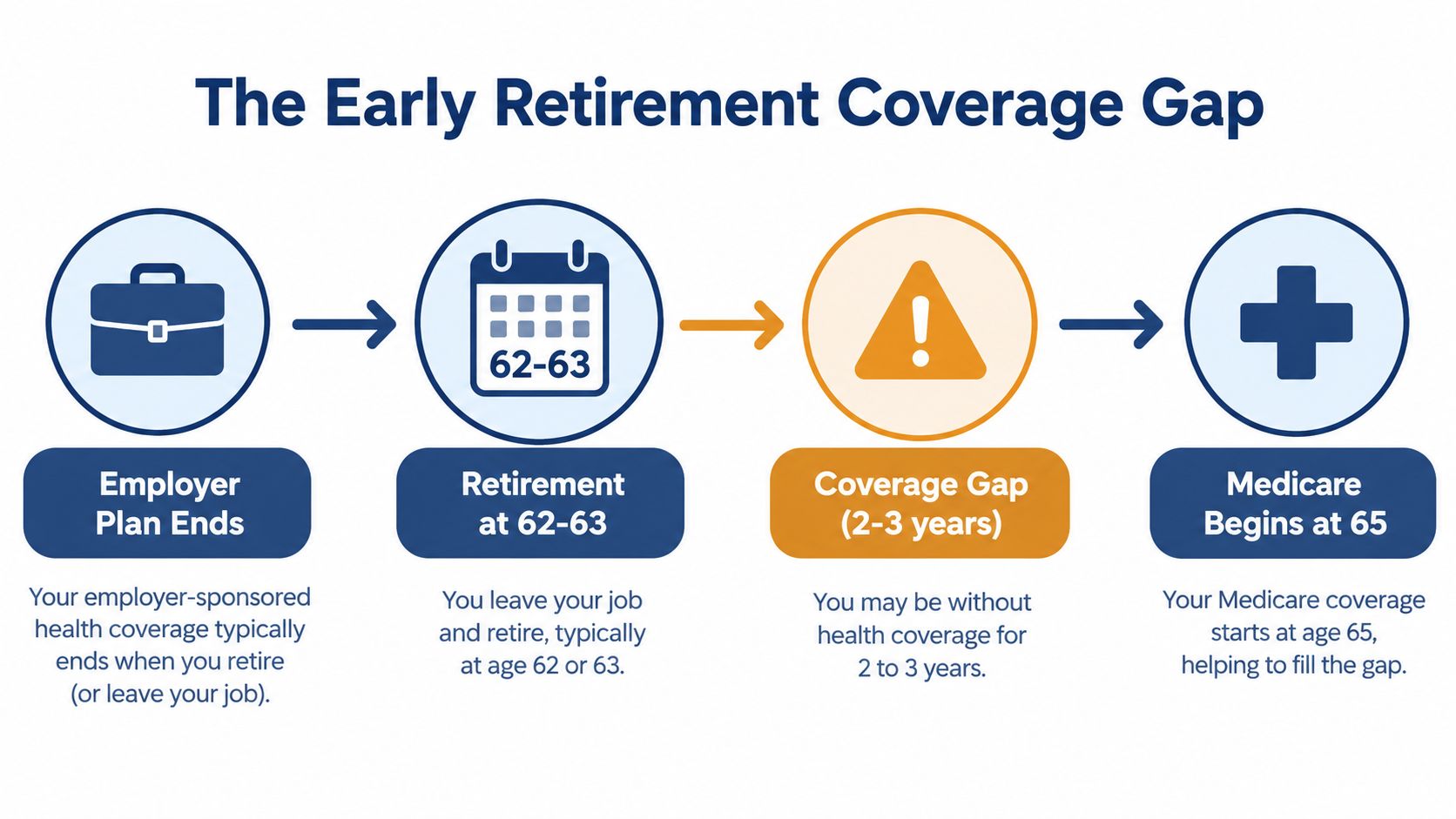
The Early Retirement Coverage Gap and Why It Matters
At 62, you might be ready to leave work but not ready to lose the insurance that came with it. A former employer's plan can make healthcare feel predictable. Once that coverage ends, you have to arrange a bridge until Medicare generally begins at 65. For a 62- or 63-year-old, that gap can be a major budget concern because individual-market premiums are age-rated, and there's no longer an employer paying part of the cost.
The Marketplace is a common route. During the 2025 Open Enrollment Period, 24,166,491 consumers selected Marketplace plans, including 3,938,907 new enrollees. CMS also reported that four out of five HealthCare.gov consumers could find a plan costing $10 or less per month after subsidies for 2025. Those figures show why the Marketplace is worth checking, but your own price depends on your household circumstances and eligibility for assistance. CMS's Marketplace enrollment announcement provides the details.
The choice isn't between “insured” and “uninsured.” You might use an ACA Marketplace plan, continue employer coverage through COBRA, join a spouse's plan, or consider a limited alternative. Each path has different rules and trade-offs. Marketplace plans also protect people with pre-existing conditions: insurers can't deny ACA-compliant coverage or charge more because of medical history.
A low premium can still lead to an expensive year if you need care and face a large deductible, coinsurance, or uncovered prescriptions. As you work out when to retire, it can also help to consider the broader trade-offs of leaving work earlier. Gold IRA Association's discussion of retirement timing offers another perspective to weigh alongside your health coverage and income plan.
Your Main Coverage Paths Before Medicare
Start with the ACA Marketplace. Losing job-based insurance generally gives you an opportunity to enroll outside the usual annual window, and Marketplace plans can be eligible for premium tax credits based on household income. Their pre-existing condition protections matter if you're leaving a job while managing a health condition or ongoing prescriptions.
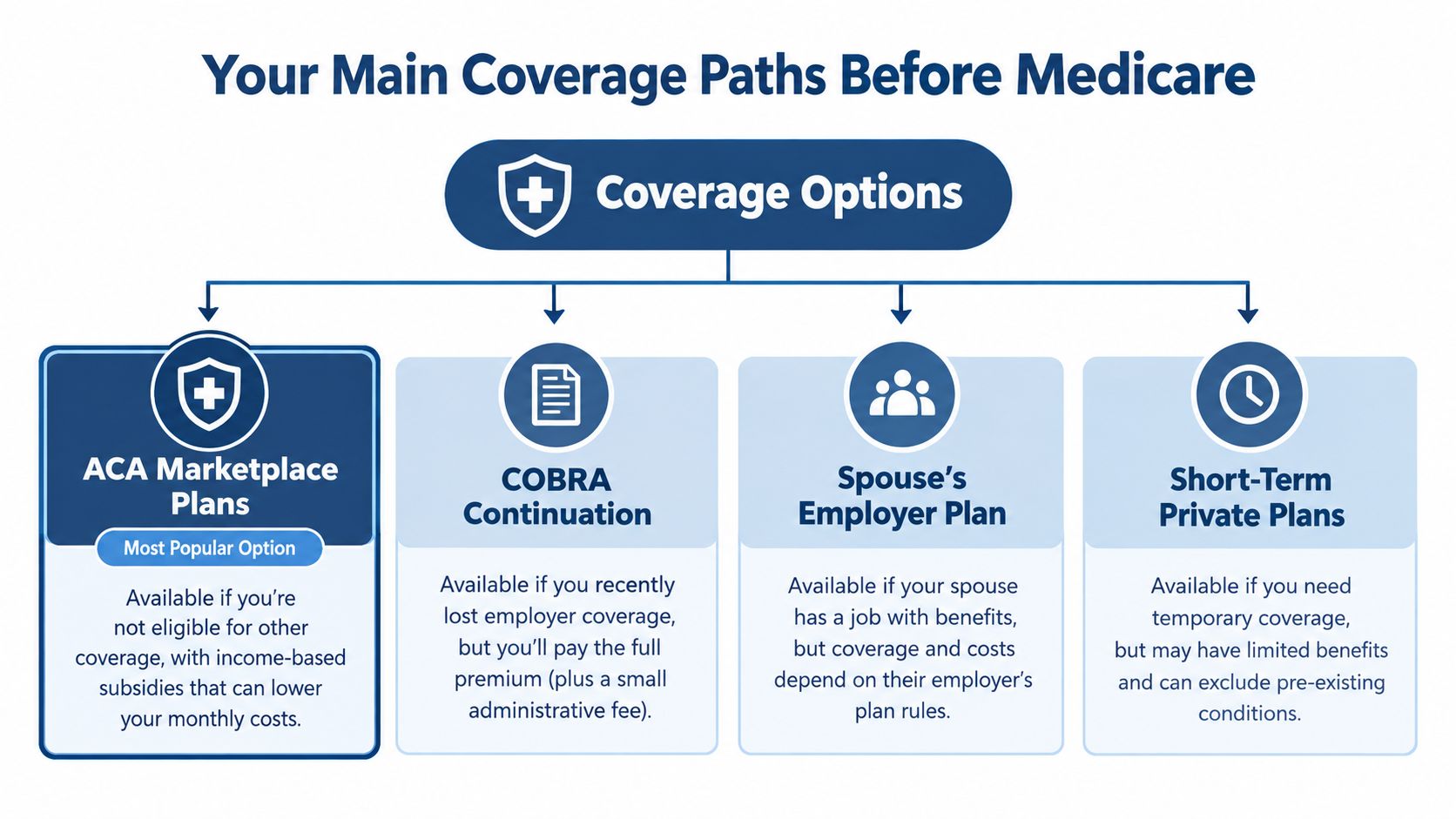
COBRA lets eligible former employees continue their existing employer plan temporarily, but you may have to pay the full premium yourself. It can be useful when keeping the same doctors and plan is important, or when you need continuity while comparing alternatives. Check the actual cost and duration rather than assuming the monthly contribution will resemble what came out of your paycheck.
A spouse's employer plan may be a practical route if your spouse is still working and their plan allows you to join. Ask the employer's benefits administrator about eligibility, enrollment timing, and the additional premium. Don't assume the spouse plan is automatically cheaper: compare its network and cost-sharing with Marketplace choices.
Short-term private coverage and health care sharing arrangements may appear less expensive, but they aren't the same as ACA-compliant insurance. They can have limits or exclusions that leave significant bills to you. Read the terms closely, especially if you expect specialist care, ongoing treatment, or prescription costs.
Practical rule: Compare what each option covers, what you pay to use it, and whether your current providers participate. The monthly premium alone doesn't tell you how secure the coverage is.
If you're considering a high-deductible Marketplace plan, check whether it's HSA-eligible and whether an HSA fits your situation. An HSA can offer a way to set aside money for eligible medical expenses, but eligibility depends on the plan and applicable rules. And if a family member needs accessibility changes at home, insurance may not cover every related expense. This guide to wheelchair ramp funding for caregivers can help you think through that separate planning question.
What Drives Your Actual Premium Price
A Marketplace quote reflects more than your age. Age, location, tobacco use, household details, plan type, and tax-credit eligibility can all affect what you pay. That's why two people who seem similar may see different prices, and why a quote should be read as a product of several inputs, not a universal rate.

Age matters. ACA rating rules permit insurers to charge older adults up to three times as much as younger adults for comparable coverage, although states can set narrower limits. That can make a 64-year-old's unsubsidized premium substantially higher than a younger adult's for a plan with the same benefits. KFF estimated that a 64-year-old just above the subsidy cutoff could pay more than $11,000 extra per year if enhanced premium tax credits expired. KFF's analysis of premium exposure for older enrollees explains why age and subsidy eligibility need to be considered together.
Location and tobacco use can also affect rates. An insurer's pricing reflects the plan's rating area, and tobacco-related rating rules may affect a quote. Household composition matters too: coverage for one person isn't priced the same way as coverage for a couple or family. When comparing quotes, make sure each one uses the same household information and coverage year.
Plan tiers change how you split costs between premiums and care. Bronze plans generally trade lower premiums for higher costs when you use services, while gold plans generally charge more in premiums in exchange for lower cost-sharing. Silver can be especially important for people who qualify for cost-sharing reductions. Compare the deductible, copays, prescription coverage, and out-of-pocket maximum, not just the first number in the quote.
For a closer look at how premiums vary across plans and situations, use this health insurance cost comparison guide. Before you choose, confirm the plan's provider network and check whether your medications appear on its formulary.
A plan comparison is easier when you write down the same details for each option: monthly premium, deductible, likely prescriptions, expected visits, and the maximum you could pay for covered care. Then the price differences become easier to explain.
Premium Tax Credits and the Subsidy Cliff
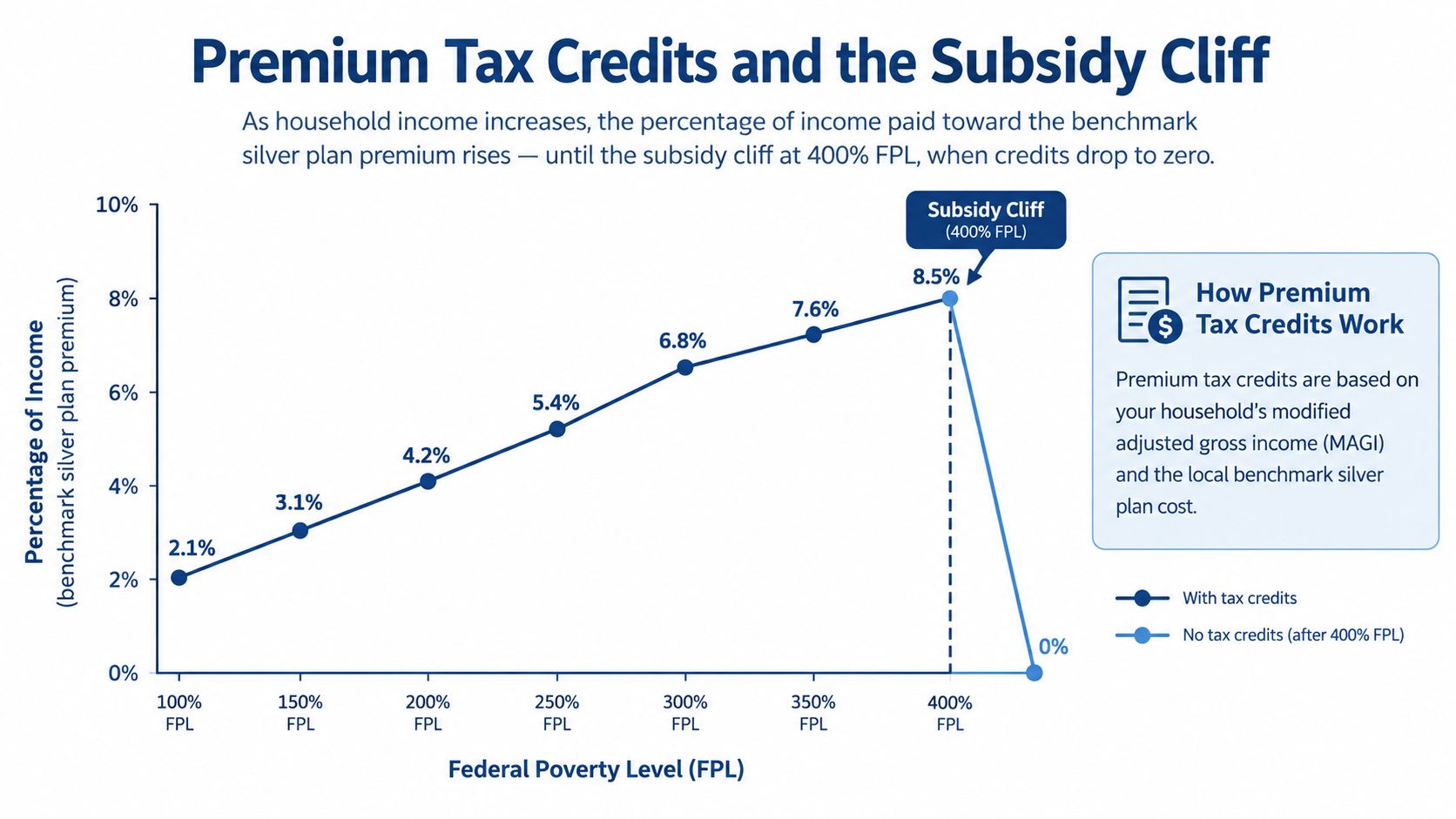
At 62, you might have enough savings to cover expenses but still qualify for help with Marketplace premiums. The key is not only how much cash you can spend, but also your household modified adjusted gross income (MAGI). Withdrawals from traditional retirement accounts, Roth conversions, capital gains, and self-employment income can all affect that figure. In ACA planning, taxable income can work like a dimmer switch: as income rises, premium assistance may shrink.
For 2026, KFF's Marketplace calculator indicates that eligible households may pay approximately 2.1% to 9.96% of income toward a benchmark silver premium, depending on income and policy rules. Your location and household size also affect the calculation, so the range is a guide, not a personal quote. Use KFF's premium tax credit calculator to compare income assumptions, and review this guide to premium tax credits for a plain-language explanation.
The subsidy cliff can make a modest income change carry a large price tag. In one estimate, a 60-year-old earning $62,000 would pay roughly $6,200 in annual premiums, while someone earning $64,000 in the same location could pay about $14,900 after the enhanced credits expired at the end of 2025. That is a difference of about $8,700. The example shows why a retiree near the threshold should check the premium effect before realizing extra income. This analysis of expiring ACA subsidies discusses the estimates.
KFF also estimated that a 60-year-old with $65,000 in annual income could pay an additional $10,389 per year, or about $865 per month, for the same Marketplace coverage after the enhanced credits expired. The estimate reflects specific assumptions and policy rules, so use it to understand possible exposure, not to predict your own bill.
Model taxable income before you enroll
Consider a 62-year-old consultant whose income varies from year to year. A large client payment, capital gain, or withdrawal from a traditional account could push MAGI higher. A Roth conversion can do the same, even though it moves money into an account that may offer tax advantages later.
Before a conversion or large withdrawal, compare the tax effect with the possible change in your net insurance premium.
This does not mean avoiding every taxable transaction. It means timing income with both taxes and coverage costs in mind. If your earnings change during the year, update your income estimate and check how the change may affect your premium credit.
Comparing Bronze, Silver, and Gold Plans by Total Cost
A plan's monthly premium is only one part of its annual cost. Add premiums, deductibles, copays, coinsurance, prescription costs, and other covered care, up to the plan's out-of-pocket maximum. Start with the care you expect, then compare what you would pay across the year.
For a 60-year-old earning $65,000, KFF estimated average 2026 unsubsidized premiums of $11,625 for the lowest-cost bronze plan, $15,914 for benchmark silver, and $15,672 for the lowest-cost gold plan. The bronze premium alone is roughly 18% of annual income. These are estimates for that specific example, not prices every early retiree will pay. See KFF's older-adult premium analysis for the comparison.
| Plan tier | Average 2026 premium | What to check | Best fit |
|---|---|---|---|
| Bronze | $11,625 annually in KFF's 60-year-old, $65,000-income example | Summary of benefits: deductible, out-of-pocket maximum, and service costs | People expecting limited care who can cover higher costs when they need services |
| Silver | $15,914 annually in the same example | Summary of benefits and whether cost-sharing reductions lower expenses | People seeking a middle ground or who may qualify for cost-sharing reductions |
| Gold | $15,672 annually in the same example | Summary of benefits: deductible, out-of-pocket maximum, and service costs | People expecting more frequent care who prefer higher premiums for lower cost-sharing |
A deductible is generally what you pay for covered services before the insurer starts sharing costs under the plan's rules. Copays are set charges for certain services. Coinsurance is your share of a service's allowed cost. The plan's summary of benefits lays out these amounts; compare it alongside the premium rather than judging the plan by its tier name.
Estimate your likely year, not just your monthly bill
A bronze plan may work for someone expecting few appointments who has savings to cover a high deductible. Regular specialist visits or costly prescriptions may make silver or gold a better fit. Silver deserves a closer look if you qualify for cost-sharing reductions, which can lower your deductible and out-of-pocket exposure. Check the drug formulary, provider network, and costs for the services you expect to use.
For a closer look at how the tiers differ, read this bronze versus silver plan comparison. If you're considering an HSA-eligible high-deductible plan, weigh its potential tax advantages against the cash you'd need for care before meeting the deductible.
Three Real-World Early Retiree Scenarios
A 62-year-old leaving work may have more than one coverage choice, and the lowest listed premium may not mean the lowest annual cost. Income timing matters too: Marketplace subsidies depend on household income for the coverage year, so withdrawals or a Roth conversion can change the calculation. Consider three households facing different decisions.
A consultant with uneven income
A self-employed consultant, age 62, expects income near $58,000. That estimate is a starting point, not a subsidy decision. Household size, location, and coverage-year rules also affect eligibility.
The consultant should estimate modified adjusted gross income, including business income and likely investment activity, then compare plans at different income levels. If work picks up, updating the estimate can help avoid a surprise at tax time. The key is to treat taxable income as a forecast that may need revision, not a fixed number.
A couple drawing from retirement accounts
A couple, both age 63, expects $95,000 in combined retirement withdrawals. They should check which withdrawals count toward Marketplace household income and how that total affects their subsidy eligibility. The timing and tax treatment of retirement transactions can change that estimate. Before choosing when to withdraw or convert funds, compare the likely coverage cost under each income scenario.
Older adults make up a substantial share of individual-market enrollees who may be affected by subsidy changes. As noted earlier, that makes it especially important to check the couple's own projected income rather than assume a quoted premium will stay affordable.
A former employee with severance
A 61-year-old leaves work with severance and must choose between COBRA and a Marketplace plan. Compare COBRA's full cost and provider network with available Marketplace options, then include severance and earlier earnings in the annual income estimate. A plan that fits the monthly budget may still fall short if it excludes a needed doctor or medication.
Treat each scenario as a starting point, not a quote. Confirm eligibility and plan terms using your own household details.
Enrollment Steps and a Practical Checklist
Losing job-based coverage can create a Special Enrollment Period. Check the deadline promptly with the Marketplace or your employer's benefits administrator, because the timing and effective date depend on your circumstances. For a plain-language overview of events that may open a special enrollment opportunity, see this guide to qualifying events for health insurance.
Open Enrollment is another chance to choose or change Marketplace coverage. For the exact dates that apply to your coverage year, check HealthCare.gov or your state Marketplace rather than relying on last year's calendar. If your state runs its own Marketplace, use that site; otherwise, apply through HealthCare.gov.
Prepare your information before comparing plans. You may need household member details, an estimate of annual income, information about current or previous coverage, and documents requested to confirm identity or eligibility. Include expected wages before retirement, severance, self-employment income, investment income, and planned retirement-account transactions in your estimate.
Use this checklist before enrolling:
- Forecast income: Estimate household income for the full coverage year, then update it when earnings or withdrawals change.
- Compare the whole plan: Review premium, deductible, out-of-pocket maximum, prescriptions, and provider network.
- Check assistance: Enter accurate household details and compare the result across plausible income scenarios.
- Save your records: Keep enrollment confirmations and information used to estimate income.
- Review tax reconciliation: If you receive advance premium tax credits, check how they'll be reconciled on your tax return and keep your income estimate current.
Keeping Coverage Affordable All the Way to Medicare
Treat coverage as an annual budget decision, not a one-time shopping task. Revisit your income estimate when you plan a Roth conversion, realize capital gains, take a retirement-account withdrawal, or bring in more business income than expected. Before renewing, check that your doctors remain in network and your prescriptions are still covered.
Budget for the out-of-pocket maximum as a limit on covered cost-sharing, not as a promise that every healthcare expense will be covered. As you approach Medicare eligibility, learn the enrollment rules for Part B and Part D so the transition doesn't catch you unprepared. If you're planning preventive care after enrolling, this overview of Medicare annual wellness visit coverage can help clarify what to ask about.
The goal isn't the smallest premium. It's a plan whose total costs fit your expected medical needs and household income.
My Policy Quote helps people compare health insurance options, including ACA Marketplace plans, with licensed-agent assistance available for individualized policy research. If you're approaching Medicare and want to compare coverage against your budget and expected care, visit My Policy Quote to explore your options.