
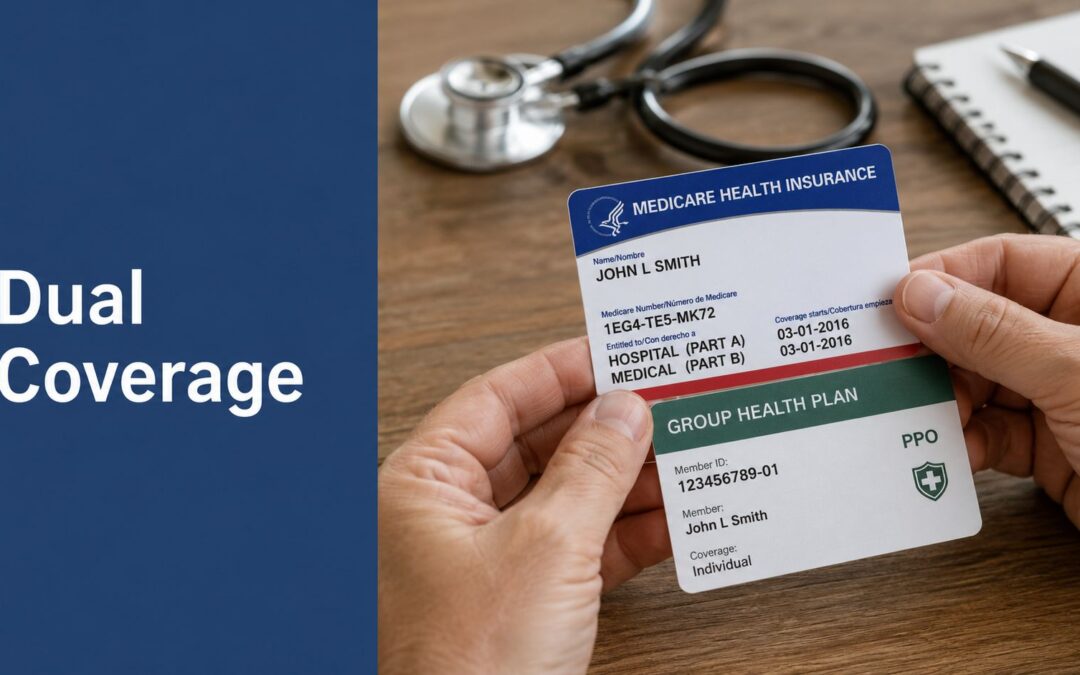
Yes, you can have two health insurance plans, and in 2021, 43.1 million people, or 13.1% of the U.S. population, had more than one type of health coverage. The important part is that this isn't about getting paid twice. It's about coordinated coverage, where one plan pays first and the other may help with eligible remaining costs.
A lot of people land here because life changed fast. You started a new job but you're still on your spouse's plan. You're turning Medicare-eligible soon but still have employer coverage. Your adult child got workplace insurance but might still stay on a parent's plan. The question sounds simple, but the financial answer usually isn't.
Most confusion comes from one mistaken idea: if two plans exist, both should fully pay. That's not how health insurance works. The core question is whether the second plan helps enough to justify the extra premium, extra paperwork, and in some cases, a second deductible.
This guide walks through the rules in plain English, then gets into the part many articles skip: the math, the hidden friction, and the decision points that matter for self-employed workers, pre-retirees, and families.
Is Having Two Health Insurance Plans Possible
Maria gets health insurance through her new employer in November. She's also already covered under her spouse's family plan. She looks at the two insurance cards in her wallet and wonders whether she has to drop one, or whether keeping both could save money.
That question is common, and the answer is straightforward. Yes, having two health insurance plans is possible. It's not unusual, and it's not some loophole. According to MetLife's overview of dual health coverage, 43.1 million people in the U.S., or 13.1% of the population, were covered by more than one type of health insurance in 2021. The same source says 75.5% of those with multiple coverage had a mix of private and public insurance.

Why people end up with two plans
Dual coverage usually happens because real life overlaps:
- Job changes: You leave one plan and gain another around the same time.
- Marriage: Your employer offers coverage, and so does your spouse's.
- Medicare or Medicaid eligibility: Public coverage overlaps with employer or retiree coverage.
- Young adult transitions: A child may have access to their own plan while still covered through a parent.
If you've had claims delayed before, clean insurance records matter even more when two plans are involved. One practical way to reduce healthcare claim denials is to verify both plans with the provider before treatment, especially the order in which they're supposed to be billed.
Dual coverage can be useful. Confusing dual coverage can be expensive.
For people comparing age-based options, this becomes even more relevant when public and private coverage overlap. If you're sorting out that crossover, this guide on Medicare vs private insurance can help frame the bigger decision.
What having two plans does not mean
It doesn't mean two insurers each write a full check for the same bill. It doesn't mean every leftover balance disappears. And it doesn't mean every doctor will automatically know how to bill both plans correctly.
It means one plan is assigned the first role, and the other may help after that. That rule has a name, and once you understand it, the rest of the topic gets much easier.
How Coordination of Benefits Really Works
Think of coordination of benefits, usually shortened to COB, like a movie cast. One actor has the lead role. The other supports the scene. They don't both deliver the same lines.
In insurance, the primary plan is the lead actor. It processes the claim first under its own rules. The secondary plan is the supporting actor. It looks at what remains and decides whether it will pay any of that balance under its own rules.

The basic flow
The key rule comes from the COB framework described by FAIR Health's consumer guidance on having more than one health plan. The combined payment from both plans generally can't exceed 100% of the covered service cost. The primary plan pays first, and the secondary plan considers the remaining balance. That prevents double payment for the same covered service.
Here is the process in plain language:
Your provider bills the primary plan first.
The first insurer reviews the claim using its network, deductible, copay, coinsurance, and coverage rules.The primary plan issues its decision.
It may pay part of the bill, deny part, or apply the charge to your deductible.The remaining eligible balance goes to the secondary plan.
The second insurer doesn't start from scratch. It reviews what the first plan already did.The secondary plan decides what it will cover.
It may pay some, all, or none of the leftover eligible amount.
Why people still get bills
A second plan can help, but it doesn't erase cost sharing automatically.
You can still owe money because:
- A service isn't covered: The secondary plan may exclude it too.
- The provider is out of network: One or both plans may limit payment.
- Deductibles still apply: One or both plans may require you to meet cost-sharing rules before paying.
- Policy limits control the outcome: Secondary coverage only pays according to that plan's terms.
A useful companion resource for understanding these claim handoffs is this guide to medical billing COB insights, especially if you've ever had a provider bill the wrong plan first.
Later, when the insurer sends paperwork back, you'll usually receive an EOB. If you want help decoding that document, this article on how to read an Explanation of Benefits is worth bookmarking.
Before the video, keep one practical rule in mind.
Practical rule: The secondary plan is a backup payer, not a duplicate payer.
Who decides which plan is primary
You usually don't choose this yourself. The plans apply established rules.
Common examples include:
- Your employer plan vs. spouse's plan: Your own employer plan is often primary for you.
- A child covered by two parents' plans: Plans may use the birthday rule to determine order.
- Medicare and other coverage: The order depends on the specific coverage arrangement and plan rules.
- COBRA and new employer coverage: The new active plan often gets billed before continuation coverage.
The biggest mistake I see is people focusing only on "Will two plans cover more?" The smarter question is, "Which one pays first, and what exactly does the second one recognize?"
Common Scenarios for Dual Health Coverage
Two-plan situations don't all behave the same way. The overlap might look similar on paper, but the financial result can be very different depending on how the plans coordinate.

Your employer plan plus your spouse's plan
This is one of the most familiar scenarios. Maybe both spouses work, both jobs offer benefits, and one spouse adds the other to their family plan.
In practice, your own employer plan commonly acts as the first payer for your claims, while your spouse's plan may act as backup. That can help with eligible leftover costs, but it also means you're dealing with two premium streams and two sets of coverage rules.
This arrangement tends to make sense when one plan has a broader network, stronger specialist access, or better prescription coverage, and the second plan fills in some of the gaps. It tends to make less sense when both plans are expensive and structurally similar.
Adult child coverage overlap
A young adult may have their own workplace plan while still being eligible to remain on a parent's plan. This can sound like a safety net, and sometimes it is.
But families should check three things early:
- Provider overlap: Does the second plan widen access?
- Prescription differences: One formulary may be much stronger than the other.
- Administrative friction: Providers need correct billing order or claims can stall.
Medicare plus employer or retiree coverage
Readers often assume "more is better," but the details matter a lot. If you're in the pre-retirement window or helping a spouse transition, don't assume the private plan will always work smoothly alongside Medicare-related coverage.
One overlooked issue is what I call the originals-only trap. Some secondary arrangements may not function the way people expect once Medicare-based coverage becomes the primary frame for payment. A spouse may assume their employer plan will keep acting like generous backup coverage, then discover the coordination is narrower than expected.
Ask the employer plan or retiree plan one direct question: "How do you coordinate if the other coverage is Medicare-based?" Get the answer in writing if possible.
COBRA plus a new plan
This often happens during a job transition. You leave one employer, elect continuation coverage, and then quickly become eligible for a new employer plan.
That overlap can be useful if you're in the middle of treatment and don't want a gap. But COBRA isn't automatically worth keeping once the new plan starts. The right answer depends on cost, ongoing care needs, and whether the old network still matters for your doctors.
If you're evaluating whether a job change gives you a valid window to add, drop, or switch coverage, this explanation of what is a qualifying event for medical insurance can help.
The deductible stacking problem for self-employed workers
For self-employed 1099 contractors, dual coverage can hide a nasty cash-flow problem. The appeal is obvious. A second plan might help with copays and leftover costs. The trap is that you may face two separate deductibles before meaningful benefits kick in.
The verified guidance here is blunt: with individual deductibles often exceeding $1,500, a contractor carrying two plans might need to spend over $3,000 out of pocket before either plan starts paying benefits in a useful way. That can wipe out the practical value of lower copays.
For a contractor, the core question isn't whether two cards look safer. It's whether the second premium and second deductible create a larger annual risk than one stronger plan would.
A simple way to think about these scenarios
Use this test:
- Good overlap: One plan clearly fills a gap the other leaves open.
- Weak overlap: Both plans are expensive and neither meaningfully improves your care access or total cost.
- Dangerous overlap: You assume the second plan works broadly, but its coordination rules are much narrower than expected.
The Real Benefits and Drawbacks of Two Plans
Some households save money with dual coverage. Others just buy complexity. The difference usually comes down to recurring medical use, premium cost, deductible design, and whether the second plan fills a real gap.
According to Fidelity's explanation of carrying two health insurance plans, dual coverage can reduce out-of-pocket exposure, but it can also leave you responsible for two separate premiums, two deductibles, and ongoing copays if the second plan has its own cost-sharing or excludes the service.
Where two plans can help
The upside is practical, not magical. A second plan may reduce what you pay after the first plan processes the claim.
That can matter when:
- You use care often: Repeated visits, prescriptions, or specialist treatment create more chances for secondary help.
- One plan has gaps: The second plan may handle part of what the first leaves behind.
- Your preferred providers differ by network: Dual coverage can preserve access in some cases.
Where two plans become a burden
The downside is rarely just money. It is also time, paperwork, and billing errors.
Common friction points include:
- Double fixed cost: You're paying for two policies, not just using two cards.
- Stacked cost-sharing: Separate deductibles can cancel out expected savings.
- Two rulebooks: Covered services, networks, referrals, and claim procedures may differ.
- Billing mistakes: A provider that sends the claim to the wrong plan can delay payment.
| Benefit | Drawback |
|---|---|
| A secondary plan may cover some eligible leftover costs after the primary plan pays. | You may owe two premiums every month. |
| Dual coverage can soften some copays, coinsurance, or deductible exposure. | You may face two deductibles before seeing real financial value. |
| Overlap can help preserve access if one plan's network is narrow. | Providers may bill the wrong plan first, causing delays or denials. |
| Families sometimes gain flexibility during transitions like marriage or job changes. | Managing two ID cards, two EOBs, and two sets of rules creates administrative stress. |
The better question than "Can I"
The legal question is easy. The financial question is harder.
Ask yourself this instead: if I pay for both plans for a full year, do I expect the second plan to do enough real work to justify its premium, deductible, and hassle?
If the answer is vague, the second plan may be more comforting than useful.
How to File a Claim with Two Insurance Plans
When people ask how to use two health insurance plans, they're often really asking how to avoid a billing mess. The good news is that the process is manageable if you stay organized and make sure everyone knows which plan is primary.
Start at the doctor's office
When you check in, give the provider both insurance cards. Don't assume the office already has the right order on file, especially if coverage changed recently.
Tell them clearly:
- Which plan is primary: Use the payer order established by your coverage rules.
- Which plan is secondary: Ask the office to note it in your account.
- Whether anything changed recently: New job, marriage, COBRA election, or Medicare enrollment can all affect billing order.
Track the first Explanation of Benefits
After the provider bills the primary insurer, wait for the first EOB. That document shows what the insurer processed, what it paid, and what it says you may still owe.
If you're new to the process, this plain-language guide on what is a health insurance claim gives helpful context before you start calling insurers.
Once the first claim is processed, the secondary plan needs that information. In some cases, insurers exchange it electronically. In others, you or your provider may need to submit the primary EOB before the second insurer can review the balance.
Don't pay a medical bill too quickly if you know a secondary plan should still review it.
Use a simple filing routine
A clean routine prevents most errors:
- Confirm both plans are active before the appointment.
- Ask the provider to bill the primary plan first.
- Review the primary EOB for processing details.
- Send the remaining eligible balance to the secondary plan if it doesn't happen automatically.
- Compare the provider bill with both EOBs before paying.
Keep one folder for every claim
Use one paper folder or one digital folder per date of service. Save the bill, both insurance cards, both EOBs, and any messages from the provider.
That sounds basic, but it solves a lot of problems fast. When a claim gets stuck, the person who can quickly state the date of service, provider, amount billed, and which plan already processed it is usually the person who gets the issue fixed first.
Decision Checklists for Your Situation
General advice isn't enough here. The right choice depends on your work status, age, family setup, and tolerance for cash-flow risk.

Checklist for self-employed professionals and 1099 contractors
Dual coverage can look protective when you're buying insurance without group-plan support. But this is the group most likely to get hurt by deductible stacking.
Ask yourself:
- Can I comfortably afford two premiums all year?
- Can I absorb two deductibles if both plans require me to meet cost-sharing before meaningful payment begins?
- Does the second plan improve network access or prescription coverage in a real way?
- Am I buying the second plan for actual use, or for peace of mind alone?
- If I had one major medical event early in the year, would two deductibles create a cash crunch?
A practical answer pattern often emerges. If the second plan doesn't solve a specific gap, one better-structured plan is often easier to manage than two weaker ones.
Checklist for pre-Medicare adults ages 60 to 64
This group faces a different risk. The issue is less about having two cards and more about whether the second card coordinates once Medicare-related coverage enters the picture.
Use these questions:
- If I become Medicare-eligible soon, how will the other plan coordinate?
- Does the spouse's employer plan have restrictions when the other coverage is Medicare-based?
- Have I asked for the coordination rule in writing?
- Will I still use the same doctors if the payment order changes?
- Am I assuming backup coverage exists broadly, or have I verified the exact claim pathway?
This is the age band where assumptions can get expensive. A plan that looks like a strong secondary payer on paper may be much narrower in practice.
Checklist for working families
Families often focus on premiums first. That's understandable, but not enough. The better decision usually comes from comparing premium cost with claims behavior and provider access.
Work through these questions:
- Which plan has the stronger pediatric, specialist, or hospital network?
- Would children benefit from being on one family plan, or is overlap useful?
- Does one parent's plan handle prescriptions better?
- Will two plans reduce meaningful costs, or just create more paperwork?
- Can our providers reliably bill both plans in the correct order?
Checklist for parents helping adult kids
An adult child with a new job may be tempted to keep every possible option. That isn't always wrong, but it should be intentional.
Ask:
- Does the employer plan stand on its own well enough to replace the parent's plan?
- Would staying on both plans create better access, or just confusion?
- Who is responsible for tracking EOBs and claim issues if a problem happens?
- Are there ongoing prescriptions, therapy visits, or specialist relationships worth protecting during the transition?
The best dual-coverage decision usually comes from one page of comparisons, not a gut feeling.
A simple worksheet works well here. List each plan's premium, deductible structure, network strength, and claim hassle. Then circle the differences that would significantly change your care or your budget. If you can't circle anything meaningful, keeping both plans may not be worth it.
Frequently Asked Questions About Dual Coverage
Can I have two Marketplace plans at the same time
In general, people should be careful with overlapping individual coverage and confirm eligibility and enrollment rules before assuming both can function together. The broader legal point is that PeopleKeep's overview of two health insurance plans explains it is generally legal to have two health insurance plans, but claims are paid under coordination of benefits rules, with a primary plan paying first and total reimbursement not exceeding the allowed cost of care.
Can I choose which plan is primary
Usually, no. Primary and secondary order is determined by plan rules and coordination standards, not personal preference. If you guess and your provider bills the wrong one first, claims can be delayed.
What happens if I have two Medicare Advantage plans
That kind of overlap should be checked carefully with the insurers involved because plan compatibility and enrollment rules matter. Don't assume two plans can both function as active major medical coverage just because both cards are valid-looking.
Does coordination of benefits apply to dental and vision insurance
It can, depending on the policies. Dental and vision plans may have their own coordination rules, so ask each insurer how they process overlapping benefits before treatment.
Will two plans eliminate all my out-of-pocket costs
No. Even when dual coverage helps, you may still face premiums, deductibles, copays, coinsurance, service exclusions, or network-related charges.
Is dual coverage worth it for healthy people
Often, the answer depends less on legality and more on whether the second plan solves a real problem. If you rarely use care and the second plan adds another premium and another deductible, the value may be weak.
If you're comparing overlapping coverage, planning for Medicare, or trying to decide whether a second plan is financially worth it, My Policy Quote can help you sort through the options with a clearer view of costs, coordination rules, and family-specific tradeoffs.