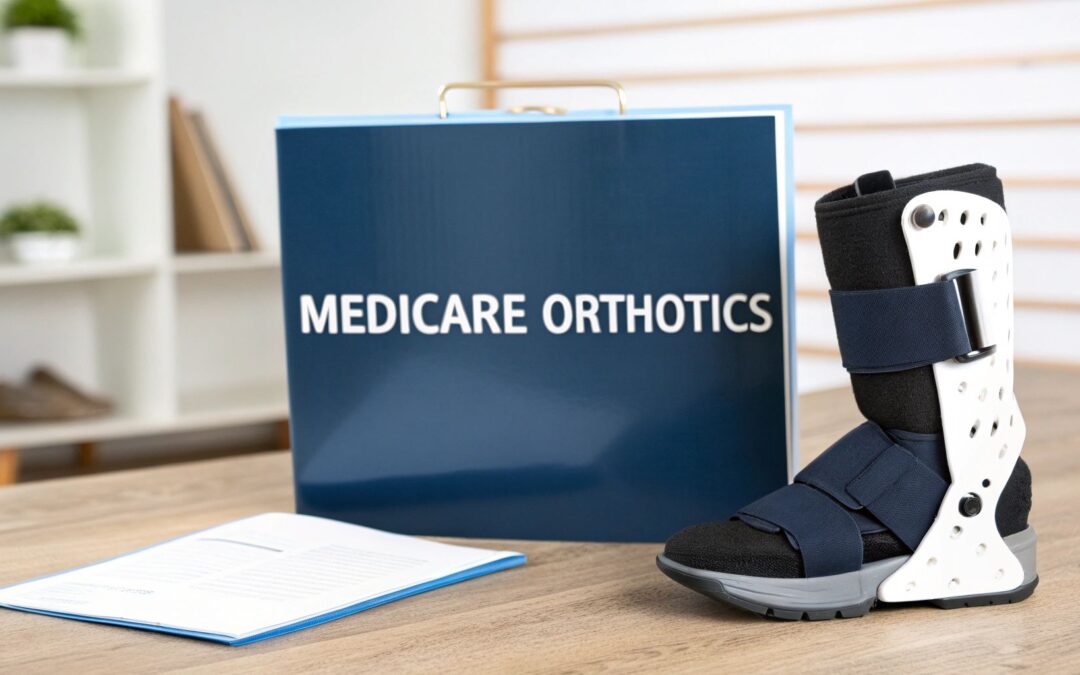
Let's get straight to it: Yes, Medicare can help cover orthotics, but there's a big catch. It all comes down to whether they are considered medically necessary to treat a specific illness or injury.
This means Medicare won't pay for devices that are just for general comfort or prevention. Coverage for orthotics falls primarily under Medicare Part B.
Your Quick Answer to Medicare Orthotics Coverage

Trying to figure out Medicare can feel like learning a new language, but the rule for orthotics is actually pretty simple: it has to be a medical necessity. Medicare Part B will help with the cost, but only if the device meets some very strict standards. It must be prescribed by a doctor to support, align, or fix a part of your body that’s been affected by a medical condition or an injury.
Think of it like this: a custom-molded leg brace your doctor orders after a bad fall is a medical tool. Its job is to help you heal or get back on your feet. On the other hand, an arch support you pick up at the pharmacy for tired feet is seen as a comfort item. Medicare draws a very clear line between the two.
What Is Considered Medically Necessary?
For an orthotic to get the green light, it has to be classified as Durable Medical Equipment (DME). This is a special category for items that are:
- Durable, meaning they can stand up to repeated use.
- Used for a specific medical reason.
- Not typically useful to someone who isn't sick or injured.
- Intended for use in your home.
This means things like rigid or semi-rigid braces for a leg, arm, back, or neck often get covered when a doctor prescribes them. However, most foot orthotics, especially those over-the-counter shoe inserts, don't make the cut.
The Bottom Line: Medicare's decision on orthotics rests on one question: Is this device a prescribed medical treatment or a general wellness product? It has to be essential for improving how a malformed body part works or for supporting a weakened area after an injury.
To help you quickly see how this works, here's a simple breakdown of orthotics coverage under Medicare.
Quick Guide to Medicare Orthotics Coverage
This table gives you a snapshot of what to expect when it comes to paying for orthotics with Medicare.
| Medicare Part | What It Covers | Key Requirement | Typical Out-of-Pocket Cost |
|---|---|---|---|
| Part B | Medically necessary braces for the leg, arm, back, and neck. Custom-molded shoes if you have diabetes and severe foot disease. | Must be prescribed by a doctor and considered Durable Medical Equipment (DME). | 20% of the Medicare-approved amount after your deductible. |
Understanding these details helps you plan ahead and avoid any surprise bills.
After you've met your annual Part B deductible, you’ll generally be responsible for 20% of the Medicare-approved amount for the orthotic device. This coinsurance can add up, especially for expensive, custom-made braces.
For those who want to keep these out-of-pocket costs predictable, checking out the best Medicare supplement plan options is a smart move. A good supplement plan can help cover that 20% gap, giving you financial peace of mind. Now, let's dive deeper into the specifics of what is and isn't covered.
Understanding Which Orthotics Are Actually Covered
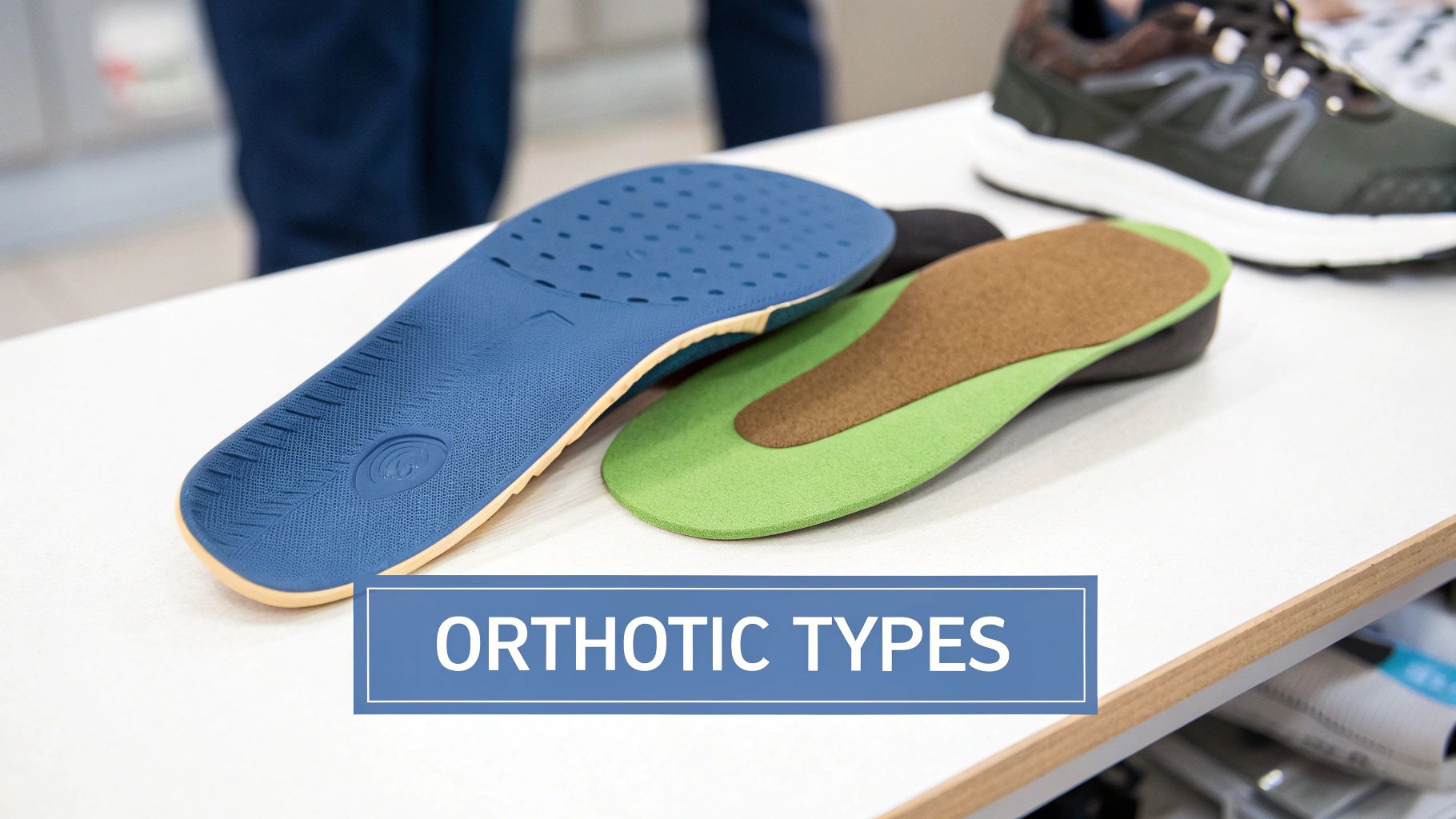
When you ask, "does Medicare cover orthotics," the answer isn't a simple yes or no. The most important thing to get your head around is that Medicare doesn't treat all supportive devices the same way. Coverage all comes down to a strict definition: is it a medical tool or a consumer product?
Medicare Part B does cover specific orthotic devices, but there's a catch. They must be rigid or semi-rigid and prescribed by a doctor to support a weak or deformed part of your body.
Think of it like the difference between prescription drugs and over-the-counter vitamins. Your doctor prescribes a specific medication to treat a diagnosed illness, making it a medical necessity. A vitamin, on the other hand, is something you might buy for general wellness. Medicare sees orthotics through a similar lens.
A custom-fitted leg brace prescribed to stabilize your knee after surgery? That’s a medical tool. But the gel arch support you grab at the pharmacy to make your sneakers more comfortable? That’s seen as a consumer product for comfort. Medicare helps pay for the tool, not the comfort item.
The Line Between Covered and Non-Covered
The real key is whether the orthotic acts as a brace—something designed to restrict motion or prop up a limb. Generally, Medicare Part B covers certain ankle-foot orthotics (AFOs) and knee-ankle-foot orthotics (KAFOs) under its braces benefit. For a device to qualify, it has to be a rigid or semi-rigid support for a body part that is weak, injured, or malformed.
This distinction is crucial because it directly hits your wallet. If a device isn't covered, you’re on the hook for 100% of the cost.
To help you know what to expect, let's look at some real-world examples.
Examples of Potentially Covered Orthotics:
- Leg Braces: Think rigid braces that support a weakened leg or keep it from moving after something serious like an ACL tear.
- Arm, Back, and Neck Braces: These are devices prescribed to limit movement while you heal from a fracture or surgery.
- Ankle-Foot Orthotics (AFOs): These supports help control the alignment of your ankle and foot, often due to conditions like a stroke or nerve damage.
Examples of Generally Non-Covered Items:
- Most Custom Foot Orthotics: We’re talking about the inserts or arch supports made to treat common foot pain like plantar fasciitis.
- Over-the-Counter Inserts: Any pre-packaged shoe insert you can buy off the shelf for comfort or basic arch support.
- Orthopedic Shoes: These are almost never covered, unless they fall under the very specific Medicare benefit for diabetic footwear.
Key Takeaway: Medicare's focus is squarely on structural support and immobilization. If the device's main job is to act as a rigid brace for a limb, your back, or your neck, it has a much, much better chance of being covered.
Getting this right is essential, especially for anyone planning their transition to Medicare. Knowing what is and isn't covered helps you budget for your health needs without any nasty surprises. If you are getting close to retirement, it’s a good idea to figure out what to do about health insurance before Medicare to make sure you don’t have any gaps in coverage for these kinds of medical necessities.
How to Navigate the Costs of Orthotics with Medicare
Knowing what’s covered is one thing, but understanding what you’ll actually pay is where the rubber meets the road. When it comes to orthotics, Medicare has a straightforward cost-sharing system designed to prevent sticker shock—as long as you know how it works.
Think of it like splitting a dinner bill with a very generous friend. For any medically necessary orthotic device, Medicare picks up the biggest part of the tab, but you’re still responsible for your share. For most orthotics you get on an outpatient basis, that share is determined by your Medicare Part B benefits.
Your part of the payment starts with the Part B annual deductible. This is the amount you have to pay out-of-pocket for covered medical services each year before Medicare’s coverage kicks in. Once you’ve hit that deductible for the year, your costs for approved orthotics become much more predictable.
Breaking Down Your Part B Costs
After you’ve met your annual deductible, you’ll pay a 20% coinsurance on the Medicare-approved amount for your orthotic. Medicare handles the other 80%.
So, if your doctor prescribes a back brace that has a Medicare-approved price of $500, your share would be $100. Medicare would pay the remaining $400. Simple as that.
It's really important to remember this 20% is based on the Medicare-approved amount, not whatever a supplier feels like charging. This is exactly why finding a supplier who accepts Medicare assignment is a non-negotiable step. It protects you from getting stuck with a bill for more than the approved rate.
Key Financial Takeaway: Under Part B, your out-of-pocket cost for an orthotic is your annual deductible (if you haven’t met it yet) plus 20% of the device's approved cost.
This clear-cut structure helps you budget for the medical equipment you need without having to shoulder the entire expense on your own.
What if You Receive an Orthotic in the Hospital?
The rules of the game change if you get your orthotic device while you're an inpatient at a hospital or during a covered stay in a skilled nursing facility (SNF). In this case, the cost of the orthotic gets bundled into the single payment Medicare makes to the facility under your Part A benefits.
Instead of a separate 20% coinsurance for the device, your costs are tied to your Part A inpatient deductible and any daily coinsurance you might owe for longer stays. This makes the billing much simpler, as the orthotic is just considered one part of your overall inpatient treatment.
The table below breaks down how these two scenarios compare, so you can anticipate your costs no matter where you receive care.
Medicare Orthotics Cost Breakdown (Part A vs Part B)
Here’s a comparative look at your cost responsibilities, depending on whether your orthotic is covered under Part A (as an inpatient) or Part B (as an outpatient).
| Scenario | Medicare Part | Patient Responsibility | Example |
|---|---|---|---|
| Outpatient Setting | Part B | Annual deductible, then 20% coinsurance | You get a prescribed knee brace from a DME supplier. You pay 20% of the approved cost. |
| Inpatient Stay | Part A | Part A deductible and any applicable daily coinsurance | You receive a back brace after surgery during your hospital stay. The cost is part of your inpatient bill. |
Understanding this distinction is vital for planning your finances. For outpatient orthotics under Medicare Part B, once your deductible is paid, you’re on the hook for a 20% coinsurance. If an orthotic is provided during a Part A-covered hospital or skilled nursing stay, the costs are simply rolled into your inpatient charges. To help cover these out-of-pocket expenses, many people enroll in Medicare Supplement (Medigap) plans. You can learn more about how these costs work by checking out various senior health resources.
A Step-by-Step Guide to Getting Your Orthotics Covered
Getting Medicare to pay for your orthotics isn’t a matter of luck. It’s about following the right steps in the right order. Think of it like a recipe—miss a key ingredient, and the whole thing can fall flat.
When you know the process, you can move forward with confidence. Let's walk through the four essential steps you need to take to get your medically necessary orthotic device covered.
Step 1: Get a Thorough Medical Evaluation
Everything starts at the doctor's office. The first move is a face-to-face visit with a physician who is enrolled in the Medicare program. This is non-negotiable.
During your appointment, your doctor will conduct a complete evaluation to figure out if an orthotic is truly medically necessary for your specific condition. This isn't just a quick chat; they need to create a detailed record explaining why you need the device, how it will help your illness or injury, and how it will improve your day-to-day life. Without this solid medical proof, Medicare has no reason to approve the coverage.
Step 2: Secure a Detailed Prescription
Once your doctor agrees that an orthotic is the right call, they’ll write a detailed prescription, often called a written order. This is much more than a simple script you’d get from a pharmacy. It’s the official blueprint for your device.
The prescription absolutely must include:
- A specific description of the orthotic you need.
- Your diagnosis and the medical reason for the device.
- How long you're expected to need the orthotic.
This document is the glue that holds your claim together. It connects your doctor’s evaluation to the specific device you need, creating a vital link in the chain of approval.
Step 3: Find a Medicare-Enrolled Supplier
This is where so many people make a costly mistake. You must get your orthotic device from a supplier who is not only enrolled in Medicare but also accepts assignment. If you go to an out-of-network supplier, even with a perfect prescription, your claim will almost certainly be denied on the spot.
Finding an approved supplier means they will bill Medicare the right way. More importantly, it means they will only charge you the standard 20% coinsurance after you’ve met your deductible. This one simple step protects you from getting hit with huge, unexpected bills. Thinking ahead about these kinds of healthcare details is a crucial part of managing your well-being, especially when you're looking at your bigger retirement health insurance picture.
Step 4: Submit the Claim Correctly
Finally, it’s time to submit the claim. The good news? Your Medicare-enrolled supplier usually handles this part for you. They’ll gather all the paperwork, including your prescription and medical records from the doctor, and send it directly to Medicare for reimbursement.
This infographic gives you a quick visual of how the claims process flows.

As you can see, it starts with your doctor, moves to the claim submission, and ends with a decision from Medicare. By following these steps carefully, you give your claim the best possible shot at success and ensure you receive the benefits you’re entitled to.
What About Special Coverage for Diabetic Shoes?
When you’re trying to figure out if Medicare covers orthotics, it’s important to know that diabetic footwear is in a class of its own. It doesn’t follow the same rules as general leg, arm, or back braces. Instead, Medicare Part B created a special, separate benefit just for therapeutic shoes and inserts, but it’s only available if you meet some very specific criteria.
Think of it like this: coverage for a regular brace is like an insurance claim after a car accident—it’s there to fix a major structural problem that already happened. The diabetic shoe benefit, on the other hand, is more like a specialized maintenance program designed to prevent a very specific and serious problem from ever starting: foot complications from diabetes.
This benefit is all about being proactive. It's designed to stop issues like ulcers and even amputations before they can develop, which is why it comes with its own unique set of guidelines.
Who Qualifies for This Special Benefit?
Just having a diabetes diagnosis isn't enough to unlock this coverage. Your doctor has to certify that you have diabetes and at least one of the following related foot conditions:
- Poor Circulation: Also known as peripheral vascular disease.
- Foot Deformities: This includes conditions like bunions, hammertoes, or Charcot foot.
- Nerve Damage (Peripheral Neuropathy): This is a big one, as it causes a loss of protective sensation in the feet.
- A History of Foot Ulcerations: Meaning you’ve had open sores on your feet in the past.
- Previous Amputation: If you’ve had a partial or full amputation of your foot.
On top of that, you must be actively treating your diabetes as part of a comprehensive care plan with your doctor. This shows that the shoes are a necessary part of your overall health strategy, not just an isolated fix.
Key Eligibility Insight: This benefit isn't for everyone with diabetes. It's specifically for people whose condition has already started to create secondary problems in their feet, making protective footwear medically essential to prevent further damage.
What Does the Benefit Actually Provide?
If you check all the boxes, Medicare Part B will help pay for specific items each calendar year. This yearly allowance is meant to make sure your feet stay consistently protected.
Here’s what the benefit typically covers per year:
- One pair of depth-inlay shoes along with three pairs of inserts. Depth-inlay shoes are built with extra vertical space to accommodate custom inserts without squeezing or putting pressure on your feet.
- One pair of custom-molded shoes (if a severe foot deformity makes standard shoes impossible) and two pairs of inserts. These are crafted from a literal mold of your foot to ensure a perfect, pressure-free fit.
The doctor who manages your diabetes has to be the one to prescribe the footwear. And you have to get them from a Medicare-enrolled supplier, like a podiatrist, orthotist, or other qualified professional.
Just like with other durable medical equipment (DME), you’ll first need to meet your annual Part B deductible. After that, you'll be responsible for the 20% coinsurance on the Medicare-approved amount.
Answering Your Top Questions About Medicare and Orthotics

Even after breaking down the basics, it’s natural to have a few more questions rattling around. When it comes to Medicare and orthotics, the details really matter. Think of this section as your quick-reference guide for those specific "what if" scenarios.
Let's clear up any lingering confusion so you can move forward with confidence and get the support you need.
What Should I Do If My Orthotics Claim Is Denied?
Seeing a claim denied is disheartening, but don't panic. It's not the end of the road. The first thing you need to do is look closely at the Medicare Summary Notice (MSN) that arrives in the mail. This isn't just a denial letter; it's a map that explains exactly why your claim was rejected.
Common reasons for a denial often come down to simple, fixable issues:
- The device wasn't considered "medically necessary."
- Your supplier wasn't enrolled with Medicare.
- Your doctor's paperwork was incomplete or missing.
Once you know the why, you can start the appeals process. This means gathering your evidence—like extra medical records or a stronger letter of medical necessity from your doctor—to build your case. The MSN will give you step-by-step instructions on how to file an appeal, but don’t wait. You have 120 days from the date you receive the notice to take action.
Are Over-the-Counter Orthotics Ever Covered?
In a word, no. Medicare has a very clear boundary between prescribed medical devices and general wellness products. Those gel inserts or arch supports you can grab off the shelf at a pharmacy? They fall into the "comfort and wellness" category.
Medicare’s braces benefit is very specific. It only covers rigid or semi-rigid devices that are prescribed to support a weak part of the body or prevent movement after an injury.
Because over-the-counter items don't fit this strict definition, they aren't a covered benefit. You'll be responsible for 100% of the cost if you choose to buy them.
How Do Medicare Advantage Plans Cover Orthotics?
Medicare Advantage, or Part C, plans have to cover everything that Original Medicare does. That’s the rule. So, if an orthotic is medically necessary and would have been approved under Part B, your Part C plan must cover it.
The difference, however, lies in the details. Medicare Advantage plans can also offer extra benefits that go beyond what Original Medicare provides. Some might offer an allowance for certain types of foot supports or other items not usually covered.
Just remember that every Part C plan is different. The provider networks, cost-sharing (like your copayments and deductibles), and specific rules will vary. The best way to know for sure is to check your plan’s Evidence of Coverage (EOC) document. It’s similar to how different insurance plans handle other major medical events; for instance, you can learn more about how health insurance covers major procedures like C-sections in our related article.